
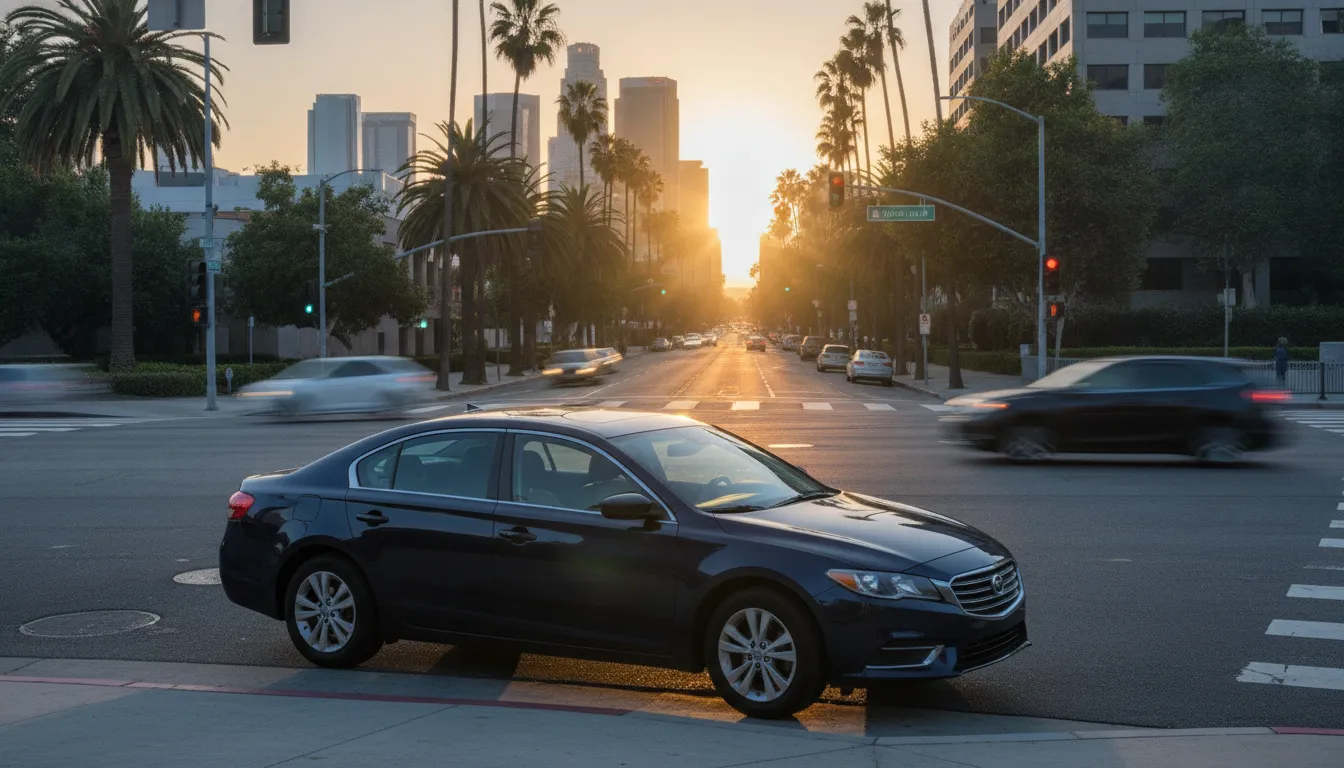
After an Uber crash in Los Angeles, a person searching for an uber accident lawyer los angeles may first ask who caused the collision. The next question is what the driver was doing in the app, because that status can affect which insurance policy responds and how a claim should be documented.
Call (323) 612-5002 for a free case review or request a free case review.
An Uber accident lawyer Los Angeles residents call can help identify the driver's app period and the insurers to notify. Counsel also helps preserve trip and crash evidence, and reviews injuries before you accept a settlement. Coverage is generally different while a driver is waiting for a match, driving to a passenger, or carrying one. The coverage period begins when a participating driver accepts a ride request. It continues until the driver completes the transaction on the app or the ride is complete, whichever is later. California law requires $1 million in primary TNC coverage for death, personal injury, and property damage during that period (Cal. Pub. Util. Code section 5433).
That makes an Uber claim different from an ordinary car claim. Review the app records, medical notes, police report, photographs, and witness names before you assume who will pay. Do not assume that Uber or a personal auto insurer will pay automatically.
Why an Uber claim is not an ordinary car claim
A collision involving an Uber vehicle may look like a typical traffic accident. The insurance analysis can still change based on what the driver was doing in the app. The policies that may matter include the driver's personal auto insurance, Uber's transportation network company (TNC) coverage, and another driver's insurance. A personal policy may exclude some app-related driving. Other coverage may apply, depending on the policy language and the facts.
The most important starting point is the driver's app status at the time of the collision. California regulators describe three service periods:
1. The app is open, but no ride has been matched
In the first period, the driver is logged in and waiting for a passenger request. Coverage during this waiting period is different and generally lower than the coverage that applies after a ride is accepted. The applicable policy and the app records help establish whether the crash occurred during this period.
2. A ride is accepted, but the passenger has not been picked up
The second period begins when the driver accepts a ride request. It continues while the driver is on the way to the pickup location. This is not the same insurance situation as simply waiting for a match. TNC coverage may become central to the claim. The route, trip records, and acceptance time can show when this period began.
3. The passenger is in the vehicle
The third period starts when the passenger enters the vehicle and continues until the passenger exits. At that point, the driver is transporting a passenger, and the insurance rules differ again. If another motorist contributed to the crash, that driver's liability policy may also need review. More than one insurer can be involved. That does not make the claim automatic.
The California Public Utilities Commission summarizes these three periods in its TNC insurance requirements. For a Los Angeles car accident claim, keep the crash report, medical records, insurance information, and any trip or app details. Those records can show which coverage period applied and which insurers should get notice.
How app status can change the insurance
In an Uber crash, the app's status can help identify which insurance rules apply. California Public Utilities Code section 5433 separates a rideshare trip into different periods. The text below reflects the code as displayed in November 2026, after SB 371. The time in the app is important, but it is not the only evidence. Also review the policy language, trip records, crash facts, and who was hurt.
California TNC insurance periods and required coverage
| Period | What the app shows | What the statute requires |
|---|---|---|
| Waiting for a match | The driver is logged on and available, but no ride has been accepted. | Coverage is different and generally lower than after acceptance. Confirm the applicable coverage from the policy and current statute rather than relying on a dollar figure in a summary. |
| Ride accepted, en route to pickup | A ride request has been accepted, and the driver is traveling to the pickup location. | TNC insurance must be primary and must provide $1,000,000 for death, personal injury, and property damage. The driver, the company, or both may maintain it. |
| Passenger in the vehicle | The passenger has entered and remains in the vehicle until exiting. | The $1,000,000 primary coverage applies. The TNC must also provide primary uninsured and underinsured motorist coverage of $60,000 per person and $300,000 per incident. That UM/UIM coverage is solely the TNC's obligation. |
The waiting period deserves particular care. The CPUC's public summary describes lower required amounts for that period. Summaries can lag changes to the statute. Save the app timeline and get the policy before you assume a limit. A personal auto policy may exclude some app use. It may also apply, depending on the policy and the facts.
For an injured passenger, the time from entry until exit matters. The statute places primary uninsured and underinsured motorist coverage on the company during that interval. That coverage can matter when the at-fault driver has no insurance, or not enough. A driver hurt while logged on may have a different claim. That claim needs its own review of status, policies, and facts.
Save screenshots of the trip status, pickup and drop-off details, and messages about the ride. Those records can show which insurance period applied. An Uber accident lawyer in Los Angeles can compare the app timeline with the crash report and the policies. Not every claim follows the same path.
What to gather before you file
A well-organized file makes it easier to name the right insurer and explain the crash. Start with the Uber records that place the trip in time. Save the trip receipt, screenshots, or app history. Include the date and time, whether a ride had been accepted, and whether you were a passenger. Rideshare coverage can differ based on what the driver was doing.
1. Save the trip receipt and any screenshot of the app status. 2. Get the police report number, if officers responded. 3. Photograph the vehicles, the street, and visible damage. 4. Write down the other driver's insurance information and any witness names. 5. Keep medical bills, wage records, and every claim number you receive.
Also keep photographs of the road, traffic signals, and visible injuries. Write down the other driver's name, phone, plate, insurance, and vehicle. If anyone saw the crash, get each witness's name and number while the details are fresh.
Keep records of treatment and missed work
Save medical records, discharge papers, prescriptions, bills, and appointment notes. Tell your providers that the injuries followed a collision. Keep copies of what you send to health insurance. If you missed work, keep pay stubs, schedules, and a note of the dates and pay involved. Do not throw records away just because an insurer already has some of them.
Report the collision through the Uber app and notify the insurers that may be involved. Ask each one for a claim number and the adjuster's name. Get those details in writing. Keep a dated log of calls, emails, and documents you send. If you were a passenger, the app status and trip records may show which policy is responding. A personal auto policy may limit app use. Do not assume the answer from the insurer's name alone.
Be careful before a recorded statement or a broad medical authorization. An adjuster may ask for information before you know which coverage applies. You can ask for the request in writing and get advice before you agree. For more steps after a California car accident, use a checklist that adds to these records. It does not replace medical care or a police report.
Who may need to be notified
The right notice path depends on where you were in the crash, not only on whether an Uber vehicle was there. A passenger should report the collision in Uber's app and save the trip details. That report does not replace notice to insurers or a legal review. The passenger may have a claim involving the Uber driver, another driver, or both. That depends on who caused the injuries and which coverage applies.
If you were in another vehicle, notify your own auto insurer promptly. Also report the collision to the Uber side when an Uber vehicle was involved. Your policy may offer benefits or uninsured motorist protection. App-related exclusions and the facts can still affect coverage. A pedestrian or cyclist should identify the Uber vehicle and driver, notify any insurer that may apply, and keep medical records. Do not assume the first insurer to answer has accepted the claim.
An Uber driver's claim may follow a different path
An Uber driver hurt by another motorist generally looks at a claim against that driver and the policies that may apply. The driver's own coverage, app status, and the other motorist's insurance can all matter. This is a different analysis from a passenger's claim. It is not an automatic employment claim against Uber. A driver should have the facts and policies reviewed before deciding who is responsible.
Hit-and-run and uninsured-driver issues
When the other driver leaves or has no insurance, notice gets harder. Report a hit-and-run to law enforcement and tell your insurer as soon as you can. You may also need to look at uninsured or underinsured motorist coverage tied to the trip. See our guides to an uninsured motorist claim and a Los Angeles hit-and-run injury claim.
California's comparative-fault rule can reduce recovery when an injured person shares responsibility. That rule does not decide whether a claim exists. Statements to an insurer, and incomplete reports, can still affect how fault is assessed. Several notice paths may overlap. A timely review with a Los Angeles auto accident lawyer can help name who should get notice.
Working with an uber accident lawyer los angeles
Before a demand, an Uber accident lawyer in Los Angeles should map what happened, which coverage may apply, and how the injuries have affected daily life. The review is more than a quick look at the police report. It ties the records to the legal and financial parts of the claim.
The driver's app status and the primary policy
Uber's coverage can depend on the driver's status at the time of the collision. Counsel will look for app records, trip details, screenshots, and witness statements. Those records should show whether the driver was waiting, had accepted a ride, was driving to a pickup, or had a passenger aboard. Those periods can involve different insurance. A personal auto policy may also exclude app use. Read the policy with the facts. Do not assume the result.
The review should identify which policy is primary and whether another policy may also apply. It should also ask whether uninsured or underinsured motorist benefits matter. A demand is stronger when it goes to the correct insurer with records that explain why that coverage applies.
Medical causation and financial losses
Medical records, test results, treatment notes, and your history help show whether the crash caused or worsened the injuries. The review also looks at care you may still need, not only bills already received. Wage-loss proof can include employer records, pay information, work restrictions, and days missed. These details should match the documents. They should not go beyond what the file supports.
Government vehicles and filing deadlines
Counsel will also ask whether a city, county, or state vehicle or employee was involved. Government claims can have shorter notice rules. For many injury or death cases, California Code of Civil Procedure section 335.1 sets a general two-year period. Claims against public entities, and cases involving minors, can change that date. Read our guide to California personal injury deadlines early. Do not wait until the general period is almost over.
Michelle Choe provides bilingual English and Korean service from Glendale. The firm offers a free case review. For personal injury matters, ask how the written fee agreement addresses attorney fees and case costs, including whether a contingency-fee arrangement is available.
Frequently Asked Questions
Will Uber cover me in an accident?
Sometimes. Coverage does not turn on a sticker or on the fact that you opened the app. California law ties the insurance to what the driver was doing. The coverage period begins when a participating driver accepts a ride request. It continues until the driver completes the transaction on the app or the ride is complete, whichever is later. Public Utilities Code section 5433 requires $1,000,000 in primary coverage for death, personal injury, and property damage during that period. While a passenger is in the car, the company must also provide uninsured and underinsured motorist coverage of $60,000 per person and $300,000 per incident. Coverage while the driver is only waiting for a match is different. The trip record and the policy decide which rule applies.
What should a passenger report after an Uber crash in Los Angeles?
Report the crash in the Uber app, get medical care, and ask each insurer for a claim number. Save the trip receipt, the time, and anything that shows you were in the car. Keep the police report number, photos, the other driver's information, and your bills. You can ask for a recorded-statement request in writing before you agree to one.
Can someone tell me how much of a settlement I would keep?
No honest answer comes from a headline number. Medical bills, health-insurance reimbursement, the fee agreement, and fault all change what is left. The firm can explain whether a contingency-fee arrangement is available and how attorney fees and case costs would affect the amount left under the written agreement. That is not a prediction of a result or a promise about a particular share.
When should I call an Uber accident lawyer in Los Angeles?
Call when more than one insurer may be involved, when the app status is unclear, or when a city or county vehicle was part of the crash. A free case review can help organize the records before a deadline or a release becomes the problem. You can reach the Law Offices of Michelle Choe at (323) 612-5002.
Bring the trip record to a consultation
An Uber claim in Los Angeles starts with a timeline, not a guess about which company should pay. Insurers ask for the app status, the police report, and the treatment records. A lawyer needs those same records before anyone talks about a demand.
The Law Offices of Michelle Choe is in Glendale and meets with clients in English and Korean. The firm offers a free case review. Ask how the written fee agreement addresses attorney fees and case costs, including whether a contingency-fee arrangement is available. Bring the trip receipt if you still have it.
Request a free case review or call (323) 612-5002.
This article is general information about California rideshare insurance and injury claims. It is not legal advice for a specific crash, and it does not create an attorney-client relationship. Deadlines and coverage depend on the facts, including whether a public entity is involved.