
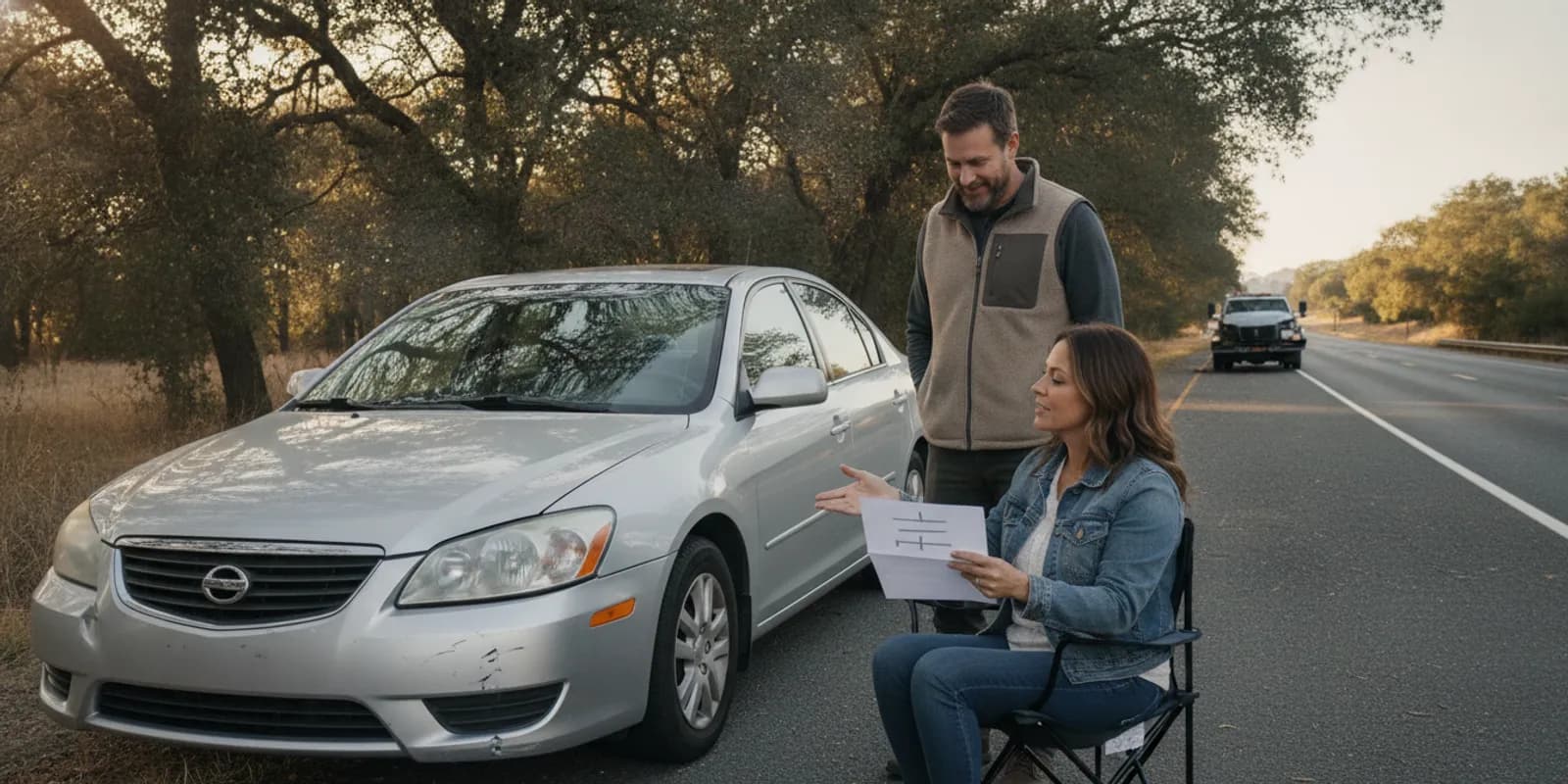
If another driver caused a crash in California and has no insurance—or not enough insurance to cover your losses—you may be considering an uninsured motorist claim california accident situation. The claim may involve coverage under your own auto policy, but the available benefits and required steps depend on the policy, the facts, and the type of loss. If you are also reviewing a vehicle defect issue, you can learn more about the firm's Irvine California lemon law services.
What does uninsured motorist coverage do?
Uninsured motorist coverage, often shortened to UM, is a type of coverage on an auto insurance policy. It may provide a way to seek payment from your own insurer when an uninsured driver is legally responsible for a covered accident. The details are controlled by the policy and California law. It is not automatic compensation, and making a claim does not by itself establish who caused the crash or what an injury is worth.
Underinsured motorist coverage, or UIM, addresses a different problem: the responsible driver has insurance, but the available liability limits may be too low to cover the injured person's losses. Whether UIM applies, how much may be available, and what must happen before the claim can proceed depend on the policy terms and the other driver's coverage.
UM and UIM coverage most commonly come up in claims for bodily injury. Property damage is treated differently and may depend on collision coverage or other policy provisions. Do not assume that a UM bodily injury claim will pay to repair your vehicle. Review the declarations page and policy, and ask the insurer to identify the coverage it believes may apply.
How can you tell whether the other driver was uninsured or underinsured?
At the scene, you may not know whether the other driver has valid insurance. A driver may show an expired card, provide incomplete information, or leave before the exchange is complete. An insurance company may later deny coverage, dispute whether the policy was active, or confirm that the driver had only limited coverage. These situations are not all the same, so keep the available facts rather than trying to resolve coverage yourself at the roadside.
Gather the other driver's name, contact details, license plate, vehicle description, and any insurance information they provide, if it is safe to do so. Record the date, time, location, direction of travel, and what you observed. If the driver leaves, note what you can remember about the vehicle and route. Do not follow a fleeing vehicle or put yourself in danger to obtain information.
A hit-and-run can raise additional questions. The policy may set conditions for treating the event as an uninsured motorist accident, including requirements about reporting or evidence. The rules can depend on the circumstances and the particular policy. Preserve any witness details, photos, video, and official reports, then ask your insurer what documentation it requires.
For an underinsured claim, request information about the at-fault driver's liability coverage and limits. Keep copies of insurer letters and any settlement offer. A low limit does not automatically mean your own UIM coverage will pay the difference; the applicable policy terms, available limits, valuation of losses, and required claim steps all matter.
What should you do in the first days after a crash?
Focus first on safety and medical needs. Get emergency help when needed and follow up with a medical professional about symptoms or injuries. You do not have to decide whether you will pursue a claim before getting care. Save the records and instructions you receive, and keep notes about how the injury affects daily activities.
- Report the collision through appropriate channels. Contact law enforcement when needed and follow any reporting instructions that apply. If it was a hit-and-run or someone was injured, ask what report or additional information is required. Keep the report number and any copy you obtain.
- Notify your insurer promptly. Review your policy for notice and cooperation requirements. Report the basic facts accurately, including when you do not yet know whether the other driver had active insurance. Ask how to open a UM or UIM inquiry without guessing at coverage.
- Preserve evidence. Save photos, video, witness names, tow and repair records, medical documents, and messages from insurers. Keep the original files when possible and make a backup. Write down what happened while your memory is fresh.
- Keep a simple loss file. Collect receipts and records for expenses tied to the crash, such as transportation or treatment costs. Keep work absence information and a dated note of pain, limitations, and changes in routine. Do not exaggerate or fill gaps with estimates presented as fact.
- Read before signing or giving a recorded statement. You may receive requests for forms, authorizations, or a recorded account. Ask what the request is for, whether it is required under your policy, and what the document permits. Consider getting advice before making statements about fault, injuries, or settlement.
These practical steps are also useful in a broader California personal injury claim. If you are not sure what to preserve, a dated folder with separate sections for the collision, medical care, insurance, and expenses can make the record easier to review.
What evidence can help explain the claim?
A UM or UIM review often requires evidence about both responsibility for the collision and the losses connected to it. No single document necessarily answers every question. Consistent records allow you and the insurer to compare accounts, investigate disputed details, and assess what remains unresolved.
- Collision evidence: photographs of vehicle damage, road conditions, traffic controls, debris, and visible injuries; video from a dashboard or nearby camera; and a sketch or written description of vehicle movements.
- People who saw what happened: names and contact information for witnesses, along with a brief note about what each person observed. A witness's direct observations can be more useful than conclusions about fault.
- Official and insurance records: incident or collision report information, claim numbers, policy details, coverage letters, and communications about whether the other driver's insurance was active.
- Medical and treatment records: appointment dates, diagnoses, treatment recommendations, bills, and records of changes in symptoms. Keep records from before the crash too if there is a relevant prior condition, so the timeline can be understood accurately.
- Financial and day-to-day effects: receipts, wage or work records, repair estimates, and notes about activities you could not do or had to change. Keep these factual and dated.
Do not edit photos in a way that changes what they show, delete relevant messages, or ask a witness to adopt your version of events. If you find additional evidence later, note when and where you obtained it. A lawyer can help identify what may be relevant without promising that any particular item will decide the claim.
How does a claim through your own insurer work?
When you make a UM or UIM claim, you are asking your own insurer to evaluate coverage and the claim under the policy. Your insurer may request documents, investigate how the collision happened, review medical information, or ask questions about your losses. You should answer accurately and keep copies of what you send. If a request is broad or unclear, ask the insurer to explain its purpose and scope.
Check the policy declarations page for the types and limits of coverage listed. The declarations page is a useful starting point, but it does not replace the full contract. Definitions, exclusions, notice rules, cooperation provisions, and dispute procedures may appear elsewhere in the policy. Ask the insurer to identify the provision it is applying when it says that a particular loss is or is not covered.
For a UIM claim, the other driver's liability insurer may also be involved. Coordinate communications and keep a written record of offers, payments, releases, and deadlines. Before accepting a settlement or signing a release from another insurer, find out whether it could affect a claim under your own policy. A release can have consequences beyond the immediate payment, so do not rely on an assumption that it is harmless.
If the insurer disputes liability, coverage, or the value of the claim, ask for its position in writing. The policy may provide a process for resolving certain UM/UIM disputes, which can include arbitration. Read the applicable policy language and seek advice about how a dispute procedure works in your situation.
What can affect the value of a UM or UIM claim?
There is no single formula that can determine the value of every claim. Important questions may include whether the other driver was legally responsible, what coverage is available, whether the crash caused or worsened an injury, what treatment and future care are supported by the evidence, and how the injury affected work and everyday life. Disagreements about any of these issues can change the evaluation.
Coverage limits also matter. The amount shown on a policy does not necessarily equal the amount payable for a particular claim. Policy terms, other available insurance, payments, liability findings, and the support for claimed losses can affect the result. For UIM, compare the relevant policies and settlement information carefully rather than assuming the second policy simply adds a fixed amount.
Keep your account of symptoms and limitations honest and specific. For example, a note that identifies the date, the activity that was difficult, and how long the problem lasted is more useful than a general statement made months later. Continue to follow medical guidance, and tell your provider about changes. A claim file should reflect the actual course of recovery, including improvement as well as ongoing problems.
What deadlines and policy rules should you check?
Do not assume that a claim can wait because you are dealing with your own insurer. A policy can require prompt notice, cooperation, or particular steps when making a UM/UIM claim. Legal deadlines may also apply, and different parts of a dispute can have different timing rules. The date of an accident, a denial, or a settlement discussion does not necessarily tell you every deadline that matters.
Read the policy and preserve any letters that mention a time limit, proof requirement, or arbitration. Ask the insurer to explain the deadline in writing, but do not treat an adjuster's informal estimate as a substitute for legal advice. If a deadline may be close, get advice promptly. Waiting for treatment to end or for the other driver's insurer to finish its review can create avoidable risk.
For background on the firm's approach to injury matters, you can review its personal injury practice information and its explanation of what a settlement means. These pages are not a substitute for your policy or advice about your specific facts.
What if the insurer questions or denies coverage?
A question about coverage is not always a final decision. The insurer may be waiting for information about the other driver's policy, the collision, or your own coverage. Ask what information is still needed, how to submit it, and whether there is a date by which it must be provided. Keep the response focused on the request, and retain a complete copy of anything you send.
If the insurer denies coverage or rejects part of the claim, ask for the decision and its reasons in writing. Identify the policy language the insurer relied on and compare it with the declarations page and the full contract. Check whether the letter explains a review, complaint, or dispute process and any dates that apply. A denial can involve a factual issue, a policy interpretation, missing documentation, or more than one issue, so it helps to understand the stated basis before deciding how to respond.
Make a record of telephone calls, including the date, the name or role of the person you spoke with, and what was discussed. Follow up on important conversations in writing. Avoid sending unrelated sensitive information without understanding why it is requested. If an explanation is unclear, ask concise questions and preserve the answer. You may want legal advice before agreeing with a denial, withdrawing a claim, or allowing a dispute deadline to pass.
When may it help to speak with a lawyer?
A legal review may be useful if the insurer says UM/UIM coverage does not apply, the other driver's insurance status is unclear, fault is disputed, the injuries are significant, or you are asked to sign a release. It may also help when the insurer's valuation does not account for documented treatment or the effect of an injury on your work and routine. You can bring the policy, claim correspondence, crash information, and a short timeline to make the conversation more focused.
Before a consultation, write down the questions you need answered. These might include: Which coverage may apply? What policy provisions should I read? What evidence is missing? Is there a deadline or a settlement document I should understand before responding? What happens if the insurer and I disagree? Clear questions can help you use the time well.
Michelle Choe Law handles personal injury matters in Glendale and offers a free consultation for personal injury matters, according to the firm's information. The firm describes its injury fee arrangement as contingency-based, with no fee unless it wins; review the written agreement for the terms that would apply to your case. You can also learn about Michelle Choe before deciding whether to request a review.
Frequently asked questions
Do I contact my own insurer if the other driver has no insurance?
Usually, you should notify your insurer and ask whether your policy includes UM coverage and what notice or documentation it requires. Reporting the collision is not the same as proving that coverage applies or agreeing to a settlement.
Does uninsured motorist coverage pay for damage to my car?
Do not assume it does. UM bodily injury coverage and vehicle property damage are different issues. Ask the insurer to explain whether collision coverage or any applicable property damage provision may address the repair loss.
Can I make a claim if the other driver had insurance?
Possibly. If the driver's available liability coverage is not enough for the losses, your policy may include UIM coverage. The policy limits, claim requirements, other payments, and facts determine whether it can apply.
Should I accept an offer from the other driver's insurer?
Understand the payment and release before accepting. A release may affect other claims, including a potential claim under your own policy. Ask for the offer and release in writing and get advice if you are unsure what rights would be given up.
Keep a clear record and check your coverage
An uninsured motorist claim after a California accident is shaped by the collision facts, insurance coverage, documented losses, and the steps required by the policy. Notify the appropriate insurers, preserve records, watch for deadlines, and get a clear explanation before signing a release or accepting a disputed claim decision.