
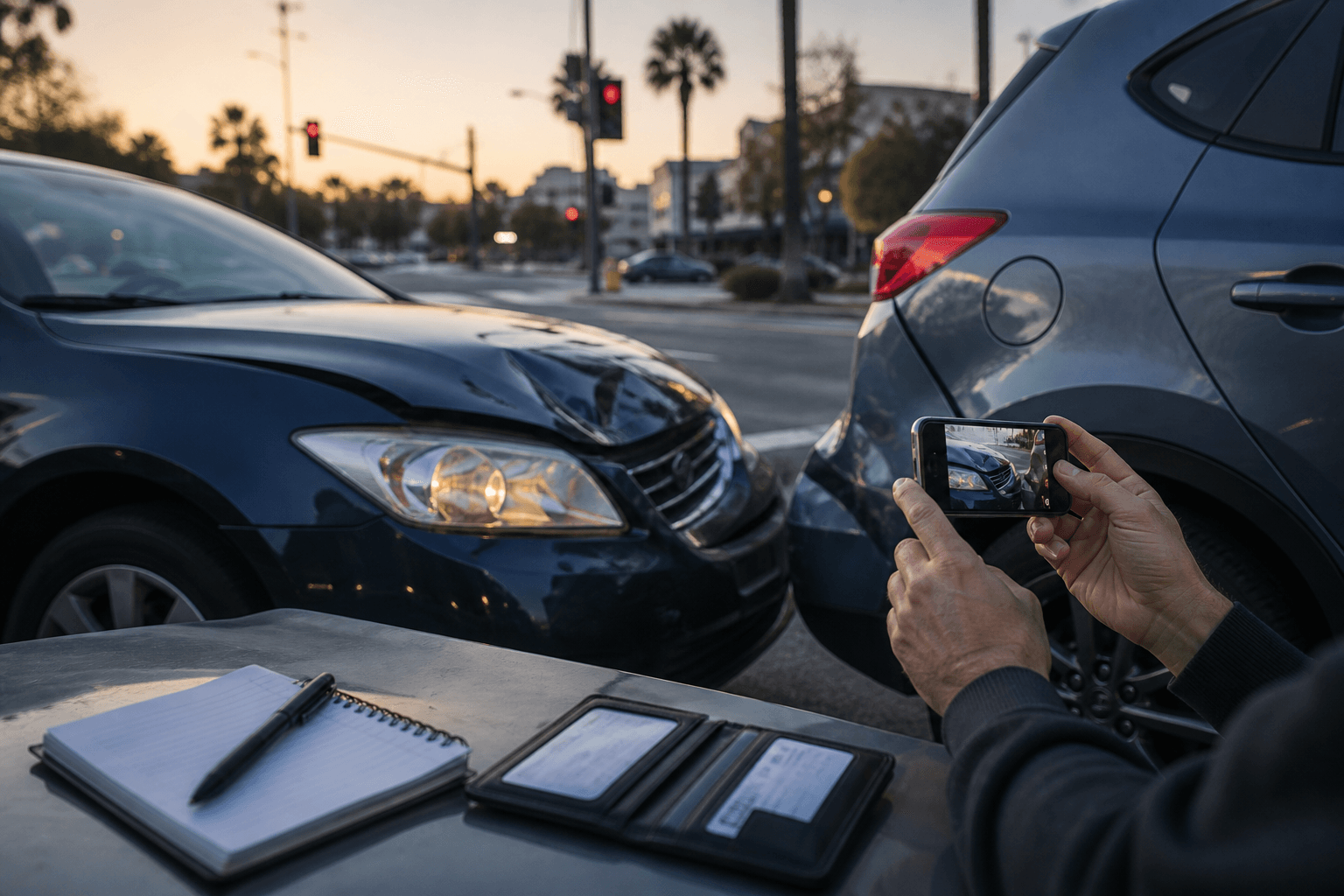
The first hours after a collision can affect your safety, your records, and any insurance claim that follows. Focus on a few calm, practical steps.
- Move to safety when possible, check for injuries, and call 911 when anyone may be hurt.
- Exchange driver, vehicle, and insurance information, and collect contact details from witnesses.
- Photograph vehicle damage, road conditions, traffic controls, and the wider scene before it changes.
- Notify your insurer promptly. California DMV also requires an SR-1 within 10 days when someone is injured or killed, or property damage exceeds $1,000.
Put safety and medical needs first
Stop at the scene and move out of active traffic when it is safe. Check yourself and your passengers before inspecting the vehicles. Call 911 if anyone reports pain, appears disoriented, or may be injured. Some symptoms develop later, so pay attention to changes and seek appropriate medical care. A medical record can also connect an injury and its treatment to the collision rather than leaving an unexplained gap.
Build a clear record of what happened
Photograph the vehicles from several distances and angles, along with debris, lane markings, signals, weather, and anything that may have blocked a driver’s view. Exchange required identification and insurance information without arguing about fault. Ask witnesses for contact information. Write down what you remember while it is fresh, including the direction each vehicle traveled and any statement made at the scene.
Handle reporting and insurance carefully
Notify your insurer promptly and follow the policy’s cooperation requirements, but avoid guessing when you do not know an answer. The California DMV requires a separate SR-1 report within 10 days when a collision causes injury or death, or more than $1,000 in property damage. A police or insurance report does not replace the SR-1. Keep copies of every submission and note each claim representative’s name and contact information.
Preserve the losses that are easy to overlook
Create one folder for medical bills, discharge instructions, prescriptions, repair estimates, rental expenses, photographs, and insurer correspondence. Track missed work and how the injury affects ordinary activities. Do not repair or dispose of important evidence before it has been documented. If responsibility is disputed, injuries are significant, or an insurer requests a broad release or recorded statement, consider getting individualized legal advice first.
Keep medical records, repair estimates, receipts, and claim correspondence together. Deadlines and reporting duties can vary with the facts, so getting individual guidance early can prevent avoidable gaps.