
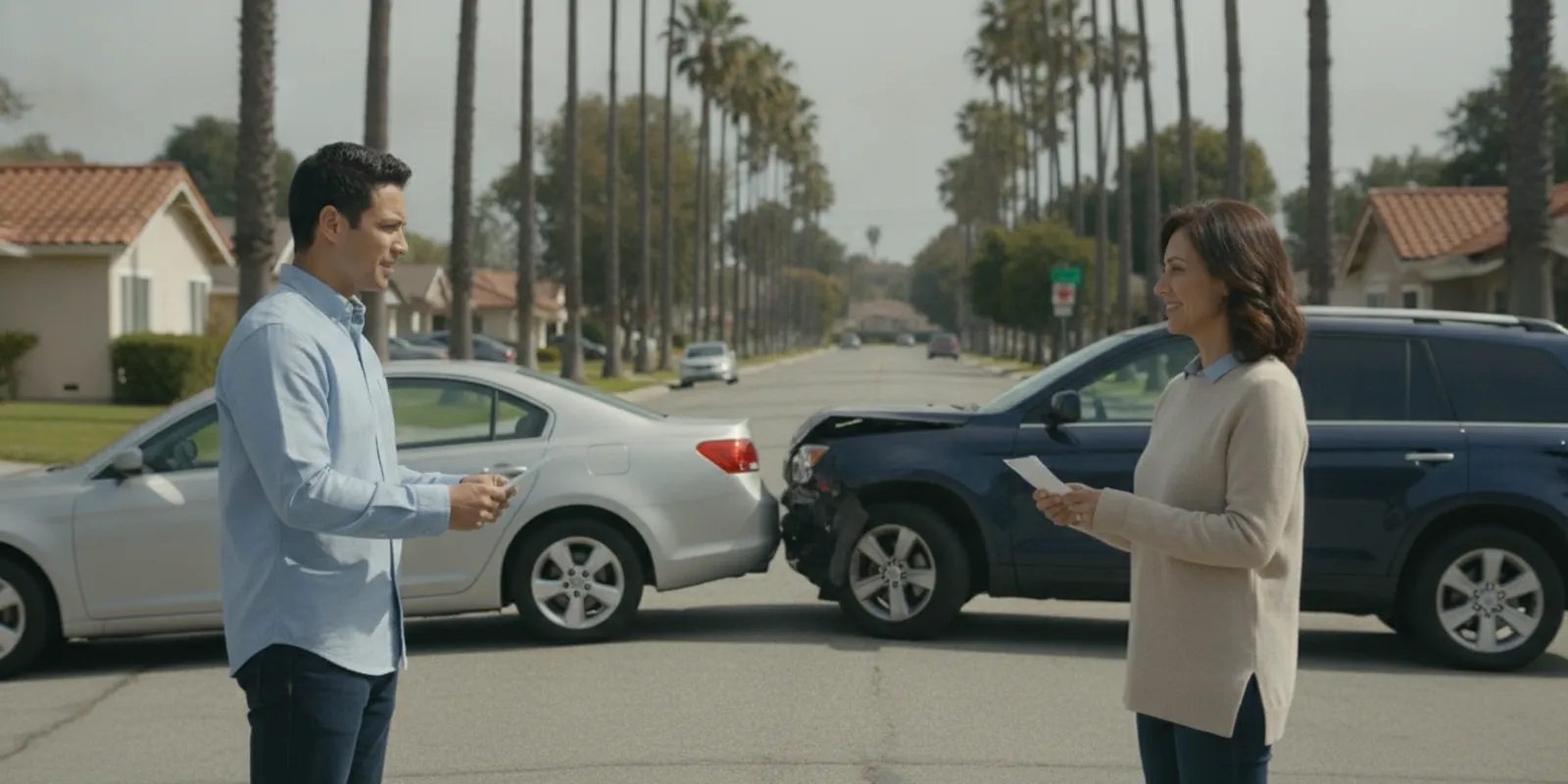
After a collision, it can be hard to think clearly. The question “what to exchange after a car accident Glendale” drivers ask has a practical answer: collect each involved driver’s identifying, vehicle, and insurance details, then document the scene and arrange any needed help. Exchange facts calmly; you do not have to decide who caused the crash at the roadside.
What information should drivers exchange after a Glendale crash?
California drivers involved in a crash generally need to exchange identifying and insurance information. Gather the details directly from the other driver and compare them with the documents, rather than relying on a quick verbal introduction. The main items to collect are:
- Full name and current address. Write down the driver’s name as shown on their license and their current residence address.
- Driver’s license number. Note the license number and issuing state. If practical, check the license rather than copying a number from memory.
- Vehicle information. Record the make, model, color, license plate number, and state. Record the vehicle registration details, including the registered owner’s name and address when available.
- Insurance details. Get the insurance company’s name and the policy number. Ask to see an insurance card or other current proof, and take a clear photo if everyone agrees and it is safe.
- Contact information. A phone number or email can be helpful for follow-up, but it does not replace the driver, vehicle, and policy information.
Write down the date, approximate time, and exact location too, including the nearest cross street or a nearby landmark. If several cars were involved, keep each driver’s information separate and label which vehicle it belongs to. A simple note such as “blue SUV, plate…, driver…” can prevent confusion later.
For a helpful checklist of immediate post-crash tasks, see the firm’s guide to steps to take after a personal injury in Glendale. It covers the wider process beyond the information exchange.
How can you make sure the information is accurate?
In a stressful moment, small copying errors are easy. Check the spelling of names, each digit in the policy and license numbers, and the plate state. Take a photo of the other vehicle’s plate and insurance card when it is safe and appropriate. Make sure a photo is legible before you leave; glare, motion, and low light can make a picture unusable.
Keep a written backup. Save the details in a note on your phone or on paper, and do not rely only on a photo buried in a camera roll. If the card shows a policy period, note it. A card is useful evidence of the information presented at the scene, but the insurer must confirm whether coverage applies to a particular crash.
Check that you have information for the person who was driving, not just the vehicle owner. The driver and registered owner may be different people. If another person comes to the scene and says they will handle everything, still record the involved driver’s details and the owner’s details if available. Do not hand over your original license or registration; show documents as needed and keep them with you.
What if the other driver will not share information?
Stay calm and do not escalate the argument. Ask once more for the basic details and, if safe, note the person’s name and vehicle description. If a driver refuses, appears impaired, leaves the scene, or the crash involves an injury or an immediate safety concern, contact law enforcement or emergency services. Give the dispatcher the location, vehicle description, direction of travel if someone left, and any information you were able to record.
Do not follow a driver who leaves, stand in traffic to photograph a car, or put yourself at risk to get a plate number. If you can safely observe the vehicle, record its color, make, model, plate, and direction of travel. Ask nearby witnesses whether they saw what happened and whether they are willing to share their contact details. Avoid pressuring anyone; simply preserve the option to follow up.
If the other driver has no insurance card, says they are uninsured, or provides information that seems inconsistent, record exactly what they said and what documents they showed you. Do not try to determine coverage at the scene. Your own insurer can explain what information it needs to review your policy, and an attorney can discuss legal options based on the facts. You can learn more about the firm’s personal injury practice and the kinds of accident matters it handles.
What should you do before exchanging details?
First, check whether anyone is hurt and whether traffic or another hazard makes the scene unsafe. Call 911 for an emergency, serious injury, or an immediate danger. Move to a safer place if you can do so without worsening an injury or creating another hazard. Turn on hazard lights when appropriate, and do not stand between vehicles or in an active lane.
Exchange information only when the scene is reasonably safe. If someone needs medical attention, prioritize that over collecting documents. You can gather missing details later through a police report or insurer. Do not attempt to move a person who may have a serious injury unless there is an immediate danger and you must act to protect them.
Where a crash creates a hazard, blocks traffic, or involves injuries, ask the appropriate authorities for help rather than trying to manage the roadway yourself. Follow lawful instructions from emergency responders. If you are unsure whether a report is needed, ask the responding officer or contact the relevant agency after you are safe.
What should you document at the scene?
The exchange records who was involved and the coverage information offered. Photos and notes help preserve what the scene looked like. If it is safe, take wide photographs of the vehicles and their positions, then closer images of visible damage. Include the surrounding roadway, traffic controls, lane markings, skid marks, debris, and any condition that may matter, such as a blocked view or a damaged sign.
Take pictures from more than one angle and avoid moving a vehicle solely to improve a photograph. Record the weather and lighting, the direction each vehicle was traveling, and the lane or driveway involved. Make a quick sketch if the positions are difficult to explain. A sketch does not need to be artistic: label the street, lanes, vehicles, and direction of travel.
Ask witnesses for their names and a way to contact them. Make a note of what each person says in their own words, without coaching them or asking them to agree with your account. If a business or home nearby may have camera footage, note its location. Do not assume the recording will be kept indefinitely; share the location with your insurer or lawyer promptly so they can advise on a request.
Preserve relevant records after leaving. Save photos, the exchange notes, towing or repair documents, and messages about the collision in one place. Keep the original files when possible and avoid editing the only copy. If you receive a report or claim number, add it to your notes.
Do you need to discuss who caused the crash?
No roadside conversation can reliably settle responsibility. You can cooperate by exchanging information and answering basic factual questions, but avoid guessing, arguing, or making broad statements such as “it was all my fault” when you are shaken and have not reviewed what happened. Do not lie or conceal facts. If you do not know an answer, say that you are not sure.
It is reasonable to say that you are willing to provide information but want to avoid speculating about fault. Do not sign a statement about the collision at the scene unless you understand what it says and why it is being requested. A signature on an exchange form or receipt can mean something different from a statement accepting blame; read the document and ask questions before signing.
Keep your account factual. Note what you saw, heard, and did, and distinguish those observations from what someone else told you. For instance, “I was traveling north in the right lane and felt an impact on the rear passenger side” is more useful than an unsupported conclusion about the other driver’s intentions.
What should you do after leaving the scene?
Get medical attention when you are injured or develop symptoms, and follow the advice of a qualified medical professional. Some symptoms may become noticeable later. Keep a record of when they began and any care you receive. This is not about predicting a legal claim; it helps you communicate clearly with healthcare providers and, if relevant, an insurer.
Notify your auto insurer promptly and follow the terms of your policy. Share accurate information, retain the claim number, and ask what documents or photographs are needed. You may be asked to give a recorded statement or provide documents. If you are unsure about a request, ask what it is for and consider getting legal advice before agreeing to a detailed statement about fault or injury.
California also has separate crash-reporting obligations in some circumstances. A collision involving injury or death, or property damage above the applicable threshold, may require a report to the California DMV within a set period. Check current DMV instructions or ask a qualified attorney promptly about your situation; do not assume that exchanging information or speaking with an insurer satisfies every reporting requirement. A police response and a DMV report are not necessarily the same thing.
For an overview of how an injury matter may proceed, read the legal process overview. Each situation differs, and an overview cannot determine whether a particular claim is valid.
What if you are too shaken to collect everything?
Focus on immediate safety and medical needs. If you can, get the other vehicle’s plate, driver’s name, and insurance information. Ask a passenger or witness to help write down details. Take a few clear photos only if you can do that without putting yourself in danger. If you cannot collect the complete information, note what is missing and tell the responding officer and your insurer as soon as practical.
Do not delay medical care to complete a checklist. Nor should you leave a dangerous location simply to avoid a conversation. When there is no safe opportunity to exchange details, wait for help in a safe place and explain what happened. You can provide your information to the other driver or the authorities later through an appropriate channel.
What information is useful for a later case review?
If you decide to seek legal guidance, organizing a few items beforehand can make an initial conversation more useful. You do not need a complete file or a perfect timeline. Start with:
- The date, time, and location of the crash.
- Names and contact details for the drivers and any witnesses you have.
- Photos, video, and your notes about the road, vehicles, and events.
- Insurance company names, policy numbers, and claim numbers you received.
- Any police report information and relevant medical or repair records available to you.
- A short account of what has happened since the collision, including insurer contacts.
Be candid about what you know and what you do not know. An attorney may ask about the sequence of events, the damage, any injuries, and the communications already exchanged. The conversation can help clarify questions to investigate; it does not guarantee a particular result. The firm’s free case review page explains one way to request an initial review. You can also read about what a settlement is for general background, while keeping in mind that every case has its own facts.
How should you handle a crash involving several vehicles?
When more than two vehicles are involved, do not treat the group as one exchange. Make a separate note for every driver and vehicle, and identify which details belong together. Record the order and positions of vehicles as you observed them, but avoid guessing about a chain of events you did not see. If a driver has already left or is being assisted by responders, note that rather than trying to interrupt emergency care.
Ask any passengers or bystanders who witnessed the collision whether they are willing to provide a name and contact method. They are not substitutes for the drivers’ required information, but they may have seen a different part of the incident. Label each contact by role—driver, passenger, or witness—and write down where that person was when the collision happened. Do not ask witnesses to coordinate stories or share details about another person without permission.
If a commercial or work vehicle is involved, note the company name and any vehicle number or identifying marking that is plainly visible. Do not assume the company is the vehicle owner or insurer. Give the details to your insurer or an attorney for follow-up. Keep observations neutral: record what you can see rather than making conclusions about who employed or controlled the driver.
How should you keep and share the records?
Use a single folder or secure note to store photos, the other driver’s details, claim communications, and receipts. Keep a backup of important files, and note when and where each image was taken. Avoid posting crash photos or identifying information publicly. A public post can be copied or misunderstood, and it is rarely the best place to explain a developing situation.
Share information with your insurer through the channel it identifies, and keep a copy of what you submit. If you send photos or documents, make a brief list of the files so you can later tell what was provided. Do not send sensitive personal information to an unverified caller or email address. If a caller claims to represent an insurer, verify the contact information independently using a trusted source before sharing details.
Frequently asked questions
Should I give the other driver my insurance information?
Yes. Exchange insurance details along with your name, address, license information, and vehicle information. Provide accurate information and show the relevant documents as appropriate. Keep your originals and retain a record of what you shared.
Should I take a picture of the other driver’s license?
A clear photo can help you copy the details accurately, but only do so when it is safe and the other person agrees. You can also write down the license number and issuing state. Avoid taking or keeping someone’s document; they should retain it.
Do I have to admit fault at the scene?
No. Exchange facts and cooperate with appropriate responders, but do not guess about fault or make an inaccurate statement. Be respectful and truthful. Responsibility can depend on facts that are not clear during a roadside conversation.
What if the other driver leaves before we exchange information?
Do not chase them. Move to safety, contact law enforcement when appropriate, and report the details you observed, including the vehicle and plate if available. Preserve any photos or witness information and notify your insurer.
Contact the office to request a free case review
Keep the information clear and get help with next steps
At a crash scene, concentrate on safety first, then collect names, addresses, license and vehicle details, and insurance information. Document what you can without risking anyone’s safety, preserve your notes, and follow up with your insurer or the appropriate agency about reporting requirements. If you would like to discuss an injury-related matter, learn about car accident legal help in Glendale or request a case review.
This article provides general information, not legal advice; the right next steps depend on the facts of your crash.