
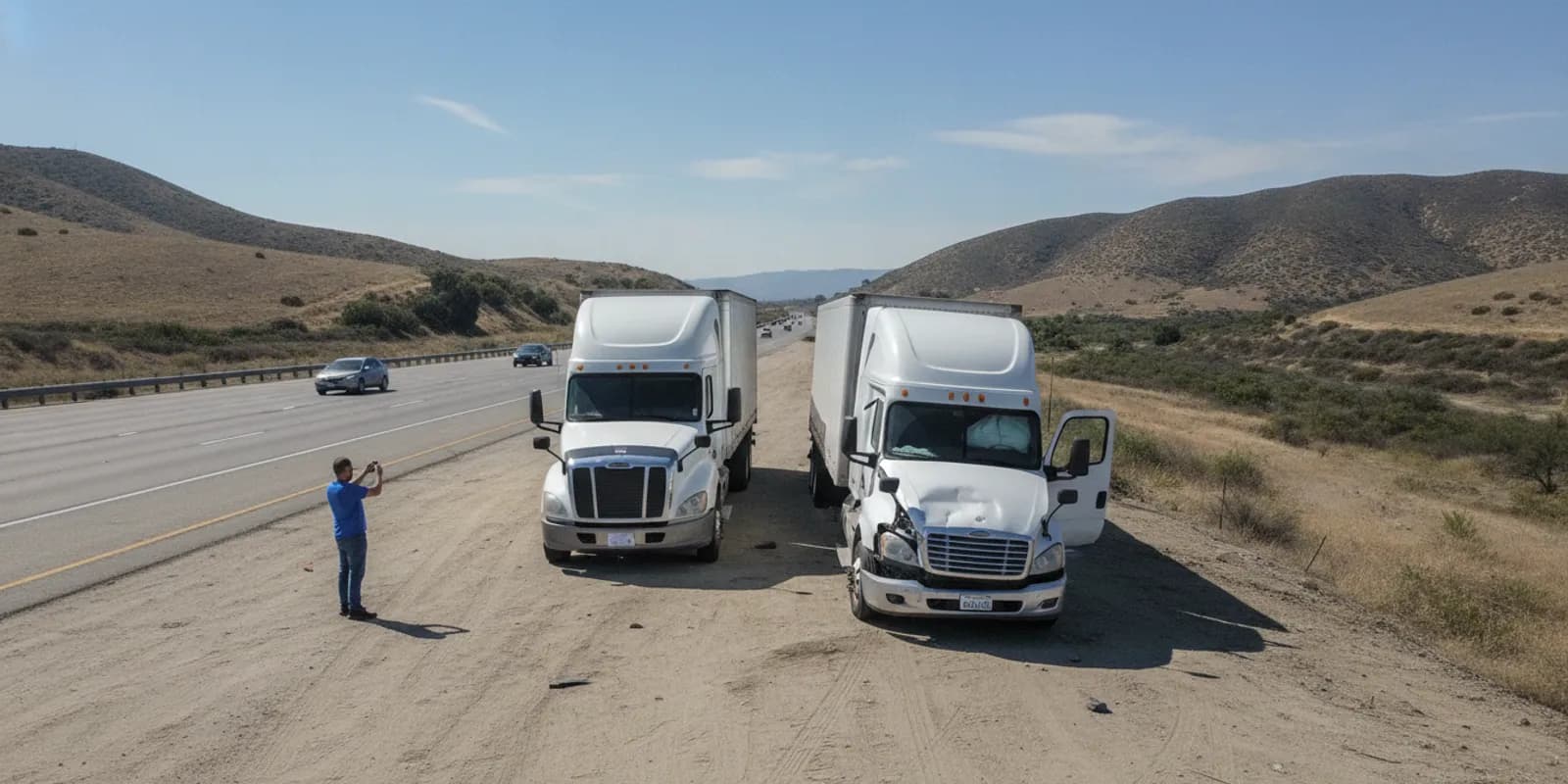
A collision with a commercial truck can leave you facing injuries, vehicle damage, and questions about who may be responsible. If you are looking for a truck accident attorney, start by protecting your health and preserving reliable information about what happened. The right next steps depend on the facts, but a careful record can make later conversations with insurers and legal counsel more productive.
What should you do first after a truck collision?
Focus on safety and medical needs before the claim. If anyone may be hurt, call 911 and follow the dispatcher’s directions. Move away from traffic if you can do so safely. Do not stand between vehicles or near a damaged truck where traffic, fuel, or unstable equipment could create another hazard. If a vehicle is blocking a lane, do not risk an injury to take photographs.
Get medical attention promptly, even if you are unsure how serious an injury is. Some symptoms are not obvious at the scene, and an examination can help identify what needs care. Tell the provider when and how the collision occurred, describe all symptoms, and follow the care instructions you receive. Keep appointment summaries, bills, referrals, and notes about missed work or daily tasks that became difficult. A record of care is useful for understanding your condition; it does not by itself decide legal responsibility or the value of a claim.
When it is safe, report the collision to law enforcement and provide accurate information. Avoid guessing about speed, distance, or fault. You can say what you personally observed and clarify when you do not know. Ask how to obtain the report or incident number. A report is one record among many, not a complete account of every fact that may matter.
What information should you collect at the scene?
If you are physically able and it is safe, document the scene before vehicles or debris are moved. Take broad photographs that show the vehicles in relation to the road, nearby intersections, lane markings, traffic controls, and any visible skid marks or debris. Then take closer images of damage, license plates, company markings, and the truck’s identifying information. Photograph different sides and angles rather than relying on one image.
Record the date, approximate time, location, direction of travel, weather, and lighting. Make a short note about what you remember while it is fresh: where each vehicle was, what happened just before impact, and what you did immediately afterward. Keep observations separate from assumptions. For example, “the truck moved into my lane” is a direct account; “the driver was distracted” is a conclusion unless you actually observed conduct that supports it.
Exchange contact and insurance information with the other driver. If possible, note the trucking company, truck or trailer number, license plate, and any carrier information displayed on the vehicle. Get names and contact details for witnesses, but do not pressure anyone to adopt your version of events. If someone saw the collision, ask whether they are willing to share what they observed with investigators or counsel later.
A phone can help record the scene, but protect the original files. Do not crop, annotate, or edit the only copy. Back up photographs and videos to a secure location, and keep a simple list of the files and when they were taken. Avoid posting detailed accounts or images publicly while facts are being reviewed; online posts can be incomplete and may be interpreted without context.
Why can evidence in a truck case require quick attention?
A commercial vehicle may generate records beyond those found in an ordinary car collision. Depending on the vehicle, company, and circumstances, potentially relevant information may include driver logs, dispatch communications, inspection and maintenance records, onboard electronic data, delivery schedules, photographs, and internal incident reports. Different entities may possess different materials, and some records may be routinely overwritten, altered, or discarded as time passes.
This does not mean that every truck has the same equipment or that every record is available in every case. It does mean that identifying what exists and asking the right party to preserve it may be time-sensitive. Keep your own evidence in its original form and note who gave you each document or photograph. Do not try to access a company’s systems, remove equipment, or contact witnesses in a way that could interfere with an investigation.
Write down the names of responding officers, tow operators, medical providers, and anyone who helped at the scene. Save receipts for towing, transportation, prescriptions, or other collision-related expenses. Keep messages from insurers and the trucking company, including dates and names. If you speak by phone, make a brief contemporaneous note of the time, who called, and what was requested. These small details can help reconstruct the sequence of events later.
Who may be involved in a commercial-truck collision claim?
The driver is not necessarily the only person or organization whose conduct may need review. Depending on the facts, questions may involve the trucking company, a vehicle owner, a maintenance provider, a cargo loader, or another party. A truck may be owned by one entity, operated by another, and maintained or loaded by others. The names on the vehicle or paperwork can be useful starting points, but they do not establish responsibility on their own.
Investigators may examine how the collision occurred, what each driver did, the condition of the vehicles, and the records available. They may also consider whether a company relationship or other circumstances connect an entity to the events. Responsibility is fact-specific. It is better not to assume that a company is liable simply because its name appears on a truck, or that only the person behind the wheel could be involved.
Several vehicles or people may have contributed to a collision. A clear account should distinguish what is known from what still needs to be checked. A truck accident attorney may help identify relevant parties, request that evidence be preserved, and organize the available information without treating an early theory as a proven fact.
How should you handle calls from insurance companies?
Insurance representatives may contact you soon after a collision. Before discussing details, ask which company the caller represents, the claim number, and the reason for the call. Write down the representative’s name and contact information. You can provide basic identifying details and explain that you are still gathering information. If you do not understand a question, ask for it to be repeated or put in writing.
Be accurate and concise. Do not guess about injuries, speed, distance, or how long recovery will take. Avoid saying that you are “fine” if you have not yet been evaluated or symptoms are changing. Do not speculate about fault. If asked for a recorded statement or a broad authorization, you can ask what it covers and take time to understand the request before agreeing. The rules and obligations can depend on the policy and circumstances, so do not assume every request has the same effect.
Keep copies of letters, emails, estimates, and forms. If an insurer makes an offer, ask for the terms in writing and what the offer is intended to resolve. A payment or release may affect the ability to pursue additional compensation, so understand the document before signing. You do not have to make a rushed decision simply because someone asks for an answer during a phone call.
For an overview of the firm’s approach to injury matters, see the personal injury law page. For a collision-focused resource, review information about car accident claims in Glendale. A truck collision can present additional evidence and party questions, so general vehicle-accident information may not answer every issue in your situation.
What records can help you understand your losses?
Keep a simple, dated file rather than trying to remember everything months later. Useful materials may include:
- Medical visit summaries, bills, prescriptions, and referrals.
- Photographs of visible injuries over time, if you choose to take them.
- Repair estimates, towing invoices, rental or transportation receipts, and vehicle inspection documents.
- Employer records showing missed work or changes to your schedule, where available.
- A brief personal log of symptoms, treatment, and tasks you could not manage as usual.
- Emails, letters, claim numbers, and notes of calls with insurers or other representatives.
Keep the records factual. A symptom note can describe what you felt and when, without trying to diagnose the cause. Save both favorable and unfavorable information; deleting a message or altering a photograph can create problems and undermine confidence in the record. If you receive a document you do not understand, retain it and ask for an explanation rather than writing assumptions on the original.
Do not delay necessary treatment because you are worried about how an insurer will view it. Discuss medical decisions with your treating provider. If care is difficult to access, ask the provider about available options and keep a note of any barriers. Gaps in records may raise questions, but the reason for a gap can matter too. Accurate documentation is more useful than trying to create a perfect-looking timeline.
When may a truck accident attorney be useful?
Legal guidance may be useful when injuries are significant, fault is disputed, several vehicles or businesses may be involved, or an insurer requests a recorded statement, extensive records, or a release. It may also help when you are unsure which evidence to preserve, who has it, or whether an offer addresses all the issues you need to consider. A lawyer can review the facts, explain possible next steps, and help you understand what is uncertain as well as what is documented.
Ask a prospective attorney who will handle your matter, how updates are provided, what documents would help with an initial review, and how fees and case costs are handled. The firm’s personal injury matters are handled on a contingency-fee basis, with no attorney fee unless the firm wins the case, according to its stated fee model. Ask how that arrangement applies to your circumstances and what costs, if any, could be treated separately. Do not assume that every legal cost or expense is covered by the same term.
Michelle Choe Law describes a hands-on practice model and offers bilingual English and Korean representation. If communicating in Korean would make it easier to explain what happened or ask questions, say so when arranging a consultation. You can also review the firm’s attorney background and its case review information before reaching out.
What should you prepare for an initial legal conversation?
You do not need to solve the case before asking for a consultation. A brief timeline and the materials you already have can make the conversation more focused. Gather the collision date and location, the incident or claim number, the names of drivers and companies, photographs, any police report information, medical records you can readily access, and insurer letters. Note what is missing or what you have requested but not received.
Prepare questions that matter to you. You might ask:
- What facts would you need to assess who may be responsible?
- Which records should I preserve or request now?
- Who will be my main contact, and how often should I expect updates?
- What are the fee arrangement and any possible case costs?
- Are there deadlines or immediate steps I should ask about?
- What should I do if an insurer contacts me before I decide how to proceed?
Share facts honestly, including uncertainty. If you do not know an answer, say so. Mention any earlier injury or condition if it relates to your current care, but do not try to decide on your own whether it matters. A lawyer’s preliminary view is based on the information available at that time and is not a promise about the result.
What mistakes should you avoid after a truck collision?
Several avoidable choices can make it harder to document what happened. Do not ignore medical concerns, discard damaged items or paperwork before you know whether they matter, or rely on memory when a brief note can preserve details. Do not repair or dispose of a vehicle without keeping photographs, estimates, and records of the work. If a vehicle must be moved or repaired for practical reasons, document its condition first when safe and retain the related paperwork.
Avoid signing a release, broad medical authorization, or settlement document before you understand its scope. Do not post accusations or detailed injury updates online, and do not delete existing posts or communications in response to a claim. Avoid contacting a driver or company to argue about fault. Keep communications calm and factual, and direct questions to the appropriate insurer or your legal representative if you have one.
Most importantly, do not treat an early estimate or a quick explanation as the final account of a complicated collision. The facts may become clearer as records are collected and medical care develops. Take practical steps, keep copies, and ask questions before making decisions that may be difficult to reverse.
How can you keep the next steps manageable?
Use a single folder, whether paper or digital, for collision records. Create sections for medical care, vehicle damage, insurance communications, photographs, and expenses. Keep a simple chronology at the front. When new information arrives, record the date and source. This approach can help you explain events consistently without turning an already stressful situation into a search through scattered messages.
There is no one checklist that fits every truck collision. Your health, the available evidence, the number of parties, and the insurance arrangements all affect what comes next. Get the care you need, preserve what you can safely preserve, avoid guessing, and seek advice when the issues feel difficult to sort out. You can contact the Law Offices of Michelle Choe to discuss your situation.
Discuss your collision with the firm
A clear record of what happened and what followed can help you make informed decisions about the next step.