
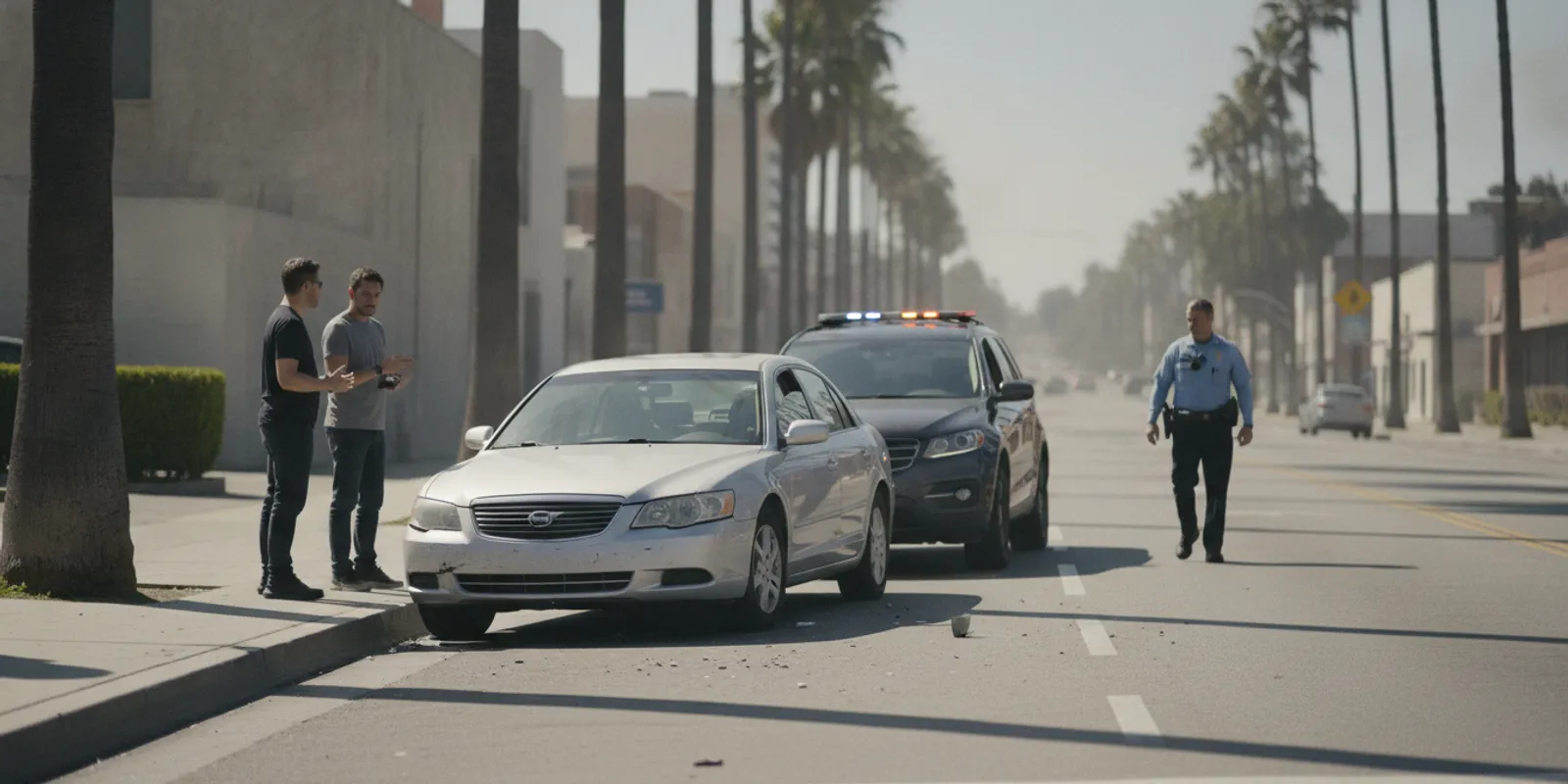
A rideshare accident attorney may help sort through questions that do not arise in every ordinary car crash. Who was driving, whether the driver was logged into the app, and whether a trip was underway can affect which insurance policies may be relevant. After a California rideshare collision, prioritize medical care and preserve information that can help clarify what happened.
Why can rideshare status affect an accident claim?
Rideshare crashes can involve more than one possible insurance source. A driver's personal auto policy may be relevant, and a rideshare company's policy may also apply depending on the driver's activity at the time. A driver waiting for a request is in a different situation from a driver who accepted a ride or is transporting a passenger. The relevant policy terms and facts need to be examined together.
An app screen alone does not decide fault or coverage. Investigators may need to establish when the driver logged in, accepted a trip, began pickup, or completed the ride. The collision circumstances, policy language, and applicable law all matter. A rideshare accident attorney can help identify questions when the insurers disagree about which policy to assess.
For example, a passenger in an active ride may have a receipt or trip history that helps establish that a trip was in progress. A person struck by a car whose driver was logged in but had not accepted a request may have less direct access to trip details. In either situation, preserve what is available and avoid assuming that the app status automatically determines who caused the collision.
What information about the driver's app status matters?
Try to identify the stage of the trip when the crash occurred. Was the driver offline, logged in and waiting, traveling to pick up a passenger, or carrying a passenger? If you were a passenger, note whether the ride had begun and whether it was still active in the app. The stages can matter because different coverage provisions may apply at different points.
Save what you can without putting yourself at risk. Useful details may include:
- The trip receipt, ride confirmation, or trip history shown in your account.
- Date, time, pickup and destination information, if available.
- Messages or notifications exchanged through the rideshare app.
- The driver's name and vehicle details shown in the app, alongside information exchanged at the scene.
- Names and contact information for witnesses and other drivers.
- Any incident report confirmation or case number from the app.
Do not infer app status from the vehicle, a decal, or what someone says in a hurried conversation. A passenger's trip record may help establish that a ride was active, while another crash may require additional investigation. Keep original screenshots and receipts, note when you saved them, and avoid relying only on memory.
Who may be responsible for a rideshare collision?
Responsibility depends on evidence and circumstances, not simply on whether a rideshare app was involved. The rideshare driver may have contributed to a crash, but another driver may also share fault. A chain-reaction collision can involve several vehicles, and different people may describe the sequence of impact differently. The location of damage and independent witness accounts may help test those accounts.
Relevant facts can include traffic signals, speed, lane changes, visibility, stopping distance, road conditions, and the timing of braking. Write down only what you personally observed. Avoid making a definitive statement about fault at the scene, but give accurate information and cooperate with appropriate requests. An insurer's early view is not necessarily the final assessment of responsibility.
Consider a simple example: a rideshare vehicle stops suddenly near a pickup point and a following car strikes it, while a third vehicle reports that the rideshare driver moved into its lane. Those descriptions raise different questions about sequence, space, and timing. Photos, vehicle damage, witness details, and any available camera footage may help clarify the events; no single fact should be treated as a complete answer without context.
California's comparative-fault principles may be relevant where more than one person contributed to an injury. The practical point for an injured person is to preserve evidence about each vehicle and each impact rather than focusing only on the rideshare driver. Do not speculate about legal percentages or agree to a fault allocation before the evidence has been reviewed.
What insurance coverage may be available?
Coverage often turns on the driver's app status and the particular policy language. A personal auto policy may contain terms about commercial or rideshare activity. A rideshare-related policy may provide coverage in certain phases, subject to its terms and the facts. If another driver contributed to the collision, that driver's coverage may also be relevant.
Do not assume a company's policy covers every crash involving a rideshare car, or that one policy is the only possible source. Ask which insurer is handling each claim, request claim identification details, and keep copies of letters and forms. Record the name and role of each person who contacts you, the date, and what they requested. A brief call log can prevent confusion when several adjusters are involved.
For general context, review the firm's personal injury information and its explanation of how a settlement works. Each policy can differ. If an insurer says that another policy is primary, ask for the position in writing and keep the response with your records rather than trying to resolve competing explanations from memory.
What should you do immediately after a rideshare crash?
Your first priority is safety and medical care. If anyone may be seriously injured, call emergency services. Move to a safe place if possible and follow responders' instructions. Consider medical evaluation even if you initially feel able to continue your day; symptoms and their effect can become clearer over time. Tell a medical provider when and how the collision happened and describe symptoms accurately.
1. Report the collision. Contact law enforcement when appropriate and use the rideshare app's incident or safety reporting process if you were using the service. Save a confirmation or case number.
2. Exchange information. Record names, contact details, vehicle information, and insurance information for the drivers involved. In a multi-vehicle crash, make a separate note for each vehicle.
3. Document the scene. If safe, photograph vehicle positions, damage, road conditions, traffic controls, and visible injuries. Note time, location, weather, and each vehicle's direction of travel.
4. Identify witnesses. Ask for contact information and write down what each person says they saw, without coaching or pressuring them.
5. Preserve trip records. Save the receipt, trip screen, driver and vehicle details, and messages. If you were not a passenger, write down what led you to think the driver was working through an app, while distinguishing observation from assumption.
6. Keep paperwork. Save medical documents, receipts, missed-work records, repair communications, and insurer messages in one place.
7. Be careful with statements. Provide truthful information, but do not guess about speed, distance, or fault. Read documents before signing and keep a copy.
If you are a passenger, you may need to report through both the app and the appropriate insurance channel. One report does not necessarily substitute for another. For broader steps, see the firm's overview of the legal process. If you are shaken or injured and cannot collect everything, focus on safety; write down what you remember later and identify records or people who may fill gaps.
What evidence can help explain what happened?
Evidence serves several purposes: it can help describe the collision, establish who was involved, clarify the driver's trip status, and document the effects of an injury. Different records answer different questions. A photograph may show the position of a vehicle but not the app status; a trip receipt may show a ride but not how the collision occurred. Use a collection of records rather than expecting one item to prove every part of a claim.
- Scene photographs: Capture the wider intersection or roadway, lane markings, signals, vehicle positions, and close views of damage. Include more than one angle when safe.
- App and trip records: Keep receipts, notifications, timestamps, pickup information, and support messages. Save the original files where possible.
- Witness information: Record names, contact details, where each person was positioned, and what they say they observed. Separate direct observation from what someone heard from another person.
- Medical records: Keep visit summaries, instructions, referrals, and bills. Note changes in symptoms and how they affect ordinary activities, without exaggerating or minimizing them.
- Vehicle and property records: Keep repair estimates, towing or storage documents, and communications about inspection. Photograph damage before repairs if it is safe and practical.
- Work and expense records: Save schedules, pay information, receipts, and other documents that may explain time missed or out-of-pocket costs.
Make a timeline while details are fresh. Start with the crash time and place, then add the first report, medical visits, calls, letters, and later changes in symptoms. Put the source next to each entry: for example, âtrip receipt,â âmy observation,â or âwitness call.â This helps distinguish documented facts from recollection.
Keep digital evidence in its original form. Back up photos and screenshots, retain full message threads when possible, and avoid cropping or annotating the only copy. If you share copies with an insurer or representative, note what you sent and when. Do not post detailed descriptions or images publicly while facts are still being clarified; public posts may lack context and can be difficult to correct.
How can you organize records when several insurers are involved?
More than one adjuster may contact you after a rideshare crash. A simple folder structure can keep the matter manageable. Create folders for app records, scene evidence, medical care, vehicle damage, work and expenses, and correspondence. Use filenames that include the date and a short description, such as â2026-11-07-trip-receiptâ or âintersection-wide-photo.â Keep an untouched backup of original files.
Maintain a contact log with the insurer or company, representative's name, claim number, date of contact, what was requested, and any promised follow-up. If a representative leaves a voicemail, save it or record the relevant details promptly. If two adjusters give different instructions, ask each to clarify their position in writing before you act on conflicting requests.
When submitting documents, send only what is requested and retain a copy of the exact packet. A short cover note can list the enclosed items and dates. Do not alter a medical record or try to make a timeline look more certain than it is. If you later discover an error, correct it clearly and keep the earlier record rather than silently replacing it.
What can complicate a rideshare injury claim?
Several issues can slow evaluation. The driver or insurers may disagree about app status. Multiple vehicles can make the sequence of impact unclear. Available insurance may be disputed, or records may be incomplete. A prior condition may make it important to distinguish earlier symptoms from changes after the crash. Be candid with medical providers about your history and describe what changed, when it changed, and how it affects you.
Another challenge is an incomplete record. A passenger may no longer see a trip screen, a witness may be difficult to reach, or a vehicle may have moved before photographs were taken. Do not fill the gaps with guesses. Write down what you do know, identify the source, and list what remains uncertain. This gives an insurer or legal representative concrete follow-up questions.
Keep track of treatment, expenses, and the effect on daily activities. Do not assume a delay means a claim has no value, and do not assume an early offer includes every relevant loss. Legal deadlines and policy requirements can affect a claim, so ask promptly if you are unsure what applies. The firm's case review page explains how to request an initial review.
How should you respond to an insurer's questions?
Take down the caller's name, company, role, and claim number. Ask whether the person represents the rideshare company, a personal auto insurer, another driver, or your own insurer. If you do not know an answer, say so rather than estimating. If a question is unclear, ask the representative to repeat it or explain what information is needed.
It is sensible to be accurate and cooperative, but that does not require guessing or signing a document you do not understand. Read requests carefully, keep copies, and ask what a release covers before signing. A release may affect rights, so do not treat it as routine paperwork. If you need time to review a request, say that and keep a record of the conversation.
When a representative asks about symptoms, explain what you experienced and when, in ordinary language. Avoid absolute statements if the facts are not certain. For instance, âI did not notice pain at the scene, but later that evening my shoulder began to hurtâ is more precise than a sweeping statement about being uninjured. Tell medical providers about symptoms and prior conditions as accurately as you can.
When may it help to speak with a rideshare accident attorney?
Consider seeking legal guidance when someone is injured, fault is disputed, several drivers are involved, or insurers disagree about coverage. It may also help if you were a passenger and do not know which party to contact, or if you are asked to give a recorded statement or sign a release before understanding its effect. Getting questions answered early may help you identify which records to preserve and whom to contact.
A lawyer can review available records, identify questions about coverage, and explain possible next steps. No outcome can be promised simply because a rideshare vehicle was involved; each situation depends on its facts and the applicable policy terms. The Law Offices of Michelle Choe handles personal injury matters and offers a free consultation. Its Glendale personal injury page provides more information.
Frequently asked questions
Does the rideshare company's insurance always apply?
No. The driver's activity in the app, the collision facts, and policy terms can matter. Other insurance policies may also be relevant, and more information may be needed to identify which coverage applies.
What if I was a passenger in the rideshare vehicle?
Get medical care if needed, report the incident through the app, preserve trip details and receipts, and collect information about other vehicles and witnesses. Keep communications and claim documents together, and avoid assuming that the app report alone resolves insurance questions.
What if I cannot tell whether the driver had accepted a ride?
Do not guess. Preserve receipts, notifications, screenshots, or other records you have and note what you personally observed. An insurer or legal representative may need to seek additional records to clarify the status.
Should I speak with an insurer?
Be truthful and provide basic factual information, but avoid speculation. Ask who the representative works for, keep a note of the conversation, and do not sign a release you do not understand.
Take a careful next step
After a rideshare crash, focus on health, accurate records, and understanding which policies may apply. If coverage or responsibility is unclear, an informed review can help you decide what to do next.