
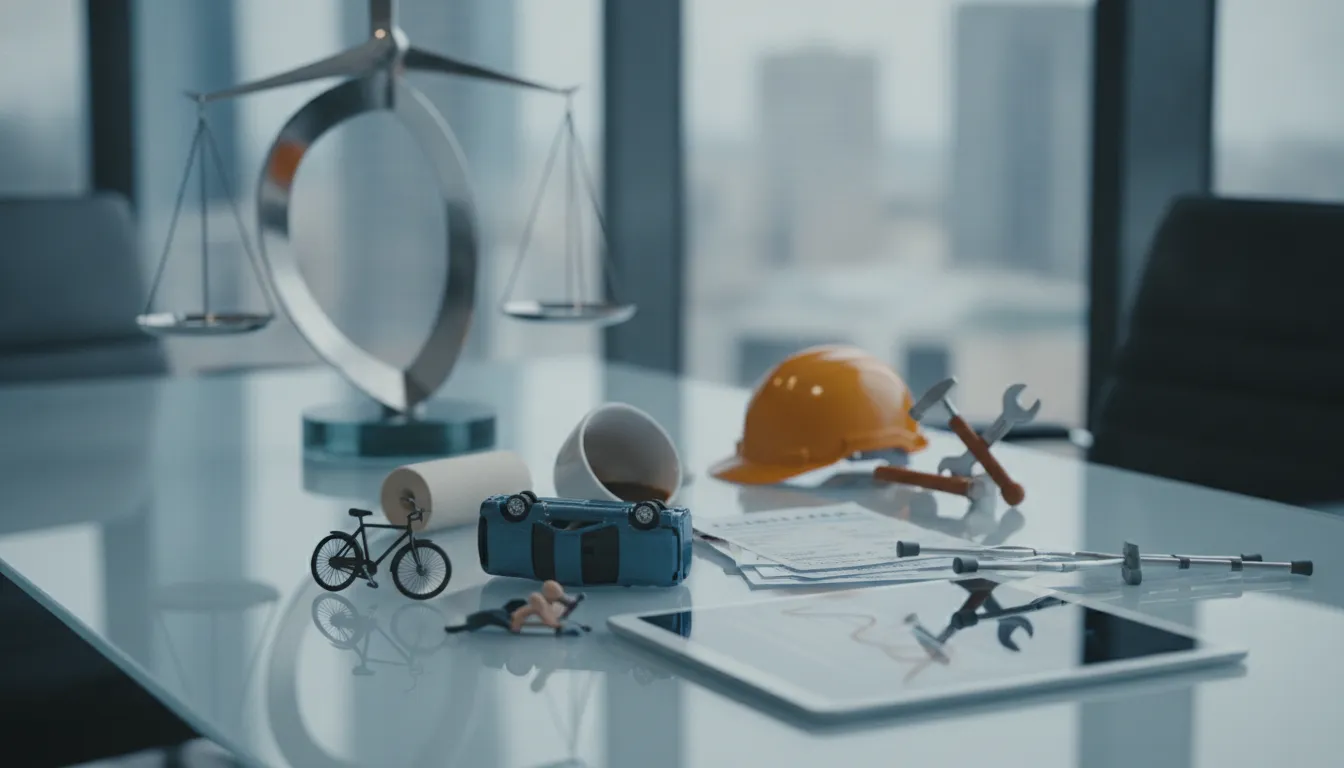
When an injury disrupts your routine, even basic questions can feel overwhelming: Who may be responsible? What records should you keep? Is an insurance offer fair? Looking at personal injury cases examples can provide a useful starting point. A case involving a wet floor raises different issues from a vehicle collision or a product that breaks during ordinary use. Each claim depends on its own facts, evidence, and California law. This guide explains how common personal injury claims work, what damages may be considered, and why outcomes vary. If you were injured in Southern California, an attorney can review your circumstances and help clarify the options available to you.
Key Takeaways
- A personal injury claim depends on evidence: Show how another party may have caused the injury and document the resulting losses.
- Keep useful records: Save photos, medical documents, witness details, bills, and messages related to the incident and your recovery.
- Check your options and deadlines early: California filing rules vary, so ask an attorney to review your circumstances before responding to insurers or accepting a settlement.
What Is a Personal Injury Case?
A personal injury case is a civil claim seeking compensation for harm that a person says another party caused. The claim may involve a car crash, an unsafe property, a defective product, or another incident. Depending on the facts, the injured person may seek payment for medical expenses, lost income, pain, and changes to daily life.
A claim is not proof that someone else is legally responsible. The injured person generally needs evidence connecting the other party’s conduct to the injury and documenting the losses. The legal rules that apply depend on the circumstances and may vary by state. In California, for example, shared responsibility can affect a person’s potential recovery.
A claim for harm caused by another party’s wrongful conduct
A personal injury claim usually alleges that another person or organization caused harm through careless, intentional, or otherwise legally wrongful conduct. A driver who runs a red light and causes a collision may have acted carelessly. A business that fails to address a hazardous spill may also face a claim if someone is injured as a result.
The circumstances help determine whether the conduct supports a legal claim. The injury may be physical or, in some situations, emotional, but the person bringing the claim must still show how the harm occurred and why another party may be responsible. Personal injury cases can involve many types of alleged wrongful conduct, and the facts of each case shape the legal analysis.
Negligence: duty, breach, causation, and damages
Many personal injury claims are based on negligence, which generally means failing to use reasonable care. To establish negligence, an injured person typically needs to show that the other party owed them a duty of care, failed to meet that duty, caused the injury through that failure, and resulted in actual damages.
These elements must connect. For example, a driver may have a duty to operate a vehicle carefully, but a careless act alone may not establish a claim if it did not cause the injury at issue. Medical records, photographs, witness accounts, and incident reports may help show what happened and link the conduct to the harm. A negligence claim is commonly evaluated through duty, breach, causation, and damages, with the evidence depending on the case.
Other legal theories, including strict liability
Negligence is not the only legal theory that may apply. Some personal injury claims involve strict liability, which can hold a party responsible without requiring the injured person to prove that the party failed to use reasonable care. Defective-product cases are one example: under certain circumstances, a manufacturer or seller may be liable when a product defect causes an injury.
Strict liability does not mean that every injury involving a product leads to compensation. The injured person generally needs evidence that the product had a legally recognized defect and that the defect caused the harm. How the product was used, whether it was altered, and what type of defect is alleged can all matter. Product injury claims may involve strict liability, but the right legal theory depends on the specific facts and applicable law.
Why injury alone doesn’t prove fault
An injury, even a serious one, does not automatically establish that another party is legally at fault. A person may have medical records confirming an injury, but still need evidence showing what caused it and how another party’s actions or failure to act contributed. The other party may dispute the cause, the timing, or the extent of the claimed harm.
Evidence can help clarify those questions. Photos, video, witness statements, maintenance records, and expert opinions may show how an incident occurred or whether a hazard or product played a role. Records of treatment and symptoms can also help connect the incident to the injury. Evidence tying a party’s conduct to the harm is central to many negligence claims. A review of the available facts can help identify what supports or challenges a claim.
What Are Common Personal Injury Cases?
Personal injury claims can arise after many kinds of accidents and harmful events. They may involve a driver who causes a collision, a business that fails to address a dangerous condition, a healthcare provider whose care causes preventable harm, or a product that injures someone during ordinary use. Dog bites and fatal incidents can also lead to legal claims.
The type of incident is only a starting point. A claim often depends on who had a responsibility to act carefully, whether that person or business failed to meet that responsibility, and whether the failure caused the injury. The evidence and legal rules can differ significantly from one case to another. For example, a fall claim may turn on whether a property owner knew about a hazard, while a medical malpractice case may require expert review of treatment decisions.
The examples below describe common legal issues, not guaranteed outcomes. Shared responsibility, insurance coverage, deadlines, and other facts can affect a claim. If you were hurt in Southern California, the Law Offices of Michelle Choe offers a free case review to discuss your circumstances and possible next steps.
Vehicle accidents: a careless driver causes a collision
A collision involving a car, truck, bus, motorcycle, bicycle, or pedestrian may lead to a personal injury claim if another party’s careless conduct contributed to the crash. Common examples include speeding, distracted or impaired driving, and failing to obey a traffic signal. In some cases, more than one driver or another party may share responsibility.
Evidence such as photos, witness accounts, medical records, and a police report can help show what happened and connect the collision to an injury. A guide to common personal injury cases describes several types of vehicle accidents and contributing factors. An injury alone does not establish fault, so the circumstances of the crash need careful review.
Slip-and-fall and unsafe-property claims: a business fails to address a spill
A fall may happen in a store, apartment building, parking lot, or other public or private space. A wet floor, cluttered walkway, poor lighting, or damaged surface can create a hazard. A property owner or business may be responsible if it failed to use reasonable care, but a fall by itself does not prove liability.
An important question is whether the owner or staff knew, or reasonably should have known, about the hazard and had enough time to address it or warn visitors. Photos of the area, incident reports, surveillance footage, and witness details may help clarify what happened. The common types of unsafe-property claims include falls involving spills, ice, and clutter. If possible, document the scene promptly and keep a record of where and when the incident occurred.
Medical malpractice: a preventable diagnosis or treatment error causes harm
Medical malpractice may be a concern when a healthcare provider’s care falls below the standard required in the circumstances and causes harm. Potential examples include a missed or delayed diagnosis, a surgical error, the wrong medication, or an unreasonable delay in responding to an emergency. An unfavorable result or complication does not, by itself, mean malpractice occurred.
These cases often require a close review of medical records and the decisions made during treatment. A qualified medical expert may need to assess whether the care met professional standards and whether a different approach could have prevented the harm. Keep records of appointments, diagnoses, prescriptions, and follow-up care. Examples of medical malpractice issues can help explain the types of errors that may be examined, but each case depends on its specific medical facts.
Workplace injuries: unsafe conditions cause harm, with a possible third-party claim
A workplace injury might result from a fall, burn, equipment failure, repetitive strain, or exposure to a harmful substance. California workers’ compensation may provide benefits for job-related injuries, generally without requiring an employee to prove that the employer was negligent. The process and available benefits differ from those in a personal injury lawsuit.
In some situations, an injured worker may also have a claim against a third party whose conduct contributed to the injury. For example, a worker hurt by faulty equipment might have a claim involving the product’s manufacturer, depending on the facts. The overview of workplace injury claims discusses how workers’ compensation and third-party claims may intersect. Identifying who controlled the hazard and how the accident happened can help clarify which options may apply.
Defective products: a product causes injury during intended use
A product injury claim may arise when an unsafe or defective item causes harm during its intended or reasonably foreseeable use. Products can include appliances, vehicle parts, food, medications, and other consumer goods. Depending on the circumstances, a manufacturer, seller, or distributor may be part of the claim.
The type of defect matters. It could involve a design that creates an unreasonable risk, an error during manufacturing, or missing or inadequate safety warnings. If possible, keep the product, packaging, instructions, and receipt, and take photos of any damage. Avoid repairing or discarding the item before getting legal advice. Examples of product liability claims show the range of products that may be involved. A technical review may help determine how the product failed and whether that failure caused the injury.
Dog bites and wrongful death: circumstances shape potential claims
California law generally holds a dog’s owner responsible when the dog bites someone in a public place or while the person is lawfully on private property, subject to legal exceptions. The dog’s prior behavior may not determine liability. The location, the injured person’s reason for being there, and the circumstances of the bite can all matter. California’s dog-bite statute explains the general rule.
A fatal accident may raise a wrongful death claim for certain surviving family members. These cases can involve questions about who may bring a claim, what losses may be considered, and whether another party’s conduct caused the death. Common personal injury claim examples include animal attacks and wrongful death. The label alone does not determine whether a claim can proceed; the facts and applicable law matter.
Hypotheticals illustrate legal issues, not guaranteed outcomes
Examples can make personal injury law easier to understand. For instance, a shopper who slips on a spill might have a claim if a business knew about the hazard and failed to take reasonable steps to address it. The outcome could differ if the spill appeared moments before the fall, warning signs were visible, or the shopper’s own actions contributed to the incident.
A hypothetical is not a prediction for a real case. Evidence may be incomplete, responsibility may be shared, and legal rules can limit or shape recovery. The personal injury case studies illustrate how outcomes depend on specific circumstances. If you were injured, preserve relevant records and seek guidance based on your situation rather than assuming your case will have the same result as someone else’s.
How Do Negligence and Liability Shape a Claim?
An injury alone does not prove that another person or business is legally responsible. In many personal injury claims, the injured person must show that someone had a duty to use reasonable care, failed to meet that duty, and caused an injury that led to losses. The key facts vary by situation. A car accident claim may focus on a driver’s actions, while a fall at a business may raise questions about a hazard and how long it was there.
Negligence is a common basis for a claim, but some cases involve other legal rules. For example, a product defect or dog bite may be covered by strict liability laws, which do not always require proof of carelessness. Whatever the legal theory, evidence must support the connection between the incident, the injury, and the claimed harm. Possible damages may include medical costs, lost income, and pain and suffering, depending on the circumstances and applicable law. The Alam Law overview of personal injury cases explains how claims can arise from another party’s actions or negligence. A case review can help clarify which rules may apply.
Show how the responsible party failed to use reasonable care
Negligence generally means failing to use the care a reasonably careful person would use in similar circumstances. A driver who speeds through an intersection or a store that ignores a spill may have failed to act reasonably. Whether conduct amounts to negligence depends on the situation, and an accident by itself does not establish that someone was at fault.
A claim often looks at four points: whether the other party owed a duty of care, whether they breached that duty, whether the breach caused the injury, and whether the injury resulted in harm. Photos, video, witness accounts, and maintenance or incident records may help show what happened. Gathering this information early can help preserve details that may otherwise be difficult to recall or obtain later.
Link the conduct to the injury and resulting harm
A claim must connect the other party’s conduct to the injury. Showing that someone acted carelessly is not enough if the evidence does not also support that their actions caused the harm. Medical records can document the injury and treatment, while photos, video, or witness statements may help explain how the incident occurred. Complex cases may require medical or technical experts to address disputed questions.
The claim should also document the losses connected to the injury. These may include medical expenses, missed work, pain, or difficulty with daily activities. The SiebenCarey overview of personal injury cases describes several types of damages that may be available, depending on the facts. Prior health conditions or gaps in treatment may prompt questions from an insurer, so keep records and discuss them honestly with your attorney.
Consider owner notice, product defects, and case-specific facts
In a fall on someone else’s property, the owner’s or business’s knowledge of a hazard may matter. A spill that appeared moments before an accident can raise different questions from a broken step that went unrepaired for weeks. Evidence such as photos, inspection records, cleaning logs, and incident reports may help establish what the owner knew, or what reasonable inspections could have revealed.
Product injury claims focus on whether a defect caused harm during a foreseeable use of the product. The issue may involve the product’s design, how it was manufactured, or a failure to provide adequate warnings. A manufacturer, seller, or distributor may be responsible under applicable product liability rules, even when ordinary negligence is not the main theory. If possible, keep the product, packaging, receipt, and instructions in their original condition so they can be reviewed.
Apply California comparative-fault rules when responsibility is shared
More than one person may contribute to an accident. A defendant or insurer might argue that the injured person’s own actions played a part, such as by failing to watch where they were walking. That argument does not automatically prevent recovery in California. A fact finder may assign each party a percentage of responsibility.
California uses a pure comparative negligence system. If an injured person is found partly responsible, their damages may be reduced by that percentage. For example, if damages are assessed at $100,000 and the injured person is assigned 20% of the fault, the amount may be reduced by $20,000. The California Supreme Court adopted this approach in Li v. Yellow Cab Co.. Since fault depends on the evidence, give an accurate account of what happened and avoid guessing when you are unsure.
Distinguish workers’ compensation from third-party lawsuits
If an employee is injured while working, workers’ compensation may cover medical care and part of their lost wages. This system generally does not require the worker to prove that the employer caused the injury. However, workers’ compensation follows different rules from a personal injury lawsuit, and an employee’s ability to sue an employer is often limited.
A separate claim may be possible when someone outside the employment relationship contributed to the injury. For example, a worker hurt in a crash while making a delivery may have a claim against another driver. A worker injured by defective equipment may have a claim involving the product’s manufacturer. The SiebenCarey overview of personal injury cases notes that an injured worker may have a claim against a responsible third party. An attorney can review how potential claims and benefit reimbursement rules may interact.
Consider state laws and circumstances, including dog-bite claims
The rules depend on the type of incident and where it happened. Under California Civil Code section 3342, a dog’s owner is generally liable when the dog bites someone in a public place or while the person is lawfully in a private place. The statute and case-specific facts matter, including whether the injured person was lawfully present and whether an exception applies.
An injury involving a dog that does not include a bite may be assessed under different rules, with attention to the owner’s conduct and the circumstances. Other claims also have their own legal standards: a vehicle collision, unsafe property, and defective product each require a fact-specific review. If you were injured, a California personal injury attorney can help identify the rules that may apply and explain what evidence may support your claim.
What Evidence Can Support a Personal Injury Claim?
Evidence can help show what happened, who may be responsible, how an incident caused an injury, and what losses followed. A claim may draw on records from medical providers, witnesses, businesses, employers, and your own notes. No single document proves every part of a claim, and the most useful evidence depends on the circumstances.
Start by saving relevant information and recording details while they are fresh. Seek medical attention promptly, and follow your provider’s advice. If you can safely document the scene, take photos or videos before conditions change. Keep copies of bills, messages, reports, and other records related to the incident and your recovery.
You do not need to know exactly what evidence will matter before you begin collecting it. An attorney can review the available information, help identify gaps, and explain how to request records you cannot access yourself. Avoid guessing about what caused an injury or changing records to make them seem more favorable. Clear, accurate documentation can help your legal team evaluate possible fault, damages, and next steps.
Medical records, photos, incident reports, and witness statements
Medical records can document your symptoms, diagnosis, treatment, and follow-up care. Keep copies of visit summaries, test results, prescriptions, and referrals. Photos may show injuries or conditions at the scene, such as a spill, damaged property, or vehicle damage. If you are able, take pictures from more than one angle and note when they were taken.
Ask witnesses for their names and contact information, and write down what they saw while their memories are fresh. Save any incident or police report you receive, but remember that a report may not answer every question about fault. This overview of common personal injury claim evidence also discusses medical records, scene photos, and witness information.
Evidence linking the incident to the injury and identifying possible fault
A personal injury claim may involve showing how an incident occurred and how it relates to your injury. For example, scene photos, witness accounts, video, and incident reports may help clarify the sequence of events. In a fall, records or images showing a hazard may be relevant. In a collision, vehicle damage and road conditions may offer useful context.
Evidence may also help identify who had responsibility for preventing or addressing a hazard. A business’s inspection records, for example, may matter in some unsafe-property claims. Responsibility can be disputed, including disagreements about who caused an accident or whether the injured person shares some fault. Preserve what you have, and let an attorney assess how it relates to the specific facts.
Expert opinions for complex medical, product, or accident claims
Some claims raise technical questions that may benefit from expert review. A medical professional may explain the nature of an injury, whether it is consistent with the reported event, or what care may be needed. In a product case, an expert may examine how an item was designed, manufactured, or used. An accident reconstruction professional may analyze vehicle damage, road conditions, and other evidence.
Expert opinions are considered alongside the records and facts of a case, including medical documentation, photographs, and witness accounts. The type of expert, if any, depends on the issues involved. These personal injury case studies describe claims that involved investigators and specialists in areas such as neurology, rehabilitation, and employment.
Treatment, expense, lost-work, and future-care records to document damages
Keep bills, receipts, insurance statements, and records of out-of-pocket costs related to your injury. These may include medication, transportation to appointments, or medical equipment. If you miss work or your ability to perform your job changes, save pay stubs, schedules, and relevant messages from your employer. Such records can help explain the financial effect of an injury.
Medical records may also document ongoing treatment or recommended care. If your injury has lasting effects, ask your provider how to obtain records that describe your care needs and prognosis. Depending on the facts and applicable law, a claim may include medical expenses, lost income, and other damages. Keep documents organized by date, and avoid estimating costs when you can preserve an actual bill or receipt.
Address pre-existing conditions, treatment gaps, and evidence insurers may question
Tell your medical providers and attorney about relevant health conditions and prior symptoms. A pre-existing condition does not automatically establish what caused new symptoms or whether an incident made an existing condition worse. Records from before and after the event may help show the timeline, so keep them if available.
If you have a gap in treatment, make a truthful note of the reason, such as cost, scheduling, or medical advice. Insurers may ask about prior symptoms, missed appointments, or differences between accounts. Clear records can help address those questions. Be accurate when describing your health and the incident, and do not guess about medical causes. Your attorney can help you understand how potentially challenging details may affect an evaluation of your claim.
Preserve records and communications; don’t alter or discard evidence
Save relevant paperwork, emails, text messages, photographs, and communications with insurers or other parties. Keep original files when possible, and note when and where photos or videos were taken. A dated timeline of the incident, treatment, symptoms, and expenses can help you keep details organized.
If a product may have caused your injury, set it aside and do not repair, modify, or discard it before getting legal guidance. Avoid editing images or deleting messages that relate to the event. If you are unsure whether something matters, preserve it and ask an attorney before disposing of it. Keeping accurate records of the incident, treatment, and related losses can make it easier to review your options during a case evaluation.
What Damages May Be Available, and What Affects Outcomes?
Economic damages: medical expenses, lost income, and related costs
Economic damages cover financial losses connected to an injury. Depending on the facts, they may include ambulance services, hospital care, medication, physical therapy, medical equipment, and other treatment costs. If you miss work, you may also seek compensation for lost wages. A claim may include reduced future earning ability when evidence shows that an injury limits your ability to work.
Save bills, receipts, pay records, and insurance statements. These records can help show both the expenses you have already paid and the losses you may continue to face. California’s civil jury instructions on economic damages identify past and future medical expenses as possible damages. The losses available in a specific case depend on its evidence and circumstances.
Non-economic damages: pain, emotional distress, and limits on daily activities
An injury can affect your quality of life as well as your finances. Non-economic damages may address physical pain, emotional distress, and limits on daily activities. These effects might include difficulty walking, sleeping, caring for family, or taking part in activities you enjoyed before the injury.
There is no fixed price for pain or disruption. Records from your medical providers, observations from people close to you, and your own account of changes to your routine may help explain the impact. California’s civil jury instructions on non-economic damages include physical pain, mental suffering, and loss of enjoyment of life as possible considerations. The facts of your case determine which damages may apply and how they are assessed.
Future treatment, long-term care, and lasting effects of serious injuries
Some injury-related losses continue after the initial treatment. If your condition calls for future surgery, therapy, medication, assistive equipment, or in-home care, the anticipated cost may be considered as part of a claim. An injury may also affect your future ability to work or earn income.
Future losses need support, not guesswork. Medical providers can explain your prognosis and likely care needs, while qualified experts may help estimate related costs or changes in earning ability. Keep copies of treatment plans, referrals, and recommendations, and continue following your provider’s care instructions. Before considering a settlement, make sure you understand what is known about your recovery and what remains uncertain. A lawyer can help assess whether the available information adequately reflects the lasting effects of your injury.
How evidence, shared fault, coverage, and negotiations affect recovery
Evidence can influence whether the other party accepts responsibility and how the losses are evaluated. Photos, witness statements, medical records, incident reports, and expense documents may help show what happened and how the injury affected you. The other side may dispute fault, question whether the incident caused a particular condition, or challenge the amount of a claimed loss.
California applies comparative fault, so an injured person’s compensation may be reduced if they share responsibility. The California jury instruction on comparative fault explains how responsibility may be assigned. Insurance coverage and settlement discussions can also affect what recovery is practically available. Coverage does not determine every aspect of a claim, but it can matter when evaluating potential sources of payment and deciding how to proceed.
Why examples can’t predict or guarantee compensation
Past cases can show how legal issues may arise, but they cannot predict the result of your claim. Even people injured in similar incidents may have different medical conditions, treatment needs, missed work, evidence, and levels of responsibility. Insurance coverage and the arguments raised by each side may also vary.
Treat case examples as illustrations, not promises about what you will receive. A settlement or verdict in another case does not establish the value of yours. Your potential damages depend on your individual circumstances and the evidence available to support them. A lawyer can review the details, identify losses that may be relevant, and explain questions that remain unresolved. Avoid relying on an online example alone when deciding whether to accept an offer or pursue a claim.
How damages, deadlines, and other rules vary by jurisdiction
The laws and filing deadlines for an injury claim depend on where the incident occurred and who may be responsible. In many California personal injury cases, the general deadline to file a lawsuit is two years from the date of injury under California Code of Civil Procedure section 335.1. Exceptions and special circumstances can affect how that deadline applies.
Claims against a California government entity usually involve an earlier claim-filing step. The California Government Claims Act generally requires claims for personal injury or death to be presented within six months. Different rules may apply, so do not assume the standard deadline covers your situation. If you were injured, speak with a California attorney promptly to identify the deadlines and procedures that may apply.
What Should You Do After an Injury in California?
After an injury, prioritize your health and keep a clear record of what happened. Medical documents, photos, witness details, and expense records may help explain the circumstances and impact of your injury. The steps below can help you stay organized, but they do not replace advice about your specific situation.
Get medical care and follow your provider’s treatment plan
Seek emergency care for a serious injury or urgent symptoms. For other injuries, arrange a medical evaluation promptly, even if you are unsure how serious they are. Some symptoms may develop later, and a healthcare provider can assess your condition and recommend appropriate care.
Follow your provider’s instructions and attend recommended appointments. If symptoms change or you have trouble following the treatment plan, contact your provider rather than stopping care without guidance. Keep copies of visit summaries, referrals, prescriptions, and discharge instructions. These records can help establish when you sought care and what treatment you received. They are one part of the information used to assess an injury claim, not a guarantee of a particular result.
Document the scene, injuries, witnesses, and follow-up care
If it is safe, take photos or videos of the scene, visible injuries, property damage, road or floor conditions, and any warning signs. Report an injury at a business or other property to a manager or representative, and ask how to obtain a copy of any incident report. For a vehicle collision, exchange contact and insurance information and follow applicable reporting requirements.
Write down the date, time, location, and your recollection of what happened. Collect witness names and contact details, and save related messages, reports, and photographs somewhere secure. Continue documenting symptoms and follow-up care as they occur. Evidence such as scene photographs and witness information can help explain how an incident happened, as personal injury case guidance describes.
Track expenses, missed work, symptoms, and daily limitations
Keep a record of costs connected to the injury, including medical bills, prescriptions, transportation to appointments, and other out-of-pocket expenses. Save receipts and insurance statements, even if a bill has not been paid in full. If you miss work or your duties change, note the dates and keep relevant schedules, pay stubs, or employer correspondence.
A brief daily log can help you remember symptoms and changes in your routine. Note pain, sleep disruption, emotional strain, and tasks you find difficult or cannot do. Include whether those limitations improve or worsen over time. These records may help show how the injury affects your life alongside medical documentation. Depending on the circumstances, a claim may involve medical costs, lost income, and non-economic damages such as pain or emotional distress.
Use caution with insurer statements, releases, and early settlement offers
An insurance adjuster may contact you soon after an incident. Be truthful, but do not guess if you cannot recall a detail. Take time to read questions, forms, and statements before responding or signing, and keep copies of your communications. Ask for clarification if you do not understand a request.
Consider the terms of any settlement offer or release carefully. Accepting a settlement may limit your ability to seek further compensation later, even if your symptoms continue or you need additional care. Before deciding, make sure you understand the offer and how it relates to your treatment, expenses, and other losses. Treatment records and documented costs can help inform settlement discussions, as this personal injury case timeline explains. A lawyer can review documents and discuss your options.
Check deadlines, including special rules for claims against public entities
California generally allows two years to file many personal injury lawsuits, but the deadline may vary based on the claim and the parties involved. The state’s Code of Civil Procedure section 335.1 sets a two-year period for many actions seeking damages for personal injury or death.
If your claim involves a California public entity, such as a city or county, you may need to submit a government claim before filing a lawsuit. For many injury claims, that claim generally must be presented within six months, though exceptions and other rules may apply. The deadline to present a government claim is separate from the deadline to file a lawsuit. Missing a deadline can affect your legal options, so speak with a California attorney promptly to identify the rules that apply to your circumstances.
When Can a Personal Injury Lawyer Help?
A lawyer can help you understand your options after an accident, especially when fault is disputed, your injuries are serious, or an insurer has contacted you. Getting advice early can also help you preserve useful records and understand which deadlines may apply.
Assess liability, evidence, damages, and legal options
A personal injury lawyer can review how the incident happened and assess whether another person or business may be legally responsible. To evaluate a potential claim, they may consider photos, witness statements, medical records, incident reports, and other evidence. They can also look at how your injuries affect your health, work, and daily activities.
An injury alone does not establish that someone else is at fault. The available options depend on the facts, the evidence, and the losses involved. A lawyer can explain what may support a claim, identify information that is still needed, and discuss possible next steps. The Law Offices of Michelle Choe represents people in personal injury matters in Glendale and surrounding Southern California communities.
Communicate with insurers and handle settlement discussions
An insurance adjuster may ask you to provide documents, answer questions, or make a recorded statement. Before responding, you can ask a lawyer to explain what the insurer is requesting and how your response could affect the claim. An attorney may also collect relevant records, document your losses, and communicate with the insurance company on your behalf.
When there is enough information about your injuries and related costs, a lawyer may prepare a demand describing the incident and requesting compensation. Negotiations can involve questions about fault, medical care, and the effects of your injuries. A personal injury case timeline offers a general look at how documentation and settlement discussions may fit into a claim. A lawyer can help you assess an offer before you decide whether to accept it.
Explain the deadlines and rules that apply to your claim
Filing deadlines depend on the type of claim and the parties involved. In California, many personal injury lawsuits generally must be filed within two years, but exceptions can change the deadline. Claims involving a government agency may require an earlier claim to be submitted, often within six months. Because missing a deadline can affect your ability to pursue a claim, it is wise to get advice based on your specific circumstances.
A lawyer can help identify the rules that may apply and explain the steps involved. The California Courts’ overview of civil lawsuit deadlines provides general information, but it cannot determine the deadline for your particular case. If you were injured in Glendale or elsewhere in Southern California, consider asking an attorney to review the dates and details as soon as you can.
Request a free case review and ask whether a no-fee-unless-recovery arrangement applies
If you are unsure whether you have a claim, a case review can help clarify your options and the information an attorney may need. Bring any records you have, such as medical documents, photos, insurance letters, and a brief timeline of what happened. You can still ask for guidance if some details or records are missing.
The Law Offices of Michelle Choe offers free case review consultations. Use the meeting to ask how fees and case-related costs work, and whether a no-fee-unless-recovery arrangement applies to your matter. These arrangements may not apply to every case, and the terms can vary. Ask for a clear explanation of the fee agreement and any costs you could be responsible for before deciding whether to move forward.
Related Articles
- Key Factors to Consider in Your Case
- How to Know if You Have a Personal Injury Case
- Understanding What Happens in a Personal Injury Trial
- Financial Implications in a Personal Injury Case
- Common Pitfalls to Avoid in Your Personal Injury Case
Frequently Asked Questions
Does getting injured automatically mean I have a personal injury claim?\ No. You generally need evidence that another party may be legally responsible, that their conduct caused your injury, and that you experienced related losses. A lawyer can review the facts and explain whether they may support a claim.
What should I keep after an accident?\ Save medical records, bills, photos, incident reports, witness contact details, and messages with insurers or other parties. Keep a dated record of symptoms, missed work, and changes to your routine. If a product may have caused the injury, set it aside without altering it.
Can I still seek compensation if I share some responsibility?\ Possibly. California’s comparative fault rules may reduce compensation based on the injured person’s share of responsibility, rather than automatically preventing recovery. The evidence and circumstances determine how fault may be assigned.
How long do I have to file a personal injury claim in California?\ Many California personal injury lawsuits have a general two-year filing deadline, but exceptions may apply. Claims involving a government entity can require an earlier claim filing. Ask an attorney to check the deadline for your situation as soon as possible.
Does the Law Offices of Michelle Choe offer a free consultation?\ Yes. The firm offers free case review consultations. You can ask what legal options may be available and whether a no-fee-unless-recovery arrangement applies to your case. Get the fee terms and any potential costs explained before you decide to proceed.