
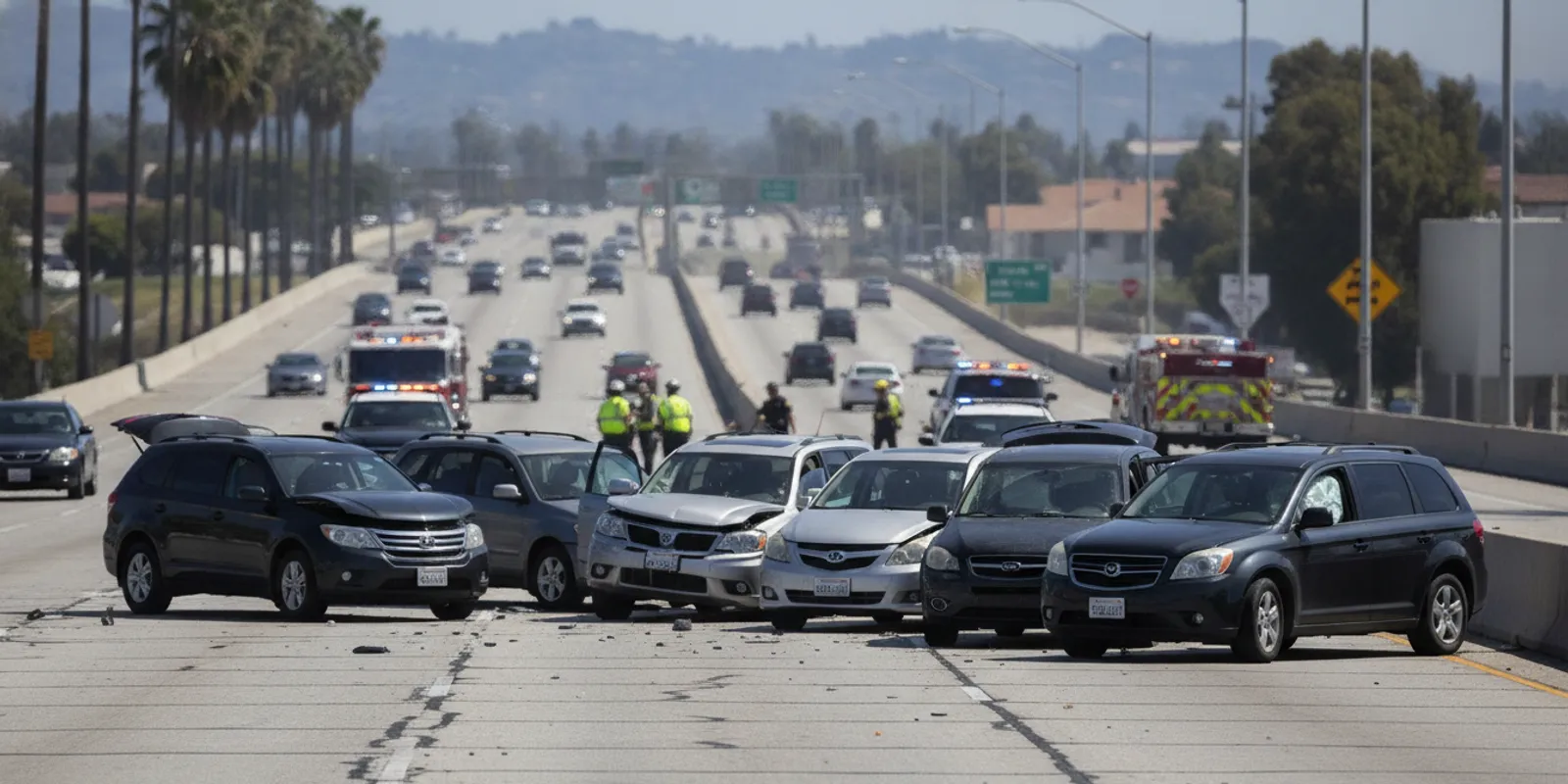
A multi-vehicle crash can leave you dealing with several drivers, insurers, and conflicting accounts at once. If you are looking for a multi vehicle accident lawyer California residents can turn to for guidance from a Glendale motor vehicle accident lawyer, start by understanding how fault may be evaluated, which records can help explain the sequence, and how to avoid rushing into statements or settlement decisions. The details of one collision can affect what you can recover and from whom.
Why can a multi-vehicle crash be harder to sort out?
In a two-car collision, the central question may be how each driver contributed. A chain-reaction crash can involve several impacts in a short time, and the sequence is not always clear to the people involved. One car may strike another, get pushed into a third, and then be struck again. Alternatively, a later driver may have had time to react but failed to avoid another impact. Each participant may recall only one part of the event.
The physical scene can make the story harder to reconstruct. Cars may be moved to clear traffic or reach a safer place. A driver who feels fine at first may leave before collecting every detail. Multiple vehicles can have damage from more than one contact point. Meanwhile, each insurer is likely to investigate the facts from its own policyholder's perspective. The first explanation you hear does not necessarily settle who was responsible.
It helps to separate three questions: what happened, who may have contributed to it, and what injuries or losses followed. Evidence that answers one question may not answer the others. For example, a photograph may show where a car stopped but not establish when each impact happened. Medical records can document treatment without identifying which driver caused the collision. Keeping those issues distinct can make your own notes and later conversations clearer.
How is fault considered when several drivers are involved?
California uses a comparative fault approach. In general, responsibility may be divided among parties according to their contributions to an incident. That means an investigation may consider the actions of more than one driver instead of treating a chain of cars as one unit. The outcome depends on the facts and evidence; a traffic citation, a vehicle's position, or the amount of visible damage does not automatically answer every civil liability question.
Consider a hypothetical collision in slow traffic. The first driver brakes for a hazard. A second driver following too closely hits that car, and the force pushes it forward. A third driver then strikes the second vehicle. Investigators may need to distinguish the initial contact from the later one and ask whether the third driver had time or space to avoid the impact. The drivers' speed, spacing, visibility, and movements before the crash may matter. This example is only illustrative, not a conclusion about any actual claim.
Another possibility is a lane-change collision followed by a series of impacts. A driver may say another car moved into the lane without warning, while a nearby driver may describe a different sequence. The evidence could include where the damage appears, the vehicles' final positions, witness observations, roadway markings, and any recording. A careful review asks how the pieces fit together rather than assuming that one person's account proves the entire chain.
Questions that may help organize the facts include:
- Which vehicles were stopped, moving, turning, or changing lanes immediately before the first impact?
- Which contact happened first, and where did each later impact occur?
- Did a vehicle move because another car struck it, or did its driver take a separate action?
- Were there hazards, traffic, weather, lighting, or road conditions that affected visibility or stopping distance?
- What did each person personally see, as distinct from what they heard afterward?
- Do photographs, damage locations, reports, witness accounts, or recordings support or contradict an account?
Fault is not always established at the roadside. Avoid treating an informal opinion as a final decision about a claim. The firm's personal injury information describes the relevant practice area, while a case review can consider the details and records available in a particular situation.
What should you do after a multi-car collision?
Safety and medical needs come first. Call emergency services when needed, move away from immediate danger if you can do so safely, and follow directions from responders. Do not step into traffic to take photographs or retrieve belongings. Seek medical evaluation for injuries or symptoms, including symptoms that appear later, and follow your provider's instructions. This article is general information, not medical or legal advice.
Once you are safe, think in terms of preserving facts rather than trying to solve the collision at the scene. A short, organized record can be more useful than a long account written from memory days later. These steps can help:
- Identify the people and vehicles. When it is safe, record names and contact details for drivers and witnesses, vehicle descriptions, and license plate numbers. Ask how to obtain the incident or police report. Do not enter a roadway or approach an unsafe vehicle to collect information.
- Capture the scene without taking risks. If safe, photograph the vehicles, their positions, visible damage, road markings, traffic controls, debris, and the general roadway. Include wide views as well as closer views. Keep the original files and note when and where they were taken.
- Make a private, factual timeline. Write down your direction of travel, approximate location, what you remember seeing and hearing, and the sequence as you experienced it. Mark uncertainties plainly. Separate personal observations from another person's account and avoid filling in gaps by guessing.
- Save the records that arrive later. Keep the report, medical paperwork, repair estimates, towing receipts, missed-work information, insurer letters, emails, and claim numbers together. Preserve relevant messages and original photographs rather than editing or deleting them.
- Keep communication accurate. Provide information required by authorities and your insurer, but do not speculate about details you do not know. If you cannot recall an exact speed or time, say so instead of offering a precise guess.
A practical way to organize the timeline is to make separate columns for time or sequence, what you personally observed, what someone else reported, and what record may help confirm it. For instance, write “I heard two impacts” in the observation column if that is what you recall, then note that a witness described three impacts separately. This does not decide which account is correct; it keeps sources from blending together as you review the information later.
For a broader explanation of settlement concepts, see the firm's guide to what a settlement is. The firm's overview of the legal process also describes general stages a legal matter may involve. These resources provide background, not advice about the facts of a specific collision.
What evidence may help explain the sequence?
Useful evidence does more than show that several cars were involved. It may help distinguish the initial collision from later impacts, show how the vehicles were positioned, or document the effects of an injury. You do not need to personally obtain every record. Some evidence may be held by another person, an insurer, a business, or a public agency, and access may require a request.
Photographs and vehicle damage
Scene photographs can show final positions, road features, visible damage, and conditions such as lighting or weather. If a vehicle has to be moved before a photograph can be taken, make a note of that and take pictures only when it is safe. Close-ups can show individual damage areas, while wider views can provide context about lanes, intersections, signs, or nearby vehicles. Keep unaltered originals when possible.
When a car needs repair, save the estimate, repair records, and any photographs taken before work begins. Damage may provide information to consider alongside other evidence, but it does not necessarily establish on its own the number or order of impacts. Avoid drawing a firm conclusion from a single image or a brief visual inspection.
Witnesses and recordings
Different witnesses may have seen different parts of the event. One person may have watched the first contact; another may have arrived after the cars stopped. Write down names and contact details when available, along with what each person says they observed. Do not coach a witness or ask them to adopt your version. A neutral note about who said what can help preserve the distinction between firsthand and secondhand information.
Nearby businesses, traffic systems, or vehicles may have cameras, but retention practices vary and a recording may not remain available indefinitely. If you know of a possible recording, note the location and approximate time. A prompt, clear request to preserve it may be appropriate. Do not assume that a camera captured the collision or that you can obtain footage immediately.
Reports and medical records
An official report may include driver and witness details, a diagram, or an officer's observations. It may not resolve every issue, and it can contain omissions or mistakes. Review it for basic accuracy, keep a copy, and note any item you believe needs clarification rather than treating the report as a complete reconstruction.
Medical records can document symptoms, evaluation, and treatment. Keep appointment information, instructions, bills, and receipts related to care. If symptoms change or new ones appear, tell your medical provider. Do not alter treatment or delay care because an insurance representative suggests a particular approach.
Organizing these materials can make a discussion about an accident claim more focused. The firm's Glendale car accident information offers another resource for readers considering injury-related questions.
How can several insurance policies affect a claim?
Several drivers can mean several policies and separate investigations. A driver's liability coverage may be relevant to a claim against that driver, while your own policy may provide benefits in some circumstances. Which coverage may apply depends on policy terms, limits, exclusions, and the facts. Do not assume that one insurer's decision resolves every possible claim or that a policy will cover every loss.
Notify your insurer as required by your policy and keep a record of each communication. Ask for the claim number and the name of the adjuster. After a call, note the date, the person you spoke with, the questions asked, and any next steps discussed. Save letters and emails in the same place as the records about the collision. This simple log can help you track different requests when several companies contact you.
An insurer may ask for a recorded statement, documents, or an authorization. Before agreeing, understand what is being requested and why, and consider getting advice if the scope is unclear. Be truthful and avoid speculation. Do not sign a release without understanding which claims it addresses and what effect it may have. If two insurers give different accounts of responsibility, record each position and the reasons they provide rather than treating either preliminary view as final.
Multiple claimants can also create questions about available policy limits. The existence of several potential claims does not by itself show how much coverage exists or how it will be allocated. Request clear information about the status of the investigation and any coverage position, and keep copies of the responses. If the process becomes confusing, an attorney can review the information and explain possible next steps. The firm's case review page provides a way to share information for an initial review.
What can complicate a multi-vehicle injury claim?
A chain collision can generate conflicting accounts, incomplete scene photographs, or uncertainty about which impact caused a particular injury or vehicle damage. Witnesses may leave before their details are recorded. A car may have been moved before anyone documented its position. Insurers may dispute the sequence, the actions of an individual driver, or whether an injury is related to the crash. Those questions can require review of several kinds of evidence together.
Medical care may continue while responsibility is investigated. An early settlement offer may not account for every relevant loss or for needs that are not yet clear. A settlement generally resolves the claims covered by a release, but the exact effect depends on the document. Read a proposed release carefully and ask questions before signing. Discuss medical decisions with your provider, not an insurer's preference.
Deadlines may apply to injury claims and other legal actions. The applicable time limit can depend on the parties and circumstances, and additional notice requirements may apply when a public entity is involved. Do not rely on a general article to calculate a deadline or assume that a particular time limit applies. Seek case-specific advice promptly if you may have a claim.
When may it help to talk with an attorney?
A legal consultation may be useful when you have injuries, several drivers or insurers are involved, accounts conflict, fault is disputed, or someone asks you to sign documents you do not understand. It may also help if you are unsure what evidence to preserve, how to respond to an insurer's questions, or how a proposed settlement would affect the claim.
You do not need to solve the collision before asking questions. Bring what you have: the report or report number, photographs, insurance details, medical paperwork, repair records, and a short timeline. If a document or detail is missing, note what you requested and from whom. An organized packet can help a conversation focus on the issues that remain uncertain rather than spending time reconstructing basic contacts and dates.
The Law Offices of Michelle Choe provides personal injury representation and offers free consultations, according to the firm's published information. A consultation does not guarantee a particular outcome. Readers can review the firm's Glendale personal injury information or request a conversation about the facts of a potential claim.
Frequently asked questions
Is the driver at the back always responsible?
No single rule can resolve every multi-car collision from vehicle order alone. A rear driver may have contributed by following too closely or failing to react, but the sequence, timing, road conditions, and actions of other drivers also matter. Each impact should be considered on its facts.
Can more than one driver share responsibility?
Yes. California's comparative fault approach allows responsibility to be considered among multiple parties according to their contributions. The available evidence and the circumstances of the crash matter. A person should not assume that every driver shares fault equally or that one driver's position in the chain decides the issue.
What if I felt fine at the scene but symptoms appeared later?
Seek medical evaluation for new or changing symptoms and follow your provider's guidance. Keep a record of when symptoms began and the care you receive. This practical step does not establish who caused the crash, but accurate medical documentation can help explain the timeline of your condition.
Should I accept an insurer's first offer?
Do not decide based only on the fact that an offer arrived quickly. Review what claims the offer and any release cover, whether the relevant facts and losses are understood, and whether medical care is continuing. Ask questions and consider case-specific legal advice before signing a release you do not understand.
What should I bring to a case review?
Bring the report or report number, driver and insurance details, photographs, medical and repair records, insurer correspondence, and a brief account of the sequence. If some items are unavailable, a list of what is missing and any requests you have made can still help explain what is known and what needs follow-up.
Take a careful next step
A multi-vehicle collision can take time to untangle, but a careful record of the scene, treatment, communications, and expenses can help preserve the facts. Avoid guessing about fault, keep copies of the documents you receive, and seek guidance when the number of parties or the insurance process makes your options unclear.