
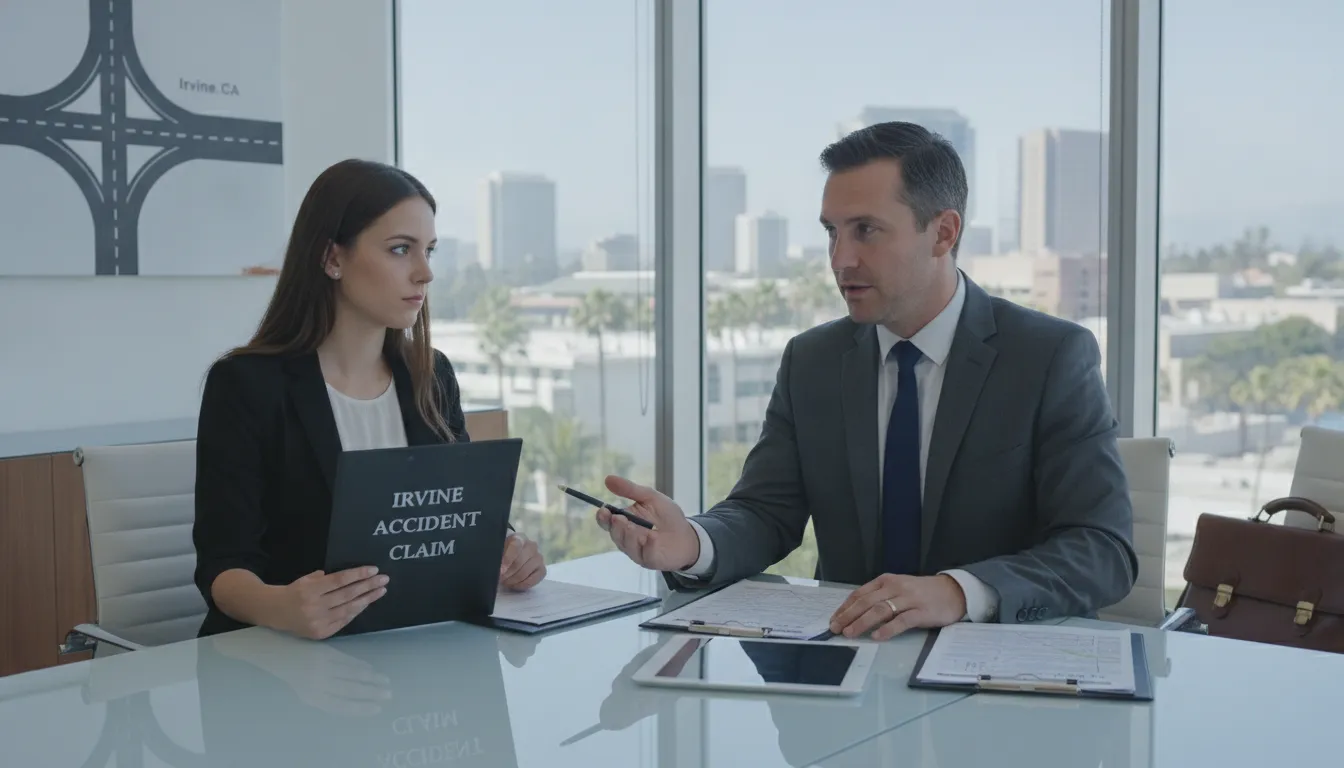
A collision may last only a few seconds, but its effects can continue for months or years. You may face medical treatment, missed work, vehicle damage, emotional distress, and uncertainty about your recovery. Insurance companies may focus on limiting what they pay, especially when fault is disputed or symptoms appear gradually. That makes careful documentation and timely legal advice important. California’s comparative fault rules, insurance requirements, and filing deadlines can all affect your claim. This guide breaks down what Irvine accident victims should know, from the scene of the crash through settlement negotiations or a lawsuit. An irvine car accident lawyer can help identify responsible parties and potential sources of compensation.
Key Takeaways
- Protect your health first: Move away from immediate danger, call 911 when necessary, seek medical care, and track symptoms even if they appear later.
- Preserve evidence and communicate carefully: Collect driver and witness details, photograph the crash, save records, notify your insurer, and avoid admitting fault or accepting a quick settlement.
- Seek legal guidance for complicated claims: Request a free case review when injuries are serious, fault is disputed, insurance is limited, multiple parties are involved, or you need Korean-language support.
What Should You Do After an Irvine Car Accident?
The moments after a collision can feel overwhelming, especially if you or a passenger may be injured. Start with safety and medical care. Once you are out of immediate danger, gather information, document the scene, and notify the appropriate parties. Avoid arguing with the other driver or making statements about who caused the crash.
California also requires drivers to report certain collisions to the Department of Motor Vehicles. If someone was injured or killed, or property damage exceeds $1,000, you generally must file an SR-1 Traffic Accident Report within 10 days. This requirement applies even if law enforcement responds, and the report is separate from notifying your insurance company. Missing the deadline can affect your driving privileges, so consider getting legal guidance if you are unsure whether the reporting requirement applies.
Your actions after an Irvine accident can affect your health, insurance claim, and ability to recover compensation. Use the following steps as a guide, but prioritize emergency care whenever necessary.
Call 911, check for danger, and request medical help
Check yourself, your passengers, and people in the other vehicle for injuries. If traffic or another hazard creates danger, move to a safer location if you can do so without worsening an injury. Turn on your hazard lights and, if possible, use warning devices to alert approaching drivers. Do not move someone who may have a spinal injury unless leaving them in place presents an immediate danger.
Call 911 and provide the exact location, the number of vehicles, visible injuries, and hazards such as leaking fuel, smoke, or blocked lanes. Ask for police and emergency medical assistance. Remain at the scene unless you need transportation for emergency treatment. When officers arrive, give a factual account without guessing about speed or fault. Ask how to obtain the collision report and record the report number before leaving.
Get medical care and document delayed symptoms
Some collision injuries do not appear immediately. Headaches, neck or back pain, dizziness, numbness, soreness, and changes in concentration can develop hours or days later. Adrenaline may temporarily hide symptoms, so do not dismiss discomfort simply because you initially feel fine.
Get medical attention from paramedics, an emergency department, urgent care provider, or your primary doctor, depending on your symptoms. Follow the recommended treatment plan and attend follow-up appointments. Keep copies of diagnoses, prescriptions, referrals, bills, and treatment notes. A symptom journal can also help. Record when symptoms began, how they affect work and daily activities, and whether they improve or worsen. Prompt, consistent care creates a medical record that may help connect your injuries to the crash. The California Department of Insurance also provides general information about auto insurance claims and accident-related coverage.
Exchange driver, insurance, vehicle, and witness details
Collect the other driver’s name, phone number, driver’s license information, insurance company, policy number, license plate, and vehicle make and model. If the driver is not the registered owner, ask for the owner’s name and contact information. Do not argue about the accident or agree to an informal payment at the scene.
Ask witnesses for their names and contact information. Note where each person was standing or driving and what they said they observed. If a rideshare, delivery, commercial, or company vehicle was involved, photograph the business name, vehicle number, and other identifying information. A driver may have insurance through both a personal policy and an employer or rideshare company. These details can help identify all potentially responsible parties and available coverage.
Photograph the scene, injuries, and vehicle damage
Take photographs and videos only when it is safe. Capture the vehicles from several angles, including close-ups of damage and wider images showing their positions in the roadway. Photograph skid marks, debris, traffic signals, lane markings, signs, lighting, weather, and road conditions. A broader view of the intersection may show details that close-up images miss.
Photograph visible injuries as they develop, while protecting your privacy. Preserve repair estimates, towing invoices, rental-car receipts, and records of damaged personal property. Do not repair or discard damaged parts before documenting them, unless leaving them in place creates a safety problem. Keep original files when possible and back them up in a secure location. Images, videos, and receipts can support your account of how the collision occurred and the losses that followed.
Report the crash and preserve police, medical, and repair records
Ask the responding agency how to obtain the police report, and write down its report number. Review the report once it becomes available. If it includes a significant factual error, ask the agency about submitting a correction or supplemental statement. Keep the original report and do not alter it yourself.
Create a dedicated file for every accident-related document. Include the police report, medical records, bills, appointment notes, prescription receipts, wage-loss information, repair estimates, towing invoices, photographs, witness details, and insurance correspondence. Keep a timeline with the crash date, symptoms, treatment, calls, expenses, and missed work. Organized records make it easier for your attorney to evaluate the claim and identify gaps that need attention. The California DMV accident-reporting guidance can help you confirm which forms and deadlines may apply.
Notify your insurer without admitting fault
Notify your insurance company promptly and provide basic facts, including the date, location, vehicles involved, and whether anyone was injured. Your policy may require timely notice even if another driver caused the crash. Ask which benefits may apply, such as medical payments, collision coverage, rental reimbursement, or uninsured and underinsured motorist coverage.
Keep your report accurate and concise. Describe what you observed, but do not guess about speed, distance, or the other driver’s intentions. Avoid statements such as “I caused the accident” or “I am not seriously hurt,” because fault and injury severity may not be clear immediately. If an adjuster requests a detailed interview, medical authorization, or other documents you do not understand, speak with an Irvine car accident lawyer before responding. Do not hide facts, but make sure your answers are complete and accurate.
Avoid recorded statements, social media posts, and quick settlements
An adjuster may ask for a recorded statement soon after the crash. You may need to provide notice and basic information, but you do not have to guess or speculate about disputed details. Before giving a recorded interview, signing a broad medical authorization, or accepting a settlement, consider reviewing the request with an attorney.
Avoid posting photographs, comments, videos, or recovery updates on social media. Even an innocent statement can be taken out of context and used to question your injuries or version of events. Be cautious with early settlement offers as well. An initial payment may not account for future treatment, lost income, permanent limitations, or symptoms that have not yet appeared. A settlement usually requires you to sign a release, which can prevent you from seeking additional compensation for the same collision. A free case review with the Law Offices of Michelle Choe can help you understand your options before you make an important decision.
When Should You Hire an Irvine Car Accident Lawyer?
Not every collision requires an attorney. A minor crash with clear fault, limited property damage, and no injuries may be resolved through a standard insurance claim. However, speaking with an Irvine car accident lawyer can be wise when your injuries are serious, fault is disputed, or more than one person or company may be responsible.
A consultation can help you understand your legal options before you give a recorded statement, accept a settlement, or miss an important deadline. It can also clarify whether the insurance company has evaluated your claim fairly. You may still resolve the matter through negotiation, and hiring a lawyer does not automatically mean filing a lawsuit.
When choosing whether to seek representation, consider the circumstances below. If you are unsure, gather your records and request a case review. Early legal guidance may help protect evidence and prevent decisions that limit your recovery.
Serious, permanent, delayed, or fatal injuries
Consider hiring a lawyer if the crash caused hospitalization, surgery, broken bones, a traumatic brain injury, spinal damage, internal injuries, or a condition that may require continuing care. Serious injuries can involve future medical treatment, rehabilitation, lost earning capacity, and permanent changes to your daily life. These losses are difficult to calculate before your doctors understand your prognosis.
Some symptoms appear hours or days after a collision. Neck pain, headaches, dizziness, numbness, memory problems, and emotional distress deserve prompt medical attention. Follow your treatment plan and keep records of appointments, diagnoses, prescriptions, and recommendations.
If a loved one died in the crash, surviving family members may have a wrongful death claim. California Courts explains the general rules and damages associated with wrongful death claims. An attorney can review the circumstances and explain which family members may bring a claim.
Disputed fault, comparative negligence, or multiple vehicles
Insurance companies may argue that you caused the collision, contributed to your injuries, or failed to take reasonable steps to recover. Multiple-vehicle crashes can make fault especially difficult to establish because each driver may provide a different account. Evidence can include the police report, photographs, traffic-camera footage, witness statements, vehicle damage, phone records, and accident reconstruction.
California uses a pure comparative negligence rule. You may recover damages even if you share responsibility, but your compensation can be reduced by your percentage of fault. For example, a $100,000 recovery could be reduced to $70,000 if you are found 30% responsible.
A lawyer can examine the evidence independently and challenge an unsupported fault assessment. This can be particularly important when an insurer relies on an incomplete police report or assigns you responsibility without fully investigating the crash.
Denied claims, low offers, or insurer pressure
Legal advice may be helpful when an insurer denies your claim, delays payment, requests a recorded statement, or sends a settlement offer that does not cover your losses. Adjusters represent the insurance company’s interests, even when they appear cooperative. A statement made before your injuries are fully understood could later be used to question the severity or cause of your condition.
An attorney can communicate with the insurer, collect medical and employment records, calculate your losses, and prepare a demand supported by evidence. Before accepting an offer, ask whether it includes future treatment, lost income, permanent limitations, vehicle damage, and outstanding medical liens.
Do not assume an early settlement is the best settlement. Once you sign a release, you generally give up the right to seek additional compensation for the same collision. A free consultation can help you evaluate a settlement offer before you accept it.
Hit-and-run, uninsured, underinsured, rideshare, or commercial crashes
These claims may involve more than a routine demand against one insured driver. In a hit-and-run, law enforcement and an attorney may need to identify the vehicle and determine whether your uninsured motorist coverage applies. If the at-fault driver has no insurance or insufficient coverage, your own policy may provide another potential source of compensation.
Rideshare and commercial vehicle claims can also involve multiple insurance policies. Coverage may depend on whether a rideshare driver was logged into the app, waiting for a request, traveling to a passenger, or carrying a passenger. A delivery driver’s employer, vehicle owner, or commercial insurer may also be involved.
Do not assume that limited insurance ends your claim. The California Department of Insurance explains uninsured motorist coverage, but policy language and crash circumstances determine how coverage applies. A lawyer can identify potential policies and preserve records before they disappear.
Employer, manufacturer, roadway, or public-entity involvement
A driver may not be the only potentially responsible party. An employer could share liability if an employee caused the crash while performing work duties. A vehicle manufacturer or repair facility may be involved if a defective tire, faulty brake, poor repair, or other mechanical problem contributed to the collision.
Roadway conditions can also matter. Missing signs, defective signals, poor lighting, unsafe construction zones, or dangerous road design may support a claim against a contractor or public entity. These cases often require maintenance records, inspection reports, photographs, engineering evidence, and other information that an individual claimant may have difficulty obtaining.
Claims against government entities follow special procedures and deadlines. California’s Government Claims Act requirements should be reviewed promptly. The deadline may be as short as six months for presenting an administrative claim, depending on the circumstances.
Work crashes involving workers’ compensation and third-party claims
If you were driving for work, traveling between job locations, or performing an assigned task when the collision occurred, you may have a workers’ compensation claim. Workers’ compensation may cover approved medical treatment and part of your lost wages, subject to California requirements. Report the injury to your employer promptly and follow the claims process.
You may also have a separate personal injury claim against a negligent driver, vehicle owner, manufacturer, or other third party. That claim may allow you to seek damages that workers’ compensation does not fully provide, including compensation for pain and suffering.
The two claims can affect each other. A workers’ compensation insurer may assert a right to reimbursement from a third-party settlement, and medical providers may have liens. Before signing a release or settling either claim, discuss how the resolution could affect your other benefits. The California Department of Industrial Relations describes workers’ compensation benefits and the general claims process.
Hiring a lawyer does not automatically mean filing a lawsuit
An initial consultation does not commit you to filing a lawsuit. Many car accident claims are resolved through insurance negotiations, mediation, or settlement. A lawyer can start by reviewing the evidence, communicating with the adjuster, and preparing a demand that explains your injuries, expenses, and other losses.
You remain involved in major decisions, including whether to accept an offer or file a lawsuit. If negotiations fail, litigation may become necessary, but it is not the automatic result of seeking legal advice. Your attorney should explain the advantages, risks, costs, and deadlines before recommending that step.
If a lawsuit is filed, the process may involve serving the defendant, exchanging evidence during discovery, attending depositions, participating in mediation, and preparing for trial. The California Courts civil lawsuit guide outlines these general stages. Ask your attorney how often similar cases settle and what would happen if yours proceeds to court.
Use a free consultation to clarify your options
A free case review can help you decide whether representation makes sense. Bring the collision report, photographs, videos, medical records, bills, repair estimates, witness information, insurance correspondence, and a basic timeline. Include information about missed work, prior injuries, treatment before the crash, and anything you told an adjuster.
Ask the lawyer about potential sources of liability, applicable deadlines, available insurance, the likely case strategy, attorney fees, case expenses, and settlement authority. You should also ask who will manage your claim, how often you will receive updates, and whether Korean-language support is available if that would make communication easier.
You do not need to have every document before requesting help. The Law Offices of Michelle Choe provides free case review consultations and personalized representation for personal injury clients in Glendale, Irvine, and throughout Southern California. You can request a free consultation to discuss your options before responding to an insurer or signing a settlement agreement.
How Do You Choose the Right Irvine Car Accident Lawyer?
Choosing an Irvine car accident lawyer is about more than finding someone who handles injury claims. You need an attorney who understands California law, knows how insurance companies assess claims, and has the resources to investigate the crash. Your lawyer should also explain your options clearly, involve you in major decisions, and give you realistic expectations.
Use a free consultation to compare attorneys before signing a representation agreement. Describe what happened, ask about possible sources of compensation, and learn how the firm handles communication and case expenses. You can also review an attorney’s license status and public disciplinary records through the California State Bar attorney search.
Pay attention to how the attorney treats you during the consultation. A lawyer who listens carefully, answers questions directly, and discusses both strengths and challenges may be better suited to guide your claim than someone who makes quick promises. The following factors can help you identify the right fit.
Choose a personal injury attorney with California experience
California car accident claims involve state-specific rules concerning negligence, comparative fault, insurance coverage, and legal deadlines. An attorney who regularly handles California personal injury cases will know how these rules may apply to your injuries, financial losses, and available insurance coverage.
Ask how often the lawyer represents people injured in motor vehicle crashes. Experience with medical records, accident investigations, settlement demands, and litigation can help your attorney identify gaps in the evidence and address disputes with the insurer.
Experience does not mean your case must go to trial. It means the lawyer can assess the facts, explain potential problems, and recommend a strategy based on your circumstances. Look for an attorney who works with you and keeps you informed about significant developments. This collaborative approach is consistent with the client-centered guidance discussed by Howinsights.
Verify the attorney’s State Bar license and discipline history
Before hiring a California attorney, confirm that the lawyer is licensed to practice in the state. The State Bar profile can show whether the attorney is active and may include public information about discipline or other licensing matters.
Make sure the name on the profile matches the person you meet. Ask who will handle your claim, whether another attorney will supervise the case, and whether paralegals or case managers will be your primary contacts.
A license check is only one part of your decision, but it is an important first step. Be cautious if someone avoids questions about credentials, pressures you to sign immediately, or guarantees a particular settlement. A trustworthy lawyer should give you time to review the representation agreement and understand your rights before moving forward.
Confirm Irvine, Orange County, and local court experience
An attorney familiar with Irvine and Orange County may understand practical details that affect your claim, including nearby court procedures, local medical providers, common crash locations, and available sources of evidence. Ask whether the lawyer has handled cases in the courts that could hear your lawsuit.
The Orange County Superior Court website provides information about local court locations and civil case resources. Although a court website cannot tell you which attorney to hire, it can help you understand where a lawsuit might proceed.
Ask the attorney how the crash location could affect the investigation. Important details may include traffic-camera footage, nearby businesses, witnesses, road design, and whether another government agency or public entity may be involved. Local familiarity should support careful case preparation, not replace it.
Look for insurance negotiation and trial experience
Most car accident claims resolve through settlement negotiations, but your lawyer should be prepared to file a lawsuit if an insurer refuses to make a fair offer. Ask how the attorney handles disputed fault, delayed responses, recorded statements, low settlement offers, and claims involving multiple insurers.
Trial experience can strengthen negotiations because the attorney understands how evidence must be presented in court. It may also help the lawyer identify weaknesses in an insurer’s position and explain the risks of accepting an early offer. The California Courts self-help resources explain that civil cases can involve formal procedures and deadlines.
Ask how often the attorney takes personal injury cases to trial and whether the lawyer you meet will handle negotiations personally. Your attorney can provide advice, but you generally decide whether to accept or reject a settlement.
Ask about investigators, reconstruction, and medical experts
Some claims require more investigation than photographs and an insurance report. Depending on the crash, your lawyer may need to interview witnesses, request surveillance footage, inspect vehicles, review phone records, or consult an accident reconstruction professional.
Medical experts can explain the seriousness of your injuries, the treatment you may need in the future, and how your condition affects work and daily activities. In more serious cases, a life-care planner or vocational expert may help document long-term needs and financial losses.
Ask whether the firm works with qualified investigators and experts when necessary. You should also ask how those expenses are handled. The attorney should explain why a particular expert may help, who pays the cost initially, and whether expenses are deducted from a settlement or award.
Review testimonials, referrals, and verifiable results
Testimonials can offer useful information about an attorney’s communication, responsiveness, and professionalism. Look for reviews that describe the client experience, not only the amount recovered. Referrals from people you trust, medical providers, or community organizations may also help you create a list of attorneys to interview.
Review case results carefully. A settlement or verdict depends on factors such as injury severity, liability, available insurance, medical treatment, and the evidence supporting the claim. One large recovery does not predict the value or outcome of your case.
Ask whether a published result was a settlement or trial verdict and what circumstances contributed to it. The attorney should protect client confidentiality while giving you a clear explanation. Be wary of guaranteed outcomes. A responsible lawyer will discuss possible strengths, risks, and next steps instead of promising a specific recovery.
Consider communication, availability, and Korean-language support
Ask how you will contact the firm, how quickly you can expect a response, and who will provide routine updates. You should know whether you will speak directly with the attorney, a paralegal, or another team member. Consistent communication can make it easier to respond to insurer requests, track medical treatment, and make settlement decisions.
For Korean-speaking clients and families, language access can help clarify legal terms, deadlines, and settlement conditions. Ask whether the firm offers Korean-language support or works with a qualified interpreter for important conversations and written documents. Do not rely on a family member, especially a child, to interpret complex legal information.
The Law Offices of Michelle Choe provides personalized legal guidance and focuses on educating and supporting Korean immigrants and the broader Korean community in California. Its resources for Korean immigrants can help clients prepare questions about language, culture, and California legal procedures.
Ask questions that reveal the right fit
Bring questions to your consultation so you can compare attorneys consistently. Consider asking:
- What deadlines may apply to my claim?
- Who may be responsible for the crash?
- What evidence should I preserve?
- What compensation may be available?
- How will you communicate with me?
- Who will manage my case day to day?
- How do your contingency fees and case expenses work?
- What challenges do you see in my claim?
- What happens if the insurer denies responsibility?
- Would you recommend settlement, mediation, or litigation?
Pay attention to the answers and the attorney’s approach. The right fit is not necessarily the person who speaks with the most confidence. It is someone who listens, explains risks in plain language, and gives you enough information to make informed decisions.
During a free case review, describe the crash honestly, including facts that may seem unfavorable. Complete information helps the lawyer evaluate liability, deadlines, insurance coverage, and potential damages more accurately.
What Does an Irvine Car Accident Lawyer Cost?
The cost of an Irvine car accident lawyer depends on the firm’s fee structure, the complexity of your claim, and whether the case settles or goes to trial. Many personal injury attorneys work on a contingency fee basis, which means you typically do not pay an hourly rate or upfront retainer. Instead, the attorney receives an agreed percentage of the compensation recovered for you.
Before hiring a lawyer, ask how the fee is calculated and what other deductions may apply. Medical liens, expert evaluations, court filing fees, investigation expenses, and record charges can affect your final recovery. Your written agreement should explain these costs in clear language.
A free consultation can help you understand your options before you commit to representation. The California State Bar’s information about fee disputes also provides general guidance for clients who have questions about attorney fees and billing arrangements.
Understand contingency fees and no-fee-unless-we-win arrangements
With a contingency fee, your attorney’s payment depends on recovering money through a settlement, verdict, or another resolution. This arrangement allows injured people to seek legal help without paying an hourly fee while the claim is pending. The exact percentage should appear in the written fee agreement.
“No fee unless we win” can have different meanings, so ask the lawyer to explain the phrase. Find out whether you could still owe case expenses if no compensation is recovered. Clarify what happens if the insurer makes an offer, you reject a settlement, the case goes to trial, or the attorney withdraws. A clear explanation at the beginning can prevent financial surprises later.
Review fee percentages and settlement deductions
Some contingency agreements use different percentages depending on when the case resolves. For example, the fee may be lower if the claim settles before a lawsuit and higher if litigation, depositions, trial preparation, or an appeal becomes necessary. These terms should be explained before you sign.
Ask whether the percentage applies to the gross settlement or the amount left after case expenses. Medical bills, health insurance reimbursements, medical liens, and attorney fees may all affect your share. Request a sample settlement statement that shows each deduction. This helps you compare agreements based on the amount you may actually receive, rather than focusing only on the advertised percentage.
Clarify case expenses, expert fees, liens, and filing costs
Attorney fees are not always the only costs connected to a personal injury claim. Depending on the circumstances, your case may involve charges for medical records, police reports, investigators, accident reconstruction, medical experts, court filing, service of legal documents, depositions, or trial exhibits.
Ask whether the law firm advances these expenses and when they are deducted. You should also discuss medical liens and reimbursement claims. A health insurer, medical provider, workers’ compensation carrier, or government program may seek repayment from your settlement. Your attorney may negotiate those balances, but the fee agreement should explain whether that service is included. Understanding the personal injury claims process can help you prepare better questions about your potential recovery.
Ask who pays expenses if the case fails
Ask directly what happens to case expenses if your claim does not result in a settlement or verdict. Some firms agree to advance expenses and absorb them if the case is unsuccessful. Other agreements may require the client to repay certain costs, even when no compensation is recovered.
Request a written explanation that addresses expert fees, filing charges, medical record costs, investigation expenses, and other common payments. Also ask whether you must approve major expenses before the firm incurs them. You should remain informed about important financial decisions throughout the claim. Knowing your responsibilities in advance can help you decide whether a proposed fee arrangement is suitable for your situation.
Review written fee and cancellation terms
California law requires many contingency fee agreements to be written and signed. The agreement should state the fee percentage, explain how expenses are handled, and describe how the final recovery will be distributed. You can review California Business and Professions Code section 6147 for additional information about contingency fee contracts.
Read the agreement before signing, and ask for a plain-language explanation of anything unclear. Review the cancellation terms as well. Ask whether you can end the relationship, whether another lawyer could seek payment for work already completed, and how your case file will be transferred. You should have time to consider the terms without pressure.
Compare value, communication, and resources, not just price
The lowest contingency percentage may not result in the lowest overall cost. A lawyer who investigates the collision, identifies all available insurance coverage, documents your long-term injuries, and negotiates medical liens may help protect a larger net recovery. Access to investigators, accident reconstruction professionals, and medical experts can also matter when fault or damages are disputed.
Ask who will manage your claim day to day and how often the firm provides updates. Find out whether you will speak directly with the attorney when important decisions arise. Experience with Irvine and Orange County claims, effective insurance negotiations, and careful communication are all worth considering. The Law Offices of Michelle Choe provides personalized legal guidance for Southern California clients seeking help after an accident.
Use a free review to clarify your financial options
A free case review can help you determine whether a lawyer handles your type of claim, which fee arrangement may apply, and what expenses could affect your recovery. Bring your insurance information, medical records, accident photographs, police report, wage-loss documents, and any settlement offer you have received.
Use the meeting to ask practical questions: What percentage will the firm charge? Who pays case expenses? Are medical liens negotiated? What happens if the claim fails? Who will communicate with you about the case? The Law Offices of Michelle Choe offers free case review consultations for people seeking personalized guidance in Southern California. A consultation does not require you to hire the firm, and it can help you make a more informed decision about your next step.
What Compensation Can You Seek After an Irvine Car Accident?
The compensation available after an Irvine car accident depends on your injuries, financial losses, fault, insurance coverage, and the evidence supporting your claim. California personal injury damages may include economic losses, such as medical bills and lost income, as well as non-economic losses, such as pain and emotional distress. The value of a claim cannot be determined from the collision alone. It requires a review of your treatment, prognosis, work history, property damage, and available insurance.
An insurer’s first settlement offer may not account for future care or the full effect an injury has on your daily life. Before accepting payment or signing a release, consider having an Irvine car accident lawyer review your circumstances and potential sources of compensation.
Recover medical bills, rehabilitation, and future treatment costs
You may seek compensation for reasonable medical care caused by the crash. This may include ambulance transportation, emergency treatment, hospital care, diagnostic imaging, medication, surgery, physical therapy, chiropractic care, and follow-up appointments. Keep every bill, explanation of benefits, prescription receipt, and mileage record related to treatment.
Your claim may also include anticipated care, such as future surgery, rehabilitation, counseling, assistive equipment, or pain management. A doctor’s prognosis can help show what care you may need and why. Some injuries develop gradually, so do not assume that feeling better means treatment is complete. Settling before your condition is fully understood could leave you responsible for future expenses. A complete medical record can help establish both the care you have already received and the treatment you may need later.
Claim lost wages, reduced earning capacity, and other financial losses
If your injuries caused you to miss work, you may seek lost wages from medical appointments, hospitalization, and recovery. Helpful records may include pay stubs, tax returns, employer statements, work schedules, and documentation of missed shifts. Self-employed individuals may use invoices, business records, contracts, and prior earnings to show how the accident affected their income.
A serious injury may also reduce your future earning capacity. This can happen if you cannot return to the same position, must work fewer hours, lose career opportunities, or accept lower-paying work. Vocational and financial professionals may help measure these losses. You may also claim related expenses, such as transportation, household assistance, or in-home care. Keep receipts and note who provided assistance, how often, and why it was necessary.
Seek vehicle repairs, total-loss value, rental costs, and property damage
A property damage claim may cover reasonable repairs to your vehicle and personal belongings damaged in the collision. Photograph the vehicle and its contents before repairs begin, obtain written estimates, and save invoices for completed work. If your car is unsafe or unavailable, you may also seek reasonable rental car or alternative transportation expenses.
When repair costs approach or exceed the vehicle’s value, the insurer may classify it as a total loss. Compensation generally focuses on the car’s actual cash value immediately before the crash, not necessarily the price of a newer replacement. Review the valuation carefully. Maintenance records, comparable vehicle listings, optional equipment, and recent upgrades may help challenge an inaccurate figure. Do not authorize salvage or dispose of the vehicle before documenting its condition and discussing the process with the insurer.
Seek compensation for pain, suffering, distress, and lost enjoyment
Economic losses do not tell the full story of an accident. California law may allow recovery for physical pain, emotional distress, inconvenience, anxiety, sleep problems, and the loss of activities you once enjoyed. These damages are not based on one invoice. The seriousness of the injury, recovery period, treatment required, and effect on your daily life may all matter.
Keep a straightforward record of symptoms and limitations. Note how pain affects sleep, exercise, parenting, social activities, and ordinary routines. Family members, friends, and treating providers may also describe changes that medical bills cannot show. Be honest and consistent in your account. Avoid exaggeration, but do not minimize symptoms simply because they are difficult to measure. Your personal records can help explain how the injury affects you between appointments.
Claim permanent disability, disfigurement, and long-term limitations
Some crash injuries cause lasting physical limitations, scarring, nerve damage, reduced mobility, or disfigurement. If an injury affects your ability to walk, lift, drive, work, or care for yourself, those effects may support compensation beyond immediate treatment costs. Permanent limitations can also increase future medical needs and reduce your ability to earn income.
Medical opinions are important in these cases. A provider may explain whether your condition is expected to improve, remain stable, or require continuing care. Photographs, functional evaluations, employment records, and statements from people who see your daily challenges can provide additional support. Because permanent injuries may involve substantial future losses, avoid evaluating a claim only by reviewing bills already received. A lawyer may consult medical, vocational, or financial professionals to assess the long-term effect of your injuries.
Pursue loss of consortium and other family claims
A spouse may have a separate claim for loss of consortium when an injured person’s condition substantially affects the marital relationship. This may involve lost companionship, affection, household support, or intimacy. The claim is connected to the injury and may depend on its severity, duration, and effect on the marriage.
Family members may also experience practical and financial losses when someone is seriously hurt. Relatives might provide unpaid care or take time away from work to help with daily needs. Whether those losses are recoverable, and who may bring a claim, depends on the circumstances and California law. Discuss family-related damages during a free case review before assuming they are automatically included in the injured person’s claim. Separate claims can have different requirements, evidence, and deadlines.
Seek wrongful death damages for surviving family members
When a car accident causes a death, eligible surviving family members may pursue a wrongful death claim. Potential damages can include funeral and burial expenses, income and financial support the deceased would have provided, household services, and the loss of companionship, guidance, care, and protection. California’s wrongful death statute identifies eligible claimants and categories of damages.
Wrongful death cases require careful attention to eligibility, evidence, insurance coverage, and filing deadlines. Family members should preserve employment records, financial documents, medical information, funeral invoices, and photographs or messages that help show the relationship. Because family members may have different rights, do not assume one person can make decisions for everyone. Legal guidance can help the family understand available claims while avoiding rushed decisions during a difficult period.
Seek punitive damages for especially reckless or malicious conduct
Punitive damages differ from compensation for medical bills, lost income, or pain. They are intended to punish conduct that goes beyond ordinary carelessness and discourage similar behavior. Under California Civil Code section 3294, a claimant generally must show oppression, fraud, or malice by clear and convincing evidence.
Most car accident claims involve negligence, not conduct that satisfies this demanding standard. Punitive damages may be considered when evidence suggests especially egregious behavior, such as intentional misconduct or conscious disregard for other people’s safety. A serious injury alone does not establish entitlement to punitive damages. The claim requires evidence about what the driver knew, what the driver did, and whether the conduct showed a conscious disregard for the safety of others. Insurance coverage may also present separate issues.
Account for insurance limits, liens, and non-economic damage restrictions
The amount you can collect may depend on available insurance, not just the seriousness of your injuries. The at-fault driver may have limited liability coverage, while your own uninsured or underinsured motorist policy could provide another source of recovery. Review your policy and preserve all declarations pages, notices, and correspondence.
Medical providers, health insurers, workers’ compensation carriers, or government benefit programs may assert liens or reimbursement rights against a settlement. These claims should be identified and resolved before distributing funds. California law also places special limits on certain damages in specific situations. For example, California Civil Code section 3333.4, often associated with Proposition 213, can restrict certain non-economic damages for uninsured drivers under specified circumstances. The result depends on the facts, so seek legal advice before accepting a settlement.
Gather evidence that supports your injury claim’s full value
Strong evidence connects the crash to your injuries and shows how those injuries affected your finances and daily life. Gather the collision report, photographs of the scene and vehicles, witness contact information, medical records, bills, prescriptions, wage documents, repair estimates, and insurer communications. Keep a timeline showing when symptoms began, which providers you visited, and how treatment changed your routine.
Follow medical instructions and attend appointments when possible. Tell providers about all accident-related symptoms, including emotional effects, rather than minimizing them. Do not discuss fault publicly or post content that could be misinterpreted by an insurer. If an adjuster requests a recorded statement or broad medical authorization, consider speaking with an attorney first. The California Department of Insurance’s auto insurance guide explains general coverage issues, but it does not determine the value of an individual injury claim.
What Legal Options Do Irvine Car Accident Victims Have?
An Irvine car accident may create more than one potential source of compensation. The responsible parties could include another driver, a rideshare company, an employer, a vehicle manufacturer, a repair shop, or a public agency responsible for roadway maintenance. Your legal options depend on how the collision happened, who contributed to it, the severity of your injuries, and the insurance policies involved.
California law allows injured people to pursue compensation based on the facts of their case, regardless of immigration status. However, immigration status does not extend legal deadlines or replace the need for evidence. If you are unsure which claims may apply, a personal injury attorney can review the collision, identify potentially responsible parties, and explain your choices during a free case review.
File a claim against the at-fault driver
When another driver causes an Irvine collision through careless, reckless, or unlawful conduct, you may file a liability claim with that driver’s insurance company. Common examples include speeding, following too closely, running a red light, failing to yield, driving under the influence, and distracted driving. A claim may seek compensation for medical care, lost income, vehicle damage, pain, and other losses connected to the crash.
Insurance companies may ask questions, request medical records, or make an early settlement offer before the full effect of your injuries becomes clear. Avoid giving a recorded statement or accepting an offer without understanding your rights. An attorney can manage communications, collect evidence, and assess the claim based on your injuries and financial losses. California accident guidance for immigrants explains that an injured person’s immigration status does not automatically prevent a claim.
Pursue uninsured and underinsured motorist coverage
If the at-fault driver has no insurance or does not carry enough coverage to pay for your losses, your uninsured or underinsured motorist policy may provide another source of compensation. This coverage may also apply after a hit-and-run, depending on the policy terms and the evidence available. Promptly notify your insurer and review any requirements involving police reports, medical care, and written notice.
Your insurance company still has a financial interest in limiting the amount it pays. It may question fault, the seriousness of your injuries, or whether your treatment is related to the crash. Gather your policy declarations, correspondence, medical records, and bills before discussing settlement. California accident rights for undocumented individuals also explain that people may seek compensation based on the facts of the collision, regardless of immigration status.
File rideshare, employer, or commercial vehicle claims
A collision involving Uber, Lyft, a delivery van, a taxi, a truck, or another company vehicle may involve commercial insurance in addition to the driver’s personal policy. Coverage can depend on whether a rideshare driver was offline, waiting for a request, traveling to pick up a passenger, or transporting a customer. The available policy can change at each stage of the trip.
An employer may also share responsibility when a worker was acting within the scope of employment. Important evidence can include app records, dispatch information, employment documents, vehicle ownership records, and insurance policies. Do not assume the driver’s personal insurer is the only possible source of compensation. A lawyer can identify the relevant parties and communicate with their insurers, a core part of an accident attorney’s role as explained in this guide to insurance negotiations.
Pursue vehicle defect, maintenance, or manufacturer claims
Some collisions result from a defective vehicle part or inadequate maintenance rather than driver error alone. Possible issues include brake failure, defective tires, steering problems, airbag failures, and other safety defects. Depending on the evidence, a claim may involve the vehicle manufacturer, parts manufacturer, dealership, repair shop, fleet owner, or maintenance contractor.
Preserve the vehicle in its post-crash condition whenever possible. Avoid authorizing extensive repairs, disposing of damaged parts, or allowing an inspection without understanding how it could affect the evidence. Repair invoices, recall notices, inspection records, event data recorder information, and expert analysis may help establish what failed and why. Because these claims often require technical investigation, notify your attorney before repairs or disposal.
File dangerous roadway and public-entity claims
A government agency or public entity may be responsible when a dangerous roadway condition contributes to a crash. Potential hazards include inadequate signs, defective traffic signals, unsafe road design, poor lighting, or a failure to repair a known dangerous condition. A government-owned vehicle may also create a claim involving a public entity.
These cases follow different procedures from ordinary claims against private drivers. California generally requires a person to submit an administrative claim within six months for many injury claims against a public entity, although exceptions may apply. The deadline can depend on the agency and the type of loss. Gather photographs, witness information, roadway reports, and medical records promptly. Speak with a lawyer as soon as possible because missing the government claim deadline may prevent recovery.
Combine workers’ compensation with third-party recovery
If you were driving for work, traveling between job sites, making deliveries, or performing another work-related task when the crash occurred, you may qualify for workers’ compensation benefits. Workers’ compensation can help cover reasonable medical treatment and part of your lost wages, even when another driver caused the collision.
Workers’ compensation may not be your only legal option. You could also have a third-party personal injury claim against the negligent driver, vehicle owner, manufacturer, or another responsible party. These claims serve different purposes, and the workers’ compensation insurer may seek reimbursement from a later settlement. Tell each insurer about the other claim, keep copies of all communications, and review any lien or repayment demand before resolving the case. Coordinated advice can help prevent one claim from harming the other.
Negotiate a settlement, attend mediation, and review releases
Many car accident claims resolve through negotiation instead of trial. Your lawyer may prepare a demand package describing liability, medical treatment, lost income, property damage, and the effect of your injuries. The insurer may accept the demand, make a counteroffer, or request additional information. Mediation provides another structured setting where both sides work with a neutral mediator.
Do not sign a release until you understand every right you are giving up. A settlement release may prevent you from seeking additional compensation for future treatment, worsening symptoms, or related losses. Confirm the gross settlement, attorney fees, case expenses, medical liens, insurance payments, and the amount you will actually receive. Hiring a lawyer does not automatically mean filing a lawsuit or delaying payment, as explained in this discussion of accident-lawyer misconceptions.
File a lawsuit, complete discovery, and prepare for trial
If an insurer denies your claim or refuses to make a fair offer, filing a personal injury lawsuit may be appropriate. The complaint begins the case, but it does not guarantee that the dispute will reach trial. Many cases resolve during discovery, motion practice, mediation, or continued settlement negotiations.
During discovery, the parties exchange evidence and information. You may answer written questions, provide documents, give a deposition, or attend a medical evaluation. Your attorney may consult accident reconstruction specialists, doctors, economists, and other experts. Litigation involves expenses and responsibilities, but many personal injury attorneys work on a contingency-fee basis, meaning they receive a fee only if they recover compensation. Read the written fee agreement carefully and ask who pays case expenses if the claim does not succeed.
Prove negligence, causation, damages, and available coverage
A negligence claim generally requires evidence that another party owed you a duty of reasonable care, breached that duty, caused the collision or injury, and created compensable losses. Police reports, photographs, traffic-camera footage, witness statements, vehicle data, medical records, and expert testimony may help establish these points.
You must also connect your injuries to the crash. An insurer may point to a prior condition, a gap in treatment, or another event as an alternative cause. Follow medical recommendations and document any reason for missed appointments or interrupted care. The amount and type of compensation depend on your injuries, financial losses, insurance coverage, and the facts of the collision. This overview of Irvine car accident claims provides additional context about the factors that may affect a claim’s value.
Account for California insurance-limit changes and underinsured claims
Insurance limits can affect your recovery, especially when several people suffer injuries in the same crash. California liability policies have minimum coverage requirements, but those limits may not cover serious injuries, extended treatment, lost earning capacity, and other substantial losses. Multiple injured people may also compete for the same policy funds.
Ask your attorney to review every potentially available policy, including your own underinsured motorist coverage. Check whether other household policies, employer policies, commercial policies, or umbrella coverage could apply. Insurance requirements and related legislation may change, so confirm the limits that apply to the collision date and the policy language at issue. The California Applicants’ Attorneys Association legislation page contains information about legislative developments, but your policy documents and case-specific legal advice determine how coverage applies.
Use handheld-device laws and distracted-driving evidence
Evidence that a driver was texting or using a handheld device may support a negligence claim. California restricts handheld device use while driving, and phone records, witness accounts, traffic-camera footage, vehicle data, and the driver’s statements may help show what happened. A driver’s admission in a text message or social media post could also become relevant.
Do not try to obtain another person’s private phone records yourself. An attorney can seek relevant evidence through the insurance investigation or formal discovery if a lawsuit is filed. Preserve your own dashcam footage, photographs, call logs, and messages without editing or deleting them. A distracted-driving violation does not automatically establish every part of a personal injury case. The evidence must still connect the conduct to the collision, your injuries, and your losses. Review California distracted-driving updates when evaluating how device use may affect liability.
Address medical-treatment errors under malpractice rules
Medical treatment after a crash can create a separate legal issue if a healthcare provider’s negligence worsens your condition. Potential examples include a delayed diagnosis, surgical error, medication mistake, or failure to provide appropriate follow-up care. In that situation, you may need to examine whether a medical malpractice claim exists in addition to the auto accident claim.
Medical malpractice cases involve different deadlines, evidence requirements, and damages rules from ordinary negligence claims. Qualified medical testimony may be necessary to show that the provider failed to meet the applicable standard of care and caused additional harm. A treatment error does not automatically remove the original driver’s responsibility, but it can complicate causation and the calculation of damages. Keep complete records of every provider, treatment decision, symptom, diagnosis, bill, and change in your condition, then seek legal advice promptly.
What California Deadlines and Comparative Fault Apply?
Two legal issues can significantly affect a California car accident claim: the deadline for filing and the percentage of fault assigned to each party. Missing a filing deadline may prevent you from recovering compensation, even when another driver caused the crash. Your recovery may also decrease if an insurer argues that your actions contributed to the collision.
The applicable deadline depends on the type of loss, the parties involved, and when the injury or damage occurred. Government entities, wrongful death claims, minors, delayed diagnoses, and people with limited legal capacity may involve different rules. Insurance policies also contain their own notice requirements. Speaking with an Irvine car accident lawyer early can help you identify the deadlines that apply to your situation and preserve important evidence.
Meet the general two-year personal injury deadline
California generally gives an injured person two years from the accident date to file a personal injury lawsuit. This deadline may apply to claims for emergency care, ongoing treatment, lost wages, reduced earning capacity, pain and suffering, and other losses caused by the crash.
Do not wait simply because your symptoms seem minor. Neck, back, head, and soft-tissue injuries can become more apparent over time. An insurance claim does not automatically preserve your right to file a lawsuit, and settlement discussions do not necessarily extend the deadline. Review California personal injury deadline guidance and obtain case-specific legal advice before the filing period approaches.
Meet the three-year property damage deadline
California generally allows three years to file a lawsuit for property damage. This deadline is separate from the time limit for bodily injury. As a result, one deadline may apply to your medical claim while another applies to damage involving your vehicle, belongings, or other personal property.
Keep photographs of the damage, repair estimates, towing and storage invoices, rental-car receipts, and documents showing your vehicle’s pre-crash value. If the vehicle is declared a total loss, records of comparable vehicles may help support its market value. Because the facts can affect how the California property damage deadline applies, do not rely on a general rule without confirming your situation.
File a government claim within six months
A special claims process may apply when a city, county, state agency, or other public entity may be responsible for your losses. California generally requires a person to present an administrative claim for personal injury or property damage to the public entity within six months of the incident. This issue can arise when a government vehicle is involved or when poor roadway design, maintenance, signage, or dangerous conditions contributed to the crash.
A government claim is different from an ordinary insurance demand. It generally must identify the incident, describe the injuries and losses, and provide other required information. Missing this early deadline can limit your ability to bring a lawsuit. Public-entity cases may involve exceptions and additional procedures, so review the California government-claim rules promptly with an attorney.
Meet the general two-year wrongful death deadline
When a car accident causes a death, certain surviving family members may bring a wrongful death claim. California generally allows two years from the date of death to file that lawsuit. The relevant date may therefore differ from the date of the collision, particularly when the injured person survives for a period before passing away.
Depending on the circumstances, damages may include funeral and burial expenses, lost financial support, household services, and the loss of companionship. California law controls who may bring the claim and which losses may be included. Families should review wrongful death deadline information quickly because medical, insurance, probate, and liability issues may overlap.
Follow insurance notice and policy deadlines
Your insurance policy may require prompt notice after a collision, even if you believe another driver was responsible. This is especially important when you may need uninsured or underinsured motorist coverage. Notify the insurer within the period required by the policy, provide accurate facts, and avoid guessing about fault or making definitive statements about the extent of your injuries.
Insurers may also set deadlines for submitting documents, responding to requests, or making a claim under specific coverage. These contractual requirements are separate from California’s statute of limitations. Read your policy carefully, keep the claim number, and save every letter, email, and text message. Insurance reporting requirements vary by policy, so ask for clarification in writing when necessary.
Check exceptions for delayed discovery, minors, and incapacity
The usual filing period may work differently when an injury was not reasonably discoverable when the accident occurred. California law may also provide special rules for minors and people who lack legal capacity. These exceptions are fact-specific, and they do not automatically extend every deadline or insurance requirement.
For example, someone may initially experience mild soreness and later learn that the crash caused a serious spinal or neurological condition. A later diagnosis does not guarantee additional time to sue. Evidence may also become harder to obtain as witnesses move, video footage is overwritten, and vehicles are repaired. Review possible exceptions for delayed discovery and incapacity before assuming that a deadline has changed.
Understand California’s pure comparative negligence rule
California follows a pure comparative negligence system. An injured person may recover compensation even when they share some responsibility for the accident. The parties, a jury, or a court may assign a percentage of fault to each person or entity involved.
The assessment may include multiple drivers, a vehicle owner, an employer, a vehicle manufacturer, or a public entity. An insurer may claim that you were speeding, distracted, following too closely, or failed to avoid the collision. Your statements, vehicle damage, witness accounts, traffic-camera footage, phone records, and expert analysis may all affect the final allocation of responsibility.
Expect compensation to decrease with your fault percentage
Your compensation generally decreases according to your assigned percentage of fault. For example, if your total losses equal $100,000 and you are found 20% responsible, your potential recovery may be reduced by $20,000, leaving $80,000 before other applicable adjustments.
Comparative fault can affect the value of a claim even when the other driver clearly violated a traffic rule. Insurers may try to assign you a greater share of responsibility to reduce what they pay. You do not have to accept that assessment without reviewing the evidence. California comparative negligence guidance explains the general rule, but the facts of your collision determine how it applies.
Use evidence to challenge an inaccurate fault assessment
Preserve evidence as soon as possible. Photograph and record the roadway, traffic signals, signs, lane markings, vehicle positions, skid marks, visible injuries, and vehicle damage. Gather witness names and contact information, request the police report, and keep medical records that describe when your symptoms began and how providers connected them to the crash.
Do not repair or dispose of a vehicle before documenting its condition unless repairs are necessary for safety. An attorney may also consult an accident reconstruction professional, inspect available vehicle data, or seek nearby surveillance footage. Witness statements, photographs, videos, and medical records may help challenge an inaccurate fault assessment and support your account of what happened.
Get early legal advice to protect filing deadlines
An early consultation can help identify the applicable deadlines, determine whether a government claim is involved, and preserve evidence before it disappears. A lawyer can also review whether an insurer’s offer accounts for future treatment, reduced earning capacity, permanent limitations, property damage, and other losses.
Bring the accident report, insurance correspondence, medical records, bills, photographs, repair estimates, and a timeline of events. Be honest about prior injuries, treatment, and anything you remember about the collision. The Law Offices of Michelle Choe offers free case review consultations and can discuss your options as an Irvine or Southern California accident victim.
What Happens During an Irvine Car Accident Claim?
An Irvine car accident claim usually begins with an investigation and continues through medical treatment, insurance negotiations, and, when necessary, litigation. The process may take time because your lawyer needs to understand your recovery, future medical needs, financial losses, and the available insurance coverage before evaluating a settlement.
Many personal injury attorneys work on a contingency fee basis, which means attorney fees are generally paid from a successful recovery rather than billed by the hour. Your written agreement should explain the fee percentage, case expenses, and what happens if the claim does not succeed. The California State Bar’s consumer information can help you understand important questions to ask before hiring an attorney.
Complete an initial consultation, conflict check, and agreement
During your first consultation, you will discuss how the collision happened, where it occurred, the vehicles involved, your injuries, medical care, and communications with insurance companies. Bring the police report, photographs, medical bills, insurance letters, and other records if you have them. Do not delay seeking legal advice simply because you are still gathering documents.
The law office will conduct a conflict check to confirm that it can represent you. If you decide to move forward, you will review a written fee agreement. Make sure it explains the contingency percentage, responsibility for case costs, expert fees, and what happens if the case ends without a recovery. Ask who will manage your claim and how often the firm will provide updates.
Preserve evidence and investigate the crash independently
Your attorney may begin preserving evidence before an insurer accepts responsibility. This may include photographs, vehicle damage, traffic-camera footage, witness statements, phone records, vehicle data, medical documentation, and the police report. If a mechanical defect may have contributed to the crash, avoid repairing, selling, or disposing of the vehicle until your lawyer advises you.
An independent investigation is especially useful when fault is disputed, several vehicles were involved, or the drivers describe the collision differently. Your attorney may inspect the roadway, locate video footage, consult an accident reconstruction professional, or examine vehicle maintenance and employment records. Write down what you remember while the details are fresh, and keep copies of every message, bill, and document related to the crash.
Collect medical records, prognosis, and damages information
Medical records help connect your injuries to the collision and show how they affect your work and daily activities. Your attorney may collect emergency-room records, imaging results, physician notes, prescriptions, therapy records, medical bills, and information about your expected recovery. Follow your providers’ recommendations and report new or worsening symptoms promptly.
Some losses cannot be calculated until your doctors have a clearer view of your prognosis. Your claim may involve future treatment, permanent limitations, additional procedures, or reduced earning capacity. Your lawyer may also gather wage statements, employer records, tax documents, repair estimates, and receipts for related expenses. The California Courts’ personal injury information provides general background about these claims and potential damages.
Communicate with insurers and prepare a demand package
Once the evidence is organized, your attorney can communicate with the at-fault driver’s insurer and, when appropriate, your own insurance company. An adjuster may request a recorded statement, medical authorization, or access to other records. Speak with your lawyer before responding, since a broad statement or authorization could affect your claim.
A demand package generally explains why the other party is liable, summarizes your injuries, includes medical records and bills, describes wage and property losses, and requests a specific settlement amount. It should rely on organized evidence rather than general statements about the crash. You should remain involved in major decisions, while your lawyer handles the legal research, preparation, and negotiations. Report new treatment, bills, insurer messages, and symptom changes promptly.
Negotiate settlements, liens, and final terms
The insurer may accept responsibility, dispute fault, or make a settlement offer. Your attorney can evaluate the offer based on your injuries, future care, lost income, pain and suffering, policy limits, and the strength of the evidence. A quick offer is not automatically a fair offer, particularly when you are still treating or your long-term prognosis remains uncertain.
Before finalizing a settlement, your attorney should review liens and outstanding balances. These may include health insurance reimbursement claims, medical-provider liens, and other payment rights. The settlement agreement should clearly state which claims are being released and whether it applies to known and unknown injuries. Do not sign a release simply because an adjuster describes it as routine. After signing, you may lose the ability to seek additional compensation. You decide whether to accept a settlement after discussing the risks and benefits with your lawyer.
Complete discovery, mediation, and trial preparation
If negotiations do not resolve the claim, your attorney may file a lawsuit before the applicable deadline. The parties then enter discovery, which involves exchanging information and collecting sworn testimony. Discovery may include written questions, document requests, requests for admission, depositions, and subpoenas for records or witness testimony.
The court may also schedule mediation, where a neutral mediator helps the parties discuss settlement. Mediation is not a trial, and you do not have to accept a proposal unless you agree to it. While mediation is underway, your lawyer should continue preparing the evidence, witnesses, and legal arguments needed for court. The California Courts’ civil case overview explains common stages of a civil lawsuit, although the procedure will depend on your specific case.
Make case decisions and maintain regular updates
Your lawyer advises you, handles legal work, and represents your interests, but you make the major decisions about your claim. These decisions may include whether to accept a settlement, authorize litigation steps, participate in mediation, or proceed to trial. Your attorney should explain the likely benefits, costs, and risks of each option in terms you can understand.
Regular communication helps prevent surprises. Ask who your primary contact will be, how often you can expect updates, and how quickly the office usually responds to messages. Tell your attorney about new medical appointments, financial problems, changes at work, insurer contact, or social media activity related to the crash. If you do not understand a legal term or proposed action, ask for a plain-language explanation before making a decision.
Prepare for trial even when claims settle
A claim may settle at any point, including after a lawsuit begins or shortly before trial. Preparing for trial can still encourage the insurer to take your evidence seriously and helps protect your position if negotiations fail. Preparation may include organizing exhibits, reviewing medical testimony, preparing witnesses, evaluating expert opinions, and practicing answers for deposition or trial questions.
Your lawyer may explain what to expect in court, how testimony works, and how a jury could evaluate conflicting evidence. Be honest about prior injuries, treatment, gaps in care, and facts that may complicate your claim. Early disclosure gives your attorney time to address difficult issues. If settlement discussions become serious, review the payment terms, release, liens, deductions, and timing before giving final approval. For help evaluating an Irvine or Southern California car accident claim, you can request a free case review from the Law Offices of Michelle Choe.
How Can Korean Immigrant Accident Victims Get Support?
A car accident can feel overwhelming when English is not your first language or you worry that seeking help could affect your immigration situation. Korean immigrant accident victims in Irvine and throughout Southern California have the right to seek medical care, report an accident, and learn about their legal options.
A Korean-speaking attorney or qualified interpreter can help you communicate with insurers, understand important documents, and protect evidence. Legal guidance can also help you avoid signing a settlement or making a statement before you understand how it may affect your claim.
Get Korean-language explanations of insurance and legal terms
Personal injury claims often involve unfamiliar terms such as liability, comparative negligence, medical liens, uninsured motorist coverage, and releases. Ask for a Korean-language explanation of any document or conversation you do not fully understand.
During a free case review, ask whether the attorney or staff can communicate with you in Korean. The Law Offices of Michelle Choe serves Southern California clients and provides personalized legal guidance for Korean immigrants and families.
Avoid relying on a friend or child to interpret complex legal information. A qualified interpreter or legal professional can explain what an insurer is requesting and point out language that could affect your rights.
Seek compensation regardless of citizenship or immigration status
Your citizenship or immigration status does not automatically prevent you from pursuing compensation after a California car accident. If another person’s negligence caused the crash, you may be able to seek damages for medical treatment, lost income, vehicle damage, and other losses.
You may also have a claim under uninsured or underinsured motorist coverage if the at-fault driver has little or no insurance. The available coverage, accident facts, and supporting evidence will affect your options.
Personal injury law and immigration law address different issues. Discuss the accident with a California personal injury attorney, and consult an immigration attorney if you have questions about how the claim relates to your individual immigration circumstances.
Remember that immigration status does not extend deadlines
Immigration status generally does not change California’s deadlines for filing a personal injury lawsuit. California usually provides two years to file a personal injury claim and three years for property damage, although exceptions may apply. The California Courts’ statute of limitations guidance explains the general rules.
A shorter deadline may apply when a government vehicle, public road, or public agency is involved. In many cases, an injured person must submit a government claim within six months. This is one reason to seek legal advice soon after a crash.
Do not wait for treatment to end or for an insurer to make a final offer. Early legal review can help identify the correct deadline, preserve evidence, and prevent avoidable delays.
Address concerns about police, insurers, and immigration consequences
Some immigrants hesitate to call the police, report injuries, or speak with an insurer because they fear immigration consequences. A traffic accident is not automatically an immigration violation, and seeking compensation is not the same as admitting wrongdoing.
California’s immigrant rights resources describe protections and limits on cooperation between local law enforcement and federal immigration authorities, including rules related to the TRUST Act. These rules have exceptions and may not answer every question about your personal circumstances.
Tell your attorney about your concerns before giving a recorded statement or signing paperwork. A personal injury lawyer can address the accident claim, while an immigration lawyer can explain immigration-specific issues.
Ask culturally sensitive questions in a supportive setting
You should feel comfortable explaining what happened, asking questions, and discussing concerns about family, finances, language, or immigration. A supportive attorney will listen carefully and explain the process without making you feel rushed.
Ask whether the firm has experience serving Korean-speaking clients, how it protects confidential information, and who will communicate with the insurance company. You can also request an explanation of unfamiliar practices, such as why an insurer wants medical records or how settlement negotiations work.
The Law Offices of Michelle Choe offers personalized legal representation in Southern California. A consultation gives you an opportunity to ask questions and decide whether the firm’s communication style fits your needs.
Use qualified interpreters to review translated documents
A translated document is helpful only when you understand its meaning and legal effect. Ask for a qualified interpreter when reviewing a settlement agreement, medical authorization, insurance statement, or other important document.
Do not sign paperwork that you cannot read or explain in your own words. An insurer’s release may limit your ability to pursue additional compensation later. An attorney can review the original document, explain its terms in Korean, and identify the rights you may give up by signing.
Keep copies of documents in both languages when available. Also write down who interpreted the document, what was explained, and any questions that remain unanswered.
Seek separate immigration-law advice when necessary
A personal injury attorney can handle your accident claim, but that attorney may not be qualified to provide immigration advice. If you have an active immigration application, prior removal proceedings, a criminal history, or concerns about speaking with officials, consult a licensed immigration attorney.
The potential immigration impact may depend on your visa, application, prior records, and statements made during the accident investigation. Do not assume that general information applies to your situation.
Tell your personal injury lawyer that you want immigration advice before proceeding. With your permission, the attorneys can coordinate while keeping the personal injury and immigration issues separate.
Find community referrals through Korean American Coalition and Korean Community Services
Community organizations can help you find Korean-speaking attorneys, interpreters, medical providers, and other support services. The Korean American Coalition offers community programs and connections in the Los Angeles area. Korean Community Services also provides support and referral resources for Korean Americans.
When requesting a referral, explain the type of accident, your location, preferred language, and whether you need a free consultation. Ask whether the organization has reviewed the referral or is simply providing a directory listing.
A referral is a starting point, not a guarantee of quality. Contact the lawyer directly, confirm that the attorney handles personal injury claims, and ask about California licensing and experience with cases like yours.
Contact Asian Americans Advancing Justice–Los Angeles and public legal resources
Asian Americans Advancing Justice–Los Angeles provides advocacy and legal resources for Asian American and immigrant communities. Its legal services information may help you find language-access resources, legal information, or community referrals.
Public and nonprofit resources can be useful if you have limited income or want to understand your rights before hiring a private attorney. However, each organization may have eligibility requirements, limited capacity, or a practice area that does not include car accident claims.
If an organization cannot represent you, ask whether it can refer you to a licensed personal injury attorney or another appropriate service. Keep a record of each organization’s contact information and instructions so you can follow up efficiently.
Verify referrals and the attorney’s California license
Before hiring an attorney, confirm that the lawyer is licensed to practice in California. The State Bar of California attorney search allows you to check license status and review certain public disciplinary information.
Ask who will manage your claim, how often you will receive updates, and whether the firm has handled accidents involving serious injuries, disputed fault, or uninsured drivers. You should also understand the contingency fee agreement, case expenses, medical liens, and what happens if the claim does not succeed.
Be cautious if anyone guarantees a specific result, pressures you to sign immediately, or asks you to provide inaccurate information. Choose an attorney who answers questions clearly, respects your language needs, and gives you time to make an informed decision.
How Can You Prepare for a Free Consultation?
A free consultation is a chance to explain what happened, learn about your legal options, and decide whether an attorney is the right fit for your situation. You do not need to have a perfect file before you call. Bring the information you have, and let the legal team explain what is still needed. If you cannot locate every document, do not delay the consultation.
Before your meeting, place your records in one folder, either digitally or on paper. Write down your main questions and create a brief summary of the crash, your injuries, and your interactions with insurance companies. Be honest about the facts, including details that may seem unhelpful. An attorney can give more useful guidance when they have a complete picture of what happened.
It can also help to review general information about California auto insurance claims before your appointment. Keep in mind that online resources cannot account for every fact in an individual case. Ask the attorney which deadlines, insurance rules, and legal options apply to your circumstances.
Bring photos, videos, police reports, witnesses, and accident records
Bring photographs and videos of the crash scene, vehicle damage, traffic signals, road conditions, visible injuries, and anything else that may help explain the collision. Dated photographs can show how bruising, swelling, or other visible symptoms developed over time.
Also bring the police report, incident number, exchange-of-information sheet, and names and contact information for witnesses. If you have dashcam footage, security-camera information, or photographs taken by someone else, preserve the original files. Do not edit, delete, or rename files in a way that could make their history unclear.
Save text messages, emails, and other communications about the crash as well. These materials may help your attorney compare different accounts of the incident and identify evidence that should be preserved quickly.
Bring medical records, bills, treatment history, and prognosis
Collect records from emergency rooms, urgent-care clinics, primary-care providers, specialists, physical therapists, and other medical professionals. Include medical bills, prescription receipts, diagnostic reports, referrals, and appointment summaries. Health insurance statements may also help show what was billed and paid.
Write down when your symptoms began, how they affect your daily activities, and whether a doctor has discussed future treatment. A prognosis, which is a medical opinion about your expected recovery, can help show whether your losses may continue.
Continue following your providers’ instructions and attending recommended appointments. If you have not sought medical care, explain the reason during the consultation. Do not dismiss pain because it appeared hours or days after the crash. The Mayo Clinic explains that some concussion symptoms can develop gradually, although only a medical professional can evaluate your symptoms.
Gather wage-loss documents, repair estimates, and insurer correspondence
Bring documents showing how the collision affected your finances. These may include pay stubs, employer letters, time-off records, tax documents, and notes showing missed shifts or reduced hours. If you are self-employed, gather invoices, business records, contracts, and other materials that show how your injuries affected your work.
For vehicle damage, collect repair estimates, photographs, towing and storage bills, rental-car receipts, and any total-loss valuation. Keep records of transportation costs if you could not use your vehicle.
Save every letter, email, text message, claim reference number, and settlement offer from an insurance company. Include communications from your insurer and the other driver’s insurer. Avoid relying only on memory. A complete paper trail helps an attorney evaluate your financial losses and identify statements that may affect the claim.
Prepare a timeline of the crash, injuries, treatment, and insurer contact
Create a simple timeline before the consultation. Start with the date, time, and location of the crash. Describe what happened immediately before and after the impact, including traffic conditions, vehicle movements, and any contact with law enforcement.
Add when you first noticed symptoms, when you received medical care, and what providers told you. Continue the timeline through follow-up visits, missed work, vehicle repairs, and conversations with insurance representatives.
Record the name of each person you spoke with and the main points discussed. Note any statements you made about the collision, including whether you accepted fault or described your injuries. A timeline can reveal gaps, conflicting accounts, and important deadlines. It also helps you explain the claim clearly without feeling pressured to remember every detail during the meeting.
Disclose prior injuries, treatment, and relevant health history
Tell the attorney about prior accidents, injuries, surgeries, medical conditions, and treatment involving the same body parts. Be open about information an insurance company may find in your medical records. Withholding a prior condition can damage your credibility and make the claim harder to evaluate.
A previous injury does not automatically prevent you from seeking compensation. The legal and medical analysis may focus on whether the collision caused a new injury, worsened an existing condition, or created additional limitations.
Bring relevant records if you have them, but do not worry if you cannot obtain everything before the consultation. Your attorney can explain which documents may be important. You should also mention medications, ongoing treatment, and any prior claims involving similar symptoms. Complete information allows the legal team to assess causation and damages more accurately.
Ask about fault, deadlines, compensation, fees, and strategy
Prepare questions about the decisions you may face. Ask how the attorney views fault, whether comparative negligence could affect your recovery, and what evidence may support your account. You can also ask which damages may be available and whether additional medical information is needed.
Deadlines are especially important. California generally allows two years to file a personal injury lawsuit and three years to bring a property damage claim, although exceptions may apply. Claims involving a government agency can have shorter requirements. The California Courts self-help guide explains common civil filing deadlines.
Ask which deadline applies to your specific facts, whether an insurance notice deadline is approaching, and what steps should happen next. You may also ask whether the attorney expects negotiation, mediation, or litigation to be appropriate. A consultation should give you a clearer understanding of your options, not pressure you into making an immediate decision.
Ask who will manage your claim and provide updates
Find out who will serve as your main contact after the consultation. You may communicate with an attorney, case manager, or legal assistant at different stages, so ask how the team divides responsibilities. Confirm whether the attorney will personally review settlement offers, major case decisions, and important correspondence.
Ask how often the firm provides updates and which communication methods are available. If you prefer phone calls, email, video meetings, or Korean-language explanations, mention that early. You should know how to report new symptoms, send documents, and reach the office when something urgent happens.
It is also reasonable to ask how quickly the firm typically responds to messages and who covers your case when your usual contact is unavailable. Clear expectations can make the process less stressful and help you remain involved in decisions about your claim.
Review the contingency agreement before signing or settling
If the firm offers representation on a contingency basis, ask how the fee is calculated and when it becomes payable. Some agreements use one percentage before a lawsuit and another after filing. Others may use a different structure. Request a written explanation in plain language.
Ask whether case expenses, expert fees, filing costs, medical-record charges, and investigation costs are deducted before or after the attorney’s fee. Also ask what happens if the claim does not succeed and whether you can end the agreement.
Do not sign because you feel rushed. Before accepting a settlement, confirm how much you will receive after attorney fees, case costs, medical liens, and other deductions. The State Bar of California provides information about legal fees and fee disputes. Take time to review the written agreement and request clarification about any provision you do not understand.
Request a free case review as an Irvine or Southern California victim
When you contact a law firm, provide a short overview of the collision, including the date and location, the injuries involved, and whether an insurer has made an offer. Ask whether the initial review is free and whether you have any obligation to hire the firm.
You can also ask what documents should be sent securely and whether the firm must complete a conflict check before discussing sensitive information. Do not send private medical or financial records through an unsecured method unless the firm instructs you to do so.
The Law Offices of Michelle Choe offers free case review consultations for people seeking guidance after an injury. An initial conversation may help you understand possible next steps, even if you are still receiving treatment or have not decided whether you need formal representation.
Get personalized advocacy from a Glendale-based personal injury firm
An Irvine crash does not require you to choose an attorney based only on an online advertisement or a nearby office address. Look for a California personal injury firm that offers clear communication, careful preparation, and representation suited to your circumstances. Ask whether the team handles disputed liability, serious injuries, insurance negotiations, and cases that may require litigation.
The Law Offices of Michelle Choe serves clients in Glendale and throughout Southern California with a personalized approach to legal representation. The firm handles personal injury matters and offers free case review consultations for potential clients.
If language or cultural concerns affect how you want to discuss your case, ask about support during the consultation. The firm also focuses on educating and assisting members of the Korean immigrant community in California. You can contact the Law Offices of Michelle Choe to discuss your accident, learn whether the firm may be able to help, and understand your next step without committing to a settlement or lawsuit.
Related Articles
- Irvine, California Personal Injury Law Attorney | Law Offices of Michelle Choe
- Steps to Take After a Personal Injury in Glendale | Michelle Choe Law
- Key Factors to Consider in Your Case | Law Offices of Michelle Choe
- Why You Shouldn’t Handle Your Injury Claim Alone | Law Offices of Michelle Choe
- How to Know if You Have a Personal Injury Case | Law Offices of Michelle Choe
Frequently Asked Questions
Do I need to file an SR-1 report after an Irvine car accident?\ You may need to submit an SR-1 Traffic Accident Report to the California DMV within 10 days if someone was injured or killed, or if property damage is greater than $1,000. This requirement applies even when police respond. The DMV report is separate from an insurance claim, so review the facts promptly if you are unsure whether it applies.
When should I contact an Irvine car accident lawyer?\ Consider requesting legal guidance if you suffered significant or delayed injuries, the other driver disputes responsibility, an insurer denied your claim, or the crash involved a rideshare driver, commercial vehicle, uninsured motorist, defective vehicle, employer, or public agency. Early advice may also help protect evidence and filing deadlines. A consultation does not require you to file a lawsuit.
What compensation may be available after a California car accident?\ Depending on the circumstances, you may seek payment for medical treatment, future care, lost wages, reduced earning capacity, vehicle damage, transportation expenses, pain, emotional distress, and lasting limitations. The amount can also depend on insurance coverage, medical liens, and your percentage of responsibility for the collision.
How much does an Irvine car accident lawyer charge?\ Many personal injury attorneys use a contingency fee arrangement, meaning the firm receives an agreed percentage of a settlement or award instead of charging an hourly rate. Ask whether the fee changes if a lawsuit is filed, how case expenses are handled, and whether you could owe costs if the claim is unsuccessful. Review these terms in writing before signing.
Can Korean-speaking immigrants pursue an accident claim in California?\ Yes. Immigration or citizenship status does not automatically prevent someone from seeking compensation after a crash. Korean-speaking clients can ask for language assistance when reviewing insurance documents, medical authorizations, settlement offers, or legal agreements. Immigration questions may require separate advice from a qualified immigration attorney, while a personal injury lawyer handles the accident claim.