
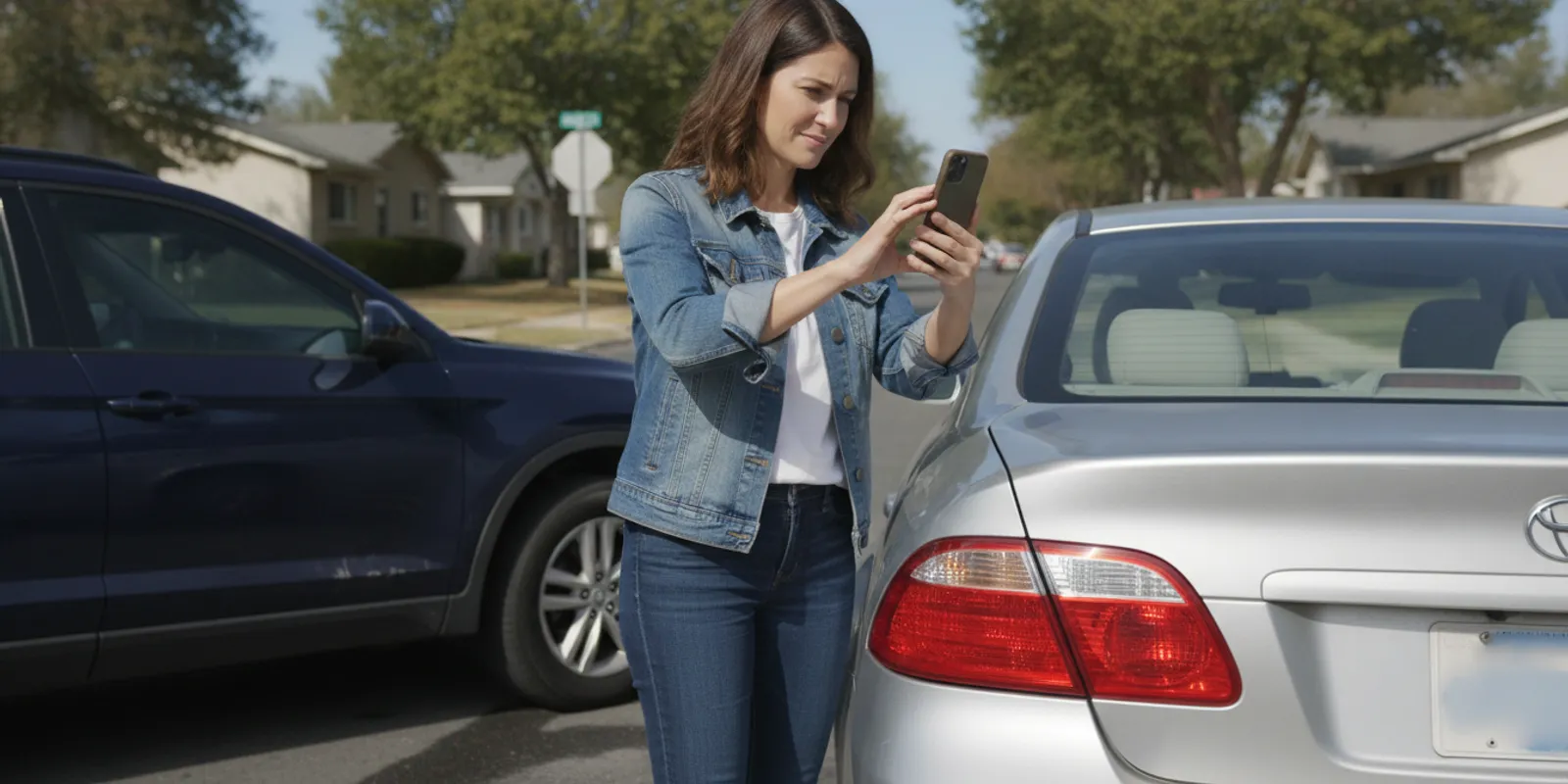
If you are looking for distracted driving accident evidence California drivers can preserve, start with safety and a clear record of what happened. A phone, a witness, or a traffic camera may help explain a collision, but no single detail proves distraction by itself. The useful next step is to record what you know, keep original materials, and avoid guessing about facts you cannot confirm.
What evidence can point to distracted driving?
Distraction can involve a driver looking away from the road, handling a device, or focusing on something inside or outside the vehicle. After a crash, you may not know what the other driver was doing. Evidence is often indirect: it may establish a timeline, show how the vehicles moved, or preserve a statement made at the scene. An investigator or insurer may evaluate several pieces together rather than rely on one clue.
Potentially useful records can include:
- Witness observations. Someone nearby may have seen a driver looking down, holding a phone, or failing to react before impact. Ask for the person’s name and a reliable way to contact them. Write down what they said in their own words as soon as practical.
- Photographs and video. Images of vehicle positions, damage, skid marks, traffic controls, road conditions, and the surrounding scene can help preserve context. Nearby business or residence cameras and vehicle dash cameras may have recorded part of the event.
- Statements made at the scene. If a driver says they were checking a message or did not see stopped traffic, record the words as accurately as possible, along with who heard them and when. Do not pressure anyone or turn a recollection into a conclusion.
- Official records. A responding officer may document observations, statements, and the scene. The report can be relevant, but it is not a final ruling on every disputed fact or a substitute for other evidence.
- Phone or app records. Device activity or other time-stamped records might be relevant to a timeline in some cases. These records may be private, incomplete, or subject to legal restrictions; do not access another person’s device or account.
- Vehicle data. Some vehicles may store event-related data. Whether data exists, what it captures, and how it can be obtained depend on the vehicle and circumstances.
Keep the focus on what the evidence actually shows. A phone in a driver’s hand after impact does not, by itself, establish that the driver was using it before impact. A delayed response can have more than one explanation. Preserve observations rather than assigning blame in a caption or social media post.
What should you do at the scene?
Do not put yourself or anyone else in danger to collect evidence. Move to a safe place if possible, call emergency services when needed, and follow directions from responders. Get medical attention for injuries, even if symptoms seem minor at first. A crash scene is not a good place to confront another driver or try to take their phone.
When it is safe and appropriate, make a brief record of basic facts:
- Write the date, approximate time, location, direction of travel, weather, lighting, and road conditions.
- Note the vehicles involved, where they came to rest, visible damage, and any nearby traffic signals or signs.
- Take clear photographs from a safe position. Include wide views of the scene as well as close views of damage, but do not obstruct traffic.
- Get names and contact details for witnesses. Ask whether they are willing to share what they observed; do not tell them what to say.
- Record the other driver’s statements and the names of people who heard them. Separate direct quotes from your own impressions.
- Exchange the information requested by authorities and other parties. Avoid debating fault or making a definitive statement about injuries before you know more.
If you cannot gather everything at the scene, do not worry about making a perfect file in the moment. Your health and safety come first. As soon as you can, write down what you remember, including details that might otherwise fade, and mark which points are uncertain.
How can you preserve photos, video, and witness information?
Keep original files where possible. Save photos and videos in their original format, and avoid editing, cropping, adding annotations, or changing the timestamp on the only copy. If you need to share a marked-up image for your own notes, retain the untouched original separately. Back up the files in a secure place and make a simple list of what each item depicts and when you obtained it.
For a dash camera or other recording device, check promptly whether the relevant segment is saved. Some systems overwrite older recordings automatically. Follow the device’s ordinary instructions to preserve a copy; do not alter the recording. Note the device, the date and time shown, and any difference between its clock and the actual time, if known.
For a nearby camera, identify the location and approximate time window. A business or property owner may have a retention period and may not provide a recording directly to you. Ask politely whether footage exists and whether it can be preserved, without assuming you are entitled to obtain it immediately. Keep a note of whom you contacted and when. If formal requests or legal steps may be needed, get advice rather than attempting to access a camera system yourself.
Witness memories can become less precise over time. Write down each person’s contact details and a neutral description of what they said. Do not repeatedly contact a witness to rehearse a version of events, and do not post their information publicly. If someone gives you a written account, keep it as received and note when and how you got it.
What role can phone records play?
Phone records may help investigate whether a device was active around the time of a crash, but they have limits. A billing record may show calls or messages without proving who held the phone, what was visible on screen, or whether the driver was looking at it. Activity timestamps can also require context, and device records may be held by a service provider or subject to privacy protections.
Do not try to unlock, search, or copy another person’s device. Do not impersonate someone or use a password you are not authorized to use. If phone data may matter, preserve your own relevant records without deleting or changing them, and ask a lawyer about appropriate ways to request or preserve evidence. Avoid assumptions based on a screenshot or a single timestamp.
California law places restrictions on certain uses of wireless phones while driving, but the specific rule and its application depend on the facts. Whether a driver violated a traffic rule and whether that violation caused a particular injury claim are separate questions. A legal review should consider the whole record rather than treating a phone-related clue as automatic proof.
How should you handle insurance calls and written statements?
Notify your own insurer as required by your policy and keep a record of the date, person, and subject of each conversation. Provide accurate information. If you do not know an answer, say so rather than speculate. Save letters, emails, claim numbers, and any documents you send or receive.
An insurer may ask for a recorded statement or request authorizations. Before agreeing, make sure you understand who is asking, what the request covers, and why. You can ask for the request in writing and take time to review it. Do not sign a document you do not understand. A statement made while you are still unsure about details can be difficult to clarify later.
Be cautious about saying that you are uninjured before you have had a chance to assess your condition. If symptoms develop or change, record when they began and discuss them with a medical professional. Keep appointment records, instructions, and bills. Medical records document treatment and symptoms; they do not independently prove the other driver was distracted, so preserve both injury-related records and collision evidence.
For a broader checklist of records after a collision, see the firm’s California car accident injury claim checklist. You can also review information about personal injury matters and the firm’s case review form.
What evidence can be lost or misunderstood?
Some evidence disappears quickly. A camera may overwrite footage, a damaged vehicle may be repaired, and memories may fade. At the same time, rushing to collect material can create problems if it is altered or taken without permission. Make a preservation list and address the items that may be time-sensitive first, while respecting safety, privacy, and legal limits.
Common pitfalls include:
- Editing an image or video and discarding the original.
- Posting a crash account publicly, including guesses about what another driver was doing.
- Deleting messages, call records, or photographs that might relate to the event.
- Assuming an officer’s report or one witness statement resolves every disputed issue.
- Contacting a witness in a way that suggests the answer you want.
- Trying to obtain private phone or camera data without authorization.
- Waiting to write down details until memories have changed.
If you discover that a file was edited or that a detail is uncertain, do not try to conceal it. Keep what remains, explain the issue accurately, and seek guidance about how to handle it.
What should you do if a vehicle needs repair?
Necessary repairs should not be postponed just to preserve a vehicle indefinitely. First, photograph visible damage from several angles when it is safe to do so, and keep the original images. If the vehicle is not safe to drive, arrange appropriate towing or storage. Before work begins, ask the repair facility to document the condition and retain replaced parts when feasible, subject to its policies and any applicable requirements. Keep estimates, invoices, and communications about the work.
If you believe the vehicle may contain relevant event data, ask a qualified lawyer promptly whether any preservation step is appropriate before repairs or disposal. Do not attempt to remove modules, connect equipment, or access data yourself. Such actions can damage property or affect the integrity of records. Write down when the vehicle was inspected, moved, repaired, or transferred, and who handled it.
A repair estimate can help show the nature and cost of vehicle damage, but it does not establish that another driver was distracted. Likewise, a photograph of damage may help describe the impact but cannot by itself determine speed, fault, or the precise sequence of events. Treat each item as one part of the larger record.
How do you organize a useful evidence file?
A practical file makes it easier to locate records and spot gaps. It does not need special software. Use folders or envelopes and a simple index. Keep copies of original digital files, and note the source of each item so that you can explain how it came into your possession.
- Incident notes: a dated timeline, location, weather, road conditions, and a list of uncertainties.
- Scene materials: original photographs and recordings, a description of each, and any known timestamp issues.
- People: witness names and contact information, plus a dated summary of what each person reported.
- Official and insurance records: report information, claim numbers, correspondence, and call notes.
- Medical and expense records: treatment dates, instructions, bills, receipts, and documentation related to time away from work.
- Vehicle materials: repair estimates, photographs before repair where available, and information about any event-data system.
Use a chronology to connect events without overstating what they prove. For example: “At about 4:20 p.m., the witness said the other driver looked down shortly before the impact.” That is more precise than writing, “The driver was texting.” Add the witness’s name and the date you recorded the conversation. This distinction helps a reviewer separate observation from inference.
What can happen during a personal injury case review?
A case review is an opportunity to explain what happened, ask questions, and understand possible next steps. It is not a guarantee that a claim will succeed. Bring the materials you have, but do not delay asking questions simply because one document is missing. A reviewer can help identify what may be relevant and whether additional records should be preserved.
To prepare, organize a short timeline and bring or note:
- When and where the collision occurred, and the vehicles involved.
- What you personally observed about the other driver and what others reported.
- Whether police, emergency responders, or witnesses were present.
- Photos, recordings, and any notice that camera footage may exist.
- When symptoms began, what care you received, and whether treatment is ongoing.
- Insurance information, claim communications, and any deadlines or requests you have received.
Michelle Choe’s firm handles personal injury matters, including auto accidents, and offers a free consultation. The firm describes its personal injury fee arrangement as contingency-based, with no fees unless it wins; ask about the terms that would apply to your matter. Learn more about the Glendale car accident lawyer page or the firm’s guide for personal injury victims.
Frequently asked questions
Does a phone record prove the other driver was distracted?
Not by itself. A record may show device activity at a particular time, but it may not establish who used the device, what they saw, or whether the activity caused the collision. It must be considered with other evidence and its limitations.
Can I get surveillance video from a nearby business?
You can ask whether relevant footage exists and request that it be preserved, but a business may have policies or legal reasons that affect whether and how it shares the video. Identify the location and time window promptly. Do not access or copy a system without permission.
Should I post photos or my account of the crash online?
It is generally prudent to avoid public posts about the event, fault, injuries, or evidence while questions remain. Posts can omit context and may be misunderstood. Preserve original materials privately and discuss questions about sharing them with a lawyer.
What if I did not collect evidence at the scene?
You can still write down what you remember, save records you already have, and identify witnesses or possible camera locations. Do so promptly, but do not put yourself at risk or try to obtain private information without permission.
Preserve what you can, keep facts separate from assumptions, and get advice if you are unsure how to protect evidence or respond to an insurance request.